
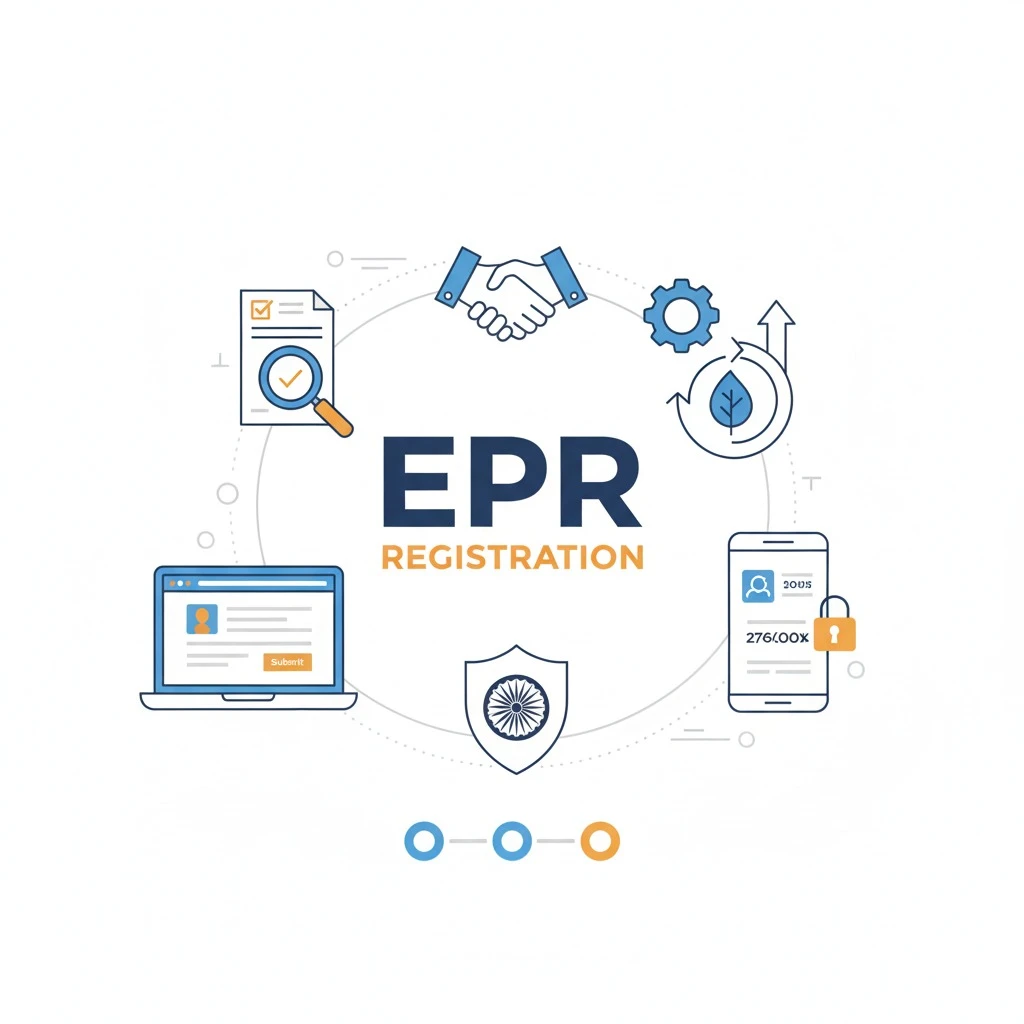
EPR Registration in Chandigarh
EPR Registration in Chandigarh is relevant for businesses that manufacture, import, sell or place regulated products or packaging into the Indian market and consequently fall within Extended Producer Responsibility requirements. Depending on the product category, obligations may arise under plastic packaging, e-waste or battery-waste frameworks administered through CPCB's centralized EPR systems.
Legal Papers India assists Chandigarh businesses with applicability assessment, category identification, document preparation, portal-related guidance and compliance coordination through a remote service model from Delhi and Noida. No physical Legal Papers India EPR office or registration centre in Chandigarh is implied.
For businesses, the first question should not be simply “How do we obtain an EPR certificate?” It should be:
Which EPR framework applies to our products, packaging and business model?
That decision determines the registration category, data requirements and continuing compliance obligations.
Why EPR Compliance Matters for Businesses in Chandigarh
EPR compliance matters when a Chandigarh business introduces products or packaging that create regulated waste after use. Under the applicable framework, responsibility does not necessarily end when the product is sold; producers, importers and brand owners can have defined obligations relating to registration, recycling, waste processing, reporting and fulfilment of EPR targets.
Chandigarh's official Industries Department identifies a business base that includes light engineering, electrical and electronic products, pharmaceuticals, plastic goods, food products, industrial components and other small-scale industries. This makes EPR particularly relevant for businesses dealing with electronics, packaged consumer goods, plastic packaging, batteries and imported regulated products.
Common Chandigarh Business Scenarios
| Business Scenario |
EPR Question to Check |
|
FMCG brand selling packaged goods |
Does plastic-packaging EPR apply? |
|
Electronics importer |
Is the entity a producer under e-waste rules? |
|
D2C brand using plastic packaging |
Is PIBO registration required? |
|
Battery importer |
Do Battery Waste Management Rules apply? |
|
Manufacturer using branded packaging |
Is the entity a producer or brand owner? |
|
E-commerce business |
Is it itself placing regulated products/packaging in the market? |
Expert observation: EPR applicability depends on the legal role performed by the entity, not simply the label the business uses internally.
For example, CPCB's plastic EPR framework separately recognizes Producers, Importers and Brand Owners (PIBOs).
Common mistake: A business assumes its supplier's EPR registration automatically covers its own obligations. Applicability should be checked against the entity's actual role in manufacturing, importing, branding or placing products on the market.
Which EPR Registration Category Applies to Your Business?
Different EPR frameworks apply to different waste streams. Businesses should identify the correct category before preparing an application because plastic packaging, electrical and electronic equipment, and batteries have separate compliance structures, portals, definitions and continuing obligations.
EPR Category Comparison
| EPR Category |
Typical Businesses |
Key Compliance Focus |
|
Plastic Waste EPR |
Producers, Importers, Brand Owners |
Plastic packaging placed in market, recycling/processing obligations |
|
E-Waste EPR |
Producers of covered electrical/electronic equipment |
E-waste recycling obligations and EPR fulfilment |
|
Battery Waste EPR |
Producers/importers of covered batteries |
Collection/recycling and EPR obligations |
|
Multi-Category Business |
Electronics or consumer-goods companies using packaging/batteries |
Separate applicability under more than one framework |
Plastic Waste EPR
CPCB's plastic-waste framework applies EPR responsibilities to Producers, Importers and Brand Owners introducing covered plastic packaging into the market.
Plastic packaging businesses should evaluate:
- Packaging type
- Business role
- Quantity introduced into the market
- Applicable reporting period
- Recycling or processing obligations
- EPR certificates and compliance records
E-Waste EPR
Businesses manufacturing or offering covered electrical and electronic equipment under their own brand, or importing such products, should assess whether they meet the applicable definition of a producer under the E-Waste Management Rules.
Battery Waste EPR
Battery manufacturers and importers should separately assess registration and EPR obligations under the applicable battery-waste framework.
Decision guideline: Do not combine separate EPR categories into one assumption. A company selling electronic products packed in plastic and containing batteries may need to examine more than one waste stream.
EPR Registration Process in Chandigarh
EPR Registration Online in Chandigarh generally requires the applicant to first establish its correct regulatory category, prepare business and product information, submit details through the applicable centralized portal and respond to queries or deficiencies before registration is approved.
Practical Registration Workflow
| Stage |
Purpose |
Common Error |
Recommended Action |
|
Applicability Review |
Identify relevant EPR framework |
Applying under wrong category |
Review product and business role first |
|
Entity Classification |
Identify producer/importer/brand owner status |
Assuming trade name decides category |
Assess actual market activity |
|
Product/Packaging Mapping |
Identify regulated products |
Incomplete product list |
Map SKUs and packaging |
|
Data Compilation |
Prepare required operational information |
Mismatched quantities |
Reconcile business records |
|
Document Preparation |
Build supporting application file |
Inconsistent entity details |
Match legal records |
|
Portal Submission |
File applicable registration |
Wrong category/data entry |
Validate before submission |
|
Query Response |
Address regulator observations |
Delayed/incomplete reply |
Maintain supporting evidence |
|
Registration |
Registration issued after approval |
Treating approval as end of compliance |
Track continuing obligations |
|
EPR Fulfilment |
Meet applicable targets |
Ignoring post-registration requirements |
Maintain periodic compliance calendar |
|
Returns/Reporting |
Submit required information |
Late or inconsistent filing |
Reconcile portal and business data |
CPCB Registration Context
For plastic packaging, CPCB's EPR framework uses a centralized online mechanism for registration and compliance. The regulatory system also provides for EPR fulfilment through registered waste processors and associated certificates where applicable.
Practical recommendation: Establish a clean product and packaging data sheet before beginning the portal application. Correcting inconsistent quantities later can create avoidable compliance work.
Documents Required for EPR Registration in Chandigarh
Document requirements depend on the applicable waste stream, business role, entity type and information requested on the relevant EPR portal. The applicant should therefore prepare both legal-entity records and product, packaging or operational information instead of treating EPR registration like a simple licence form.
Common Business Documents
| Business Type |
Typical Supporting Information |
|
Proprietorship |
PAN, proprietor details, GST/business information |
|
Partnership |
Partnership Deed, PAN, GST and partner details |
|
LLP |
Incorporation Certificate, LLP Agreement, PAN, GST |
|
Private Limited Company |
Incorporation Certificate, PAN, GST and authorized-person details |
|
Manufacturer |
Entity documents plus product/manufacturing information |
|
Importer |
Entity documents plus import/product details |
|
Brand Owner |
Brand/entity information plus packaging/product data |
Application Information May Include
- Legal entity details
- PAN
- GST details
- Registered address
- Authorized-person details
- Product categories
- Brand information
- Import or manufacturing information
- Packaging data where relevant
- Waste-category details
- Supporting declarations
- Portal-specific information
Common mistake: Business records, GST information and portal data do not match. Entity name, address and legal status should be checked before submission.
Expert recommendation: Keep the compliance dataset used for EPR separate from ad-hoc sales estimates. Reporting should be based on reconciled and supportable business information.
EPR Registration for Chandigarh Manufacturers, Importers & Brand Owners
Manufacturers, importers and brand owners can face different EPR responsibilities even when they sell similar products. The determining factor is how the business introduces the product or packaging into the market and which regulatory definition applies under the relevant waste-management rules.
Who Should Assess EPR Applicability?
- Manufacturers
- Producers
- Importers
- Brand Owners
- E-commerce Companies
- Electronics Manufacturers
- Electronics Importers
- Battery Manufacturers
- Battery Importers
- Plastic Packaging Businesses
- FMCG Companies
- D2C Brands
- Businesses dealing with regulated waste/products
Example: D2C Brand
A Chandigarh D2C company may outsource manufacturing but sell products under its own brand in plastic packaging.
The business should not automatically conclude that the contract manufacturer bears every EPR obligation. Its own role as a brand owner and the applicable packaging framework must be examined.
Example: Electronics Importer
An importer bringing covered electronic equipment into India should assess e-waste producer-registration requirements rather than assuming that the foreign manufacturer remains responsible under the Indian EPR framework.
Benefits of Professional EPR Registration Assistance
Professional assistance is most useful when it identifies the correct regulatory framework before the application is filed and keeps registration data aligned with later compliance requirements. An incorrect entity category or weak product mapping can create problems beyond the initial registration stage.
Operational Benefits
- Clear identification of applicable EPR category
- Structured product and packaging mapping
- Better document organization
- Consistent application data
- Centralized compliance records
Regulatory Benefits
- Better portal-readiness
- Reduced risk of incomplete submissions
- Structured response to application queries
- Better understanding of post-registration obligations
- Compliance-calendar planning
Commercial Benefits
Valid EPR registration can become important for:
- Marketplace onboarding
- Vendor due diligence
- Import compliance
- Customer procurement
- Supply-chain documentation
- Business expansion involving regulated products
Future Compliance Benefits
Registration may be only the first stage.
Depending on the EPR framework, continuing obligations can include:
- Target fulfilment
- EPR certificate management
- Recycling/processing records
- Periodic reporting
- Annual returns
- Updating registration information
Compliance warning: An EPR registration certificate should not be treated as a permanent one-time clearance for all products, categories and future business changes.
EPR Registration Cost & Timeline in Chandigarh
EPR Registration Cost in Chandigarh cannot responsibly be expressed as one fixed amount for every applicant because the work varies according to EPR category, number of products, packaging complexity, entity role, application quality, data readiness and continuing compliance requirements.
Main Cost Factors
| Factor |
Why It Matters |
|
EPR Category |
Plastic, e-waste and battery frameworks differ |
|
Entity Role |
Producer/importer/brand owner requirements vary |
|
Product Count |
More categories may increase data work |
|
Packaging Complexity |
Multiple packaging types require better mapping |
|
Documentation Readiness |
Missing/inconsistent records increase preparation |
|
Compliance Scope |
Registration-only and ongoing support differ |
|
Regulatory Queries |
Deficiencies can extend processing effort |
Timeline Factors
Processing depends on:
- Correct category selection
- Application completeness
- Data accuracy
- Supporting-document quality
- Portal observations
- Applicant response time
- Regulatory processing
For plastic packaging, CPCB's published framework states that registration is to be completed within two weeks from submission of a complete online application. This should be treated as the regulatory processing framework for a complete application rather than a guaranteed total project timeline.
Buyer tip: Ask whether a quotation covers only initial registration or also later EPR obligations, returns and target-related support.
Why Chandigarh Businesses Can Work with Legal Papers India
Legal Papers India can support Chandigarh businesses remotely from Delhi and Noida with EPR applicability assessment, document preparation and registration coordination. This model is particularly suitable for B2B organizations that can exchange entity, product, packaging and compliance information digitally.
Assistance can cover:
- EPR applicability assessment
- Waste-stream identification
- Producer/importer/brand-owner classification
- Document checklist
- Product or packaging data organization
- Application preparation
- Portal guidance
- Query-response coordination
- Post-registration compliance guidance
Questions to Ask Before Choosing an EPR Consultant
- Which EPR framework applies to our business?
- Are we a producer, importer or brand owner?
- Could more than one EPR category apply?
- What information must our internal team provide?
- Is portal-query support included?
- Does the engagement include post-registration compliance?
- Are annual returns or EPR-target activities separate?
Transparency note: Legal Papers India provides assistance remotely and does not claim a physical Chandigarh EPR registration office.
Get to know About Us
Frequently Asked Questions
1. What is EPR Registration in Chandigarh?
EPR Registration in Chandigarh is the applicable producer-responsibility registration for businesses that fall within regulated waste frameworks such as plastic packaging, e-waste or batteries. Registration requirements depend on the entity's business role, products and waste stream rather than merely on its Chandigarh address.
2. Can EPR Registration be completed online in Chandigarh?
Yes, relevant CPCB EPR systems use online registration and compliance mechanisms. Businesses can prepare documentation and coordinate consultancy remotely. The correct portal and application requirements depend on whether the entity falls under plastic packaging, e-waste, battery waste or another applicable EPR framework.
3. Who needs CPCB EPR Registration in Chandigarh?
Producers, importers, brand owners and other regulated entities may require registration depending on the applicable rules. For plastic packaging, CPCB specifically recognizes Producers, Importers and Brand Owners. Electronics and battery businesses should separately assess the definitions and obligations applicable to their respective waste streams.
4. Does an importer need EPR Registration?
An importer may require EPR registration when it imports products or packaging covered by the applicable EPR framework. The assessment should consider what is being imported, how the product is sold in India and which waste-management rules apply.
5. Can one EPR Registration cover plastic, e-waste and batteries?
Businesses should not assume that one registration covers every waste stream. Plastic packaging, e-waste and batteries operate under separate regulatory frameworks. A business dealing with multiple regulated categories may need to assess and manage each applicable EPR obligation separately.
6. What is the cost of EPR Registration in Chandigarh?
Cost varies according to EPR category, entity type, number of products, packaging data, documentation readiness and consultancy scope. A quotation should clarify whether it covers registration only or also post-registration obligations, query handling, returns and target-related support.
7. Is an EPR Certificate the same as a general pollution licence?
No. EPR registration addresses Extended Producer Responsibility obligations under the applicable waste-management framework. It should not be treated as a substitute for every environmental consent, licence or authorization that may separately apply to the applicant's operations.
8. Does an online D2C brand need EPR Registration?
It may. A D2C brand using regulated plastic packaging or selling covered electronics or battery products should assess its role under the applicable rules. Outsourcing manufacturing does not automatically remove the brand owner's own regulatory responsibilities.
9. What happens after EPR Registration is approved?
Post-registration obligations may include maintaining accurate data, fulfilling applicable EPR targets, obtaining or managing relevant recycling/processing certificates, filing prescribed returns and updating registration details when business circumstances change.
10. What causes EPR applications to get delayed?
Common problems include incorrect entity classification, incomplete documents, inconsistent legal details, inaccurate product or packaging information and delayed responses to portal queries. Performing an applicability and data review before filing can reduce avoidable corrections.
Start Your EPR Compliance Journey with Legal Papers India
Businesses seeking EPR Registration in Chandigarh should begin by identifying the exact waste stream and regulatory role applicable to their operations.
Legal Papers India can assist producers, manufacturers, importers, brand owners, electronics businesses, battery companies, plastic-packaging businesses, FMCG companies, D2C brands and other B2B organizations through remote compliance support from Delhi and Noida.
Before proceeding, clarify:
- Products placed in the market
- Packaging materials used
- Whether goods are manufactured or imported
- Brand ownership
- Applicable waste stream
- Annual quantities
- Existing registrations
- CPCB portal status
- Post-registration compliance requirement
Get Trusted Compliance Support from Legal Papers India. Contact Us
Legal Papers India Business Solution Private Limited, F 2, Sector 8, Noida, Uttar Pradesh, 201301
Monday to Saturday 10:00 AM to 06:30 PM





Please submit all general enquiries in the contact form below and we look forward to hearing from you soon.


Captcha:



Or sign in with:
LOGIN WITH GOOGLESign up for early Sale access plus tailored new arrivals, trends and promotions. To opt out, click unsubscribe in our emails.
Forgot your password? No worries! Enter your registered email to receive a link and securely reset it in just a few steps.