



Legal Papers India specializes in the complete winding-up process for Private Limited companies. We offer end-to-end assistance, including document preparation, regulatory filings, creditor settlements, and final closure approvals. Our expertise ensures full compliance with the Companies Act, Insolvency and Bankruptcy Code, and other applicable laws. By choosing Legal Papers India, businesses save time, avoid legal risks, and complete the closure process with confidence. Our team is committed to delivering a smooth, transparent, and lawful winding-up experience for all clients.
Home
»Winding Up PVT LTD
Winding Up PVT LTD
Obtain Winding Up PVT LTD at ₹2499/- only!
Liquidation of a company is the process of converting its assets into cash to repay creditors and distribute remaining funds to shareholders. It marks the final stage of a company’s existence. Liquidation may occur voluntarily when directors decide to close operations or compulsorily by court order due to insolvency or non-compliance with laws. The process is governed by the Insolvency and Bankruptcy Code, 2016, and the Companies Act, 2013.
Company Liquidation
Winding Up
Corporate Dissolution
Asset Realization
Insolvency Compliance
Voluntary Liquidation
0+
Happy Clients
0+
Certificate Issued
0+
Professionals

Get Expert Consultation
Bussiness Type
Captcha:

Overview on What Is Liquidation of a Company ?
Liquidation of a company is the process of converting its assets into cash to repay creditors and distribute remaining funds to shareholders. It marks the final stage of a company’s existence. Liquidation may occur voluntarily when directors decide to close operations or compulsorily by court order due to insolvency or non-compliance with laws. The process is governed by the Insolvency and Bankruptcy Code, 2016, and the Companies Act, 2013. Legal Papers India ensures all liquidation steps are handled in accordance with legal requirements, from asset valuation to final dissolution, protecting the interests of all stakeholders throughout the process.
Winding Up PVT LTD Company
Winding up a Private Limited (PVT LTD) company is the legal process of closing its operations permanently. It involves selling company assets, paying off debts, and distributing any remaining surplus to shareholders.
- This process is regulated under the Companies Act, 2013.
- A company may opt for winding up due to financial losses, non-operational status, or other strategic reasons.
- The procedure must comply with legal requirements to avoid penalties or disputes.
- Proper documentation and adherence to statutory timelines are essential to complete the process efficiently.
- Legal Papers India ensures the entire procedure is carried out in full compliance with applicable laws, minimizing risks for directors and stakeholders.
Our team assists in preparing documents, filing with authorities, and completing all legal formalities, ensuring a smooth and lawful closure of your PVT LTD company.
Winding Up of a Company
Winding up of a company refers to the formal closure where its existence is legally terminated. It involves settling liabilities, liquidating assets, and deregistering the business from government records.
- Once completed, the company ceases to exist and cannot conduct any business activities.
- The process can be voluntary, initiated by directors and shareholders, or compulsory, directed by the court.
- Each route has specific legal obligations and procedural requirements.
- Engaging professional assistance ensures compliance with all statutory guidelines and avoids delays.
Legal Papers India manages the complete winding-up procedure, helping businesses close operations in a lawful, transparent, and time-bound manner.
Checklist for Winding up of Company in India
1. Obtain Board and Shareholder Approval
Before initiating the winding-up process in India, it is essential to obtain approval from the board of directors and shareholders. This formal consent ensures that the decision to close the company is legally validated.
2. Clear Pending Statutory Dues and Taxes
All pending statutory dues, taxes, and regulatory obligations must be cleared. Settling these liabilities prevents legal complications during the winding-up process.
3. Prepare Statement of Accounts
A statement of accounts should be prepared to reflect the company’s financial position. This includes assets, liabilities, and equity, providing a transparent overview for shareholders, creditors, and regulatory authorities.
4. Inform Creditors and Settle Liabilities
Creditors must be informed about the winding-up, and all outstanding liabilities should be settled. This ensures compliance with legal requirements and prevents disputes.
5. File Forms and Resolutions with ROC
Necessary forms and resolutions related to winding-up must be filed with the Registrar of Companies (ROC). This formalizes the process and maintains legal records of the closure.
6. Appoint a Liquidator
A liquidator should be appointed to manage the disposal of assets, settle remaining liabilities, and oversee the final stages of the company’s closure.
7. Expert Assistance
Legal Papers India assists clients in preparing and verifying each checklist item, ensuring compliance, accuracy, and a smooth execution of the winding-up process. Proper guidance minimizes errors and legal risks.
Benefits of Company Liquidation of Company
- Debt Settlement
Liquidation ensures all outstanding debts are cleared in a structured and legal manner, protecting directors from future claims.
- Legal Closure
The process results in an official termination, preventing further legal obligations or compliance requirements.
- Asset Distribution
Company assets are distributed fairly among creditors and shareholders according to legal priorities.
- Avoiding Penalties
A proper winding-up process avoids penalties from regulatory authorities for non-compliance.
- Clear Financial Records
Liquidation finalizes the company’s accounts, ensuring transparency in closure.
- Stakeholder Protection
Legal liquidation safeguards the rights and interests of shareholders and creditors.
Documents Required for Liquidation of a Company in India
For company liquidation, the following documents are generally required:
- Board resolution approving winding up.
- Shareholder resolution authorizing closure.
- Latest audited financial statements.
- List of assets and liabilities.
- Consent letters from directors.
- Statement of accounts certified by a Chartered Accountant.
Modes of Winding Up of Company
There are two primary modes of winding up a company:
- Voluntary Winding Up: Initiated by the company’s shareholders and directors when the business is no longer viable or needed.
- Compulsory Winding Up: Ordered by a court or tribunal due to insolvency, fraudulent activities, or serious non-compliance with laws.
Each mode follows specific legal procedures and requirements. Legal Papers India evaluates your situation to recommend the most suitable mode, ensuring compliance with statutory timelines and minimizing financial and legal risks.
Regulations for Liquidation of a Company
The liquidation process in India is primarily governed by the Companies Act, 2013, and the Insolvency and Bankruptcy Code, 2016.
- These laws outline the procedure, rights of creditors, and duties of the liquidator.
- Additionally, rules from the Ministry of Corporate Affairs (MCA) and guidelines by the Insolvency and Bankruptcy Board of India (IBBI) apply.
- Adherence to these regulations is crucial to avoid legal disputes or delays in closure.
- Legal Papers India ensures complete compliance with all applicable laws, managing filings, reports, and communication with regulatory bodies effectively.
Top Reasons for Compulsory Winding up of a Company
Common reasons for compulsory winding up include:
- Persistent non-compliance with statutory requirements
- Inability to pay debts
- Fraudulent activities, or actions against public interest.
- A company may also be wound up if it fails to commence business within a year of incorporation or remains inactive for a long period.
Priority of Claims
In liquidation, claims are settled in a fixed priority order. First, costs of the liquidation process are paid, followed by secured creditors, workmen’s dues, and other employee claims.
- Next are unsecured creditors, then government dues, and finally, any surplus to shareholders.
- This sequence is legally binding under the Insolvency and Bankruptcy Code, 2016.
- Legal Papers India manages the settlement process to ensure fair and lawful distribution.
- We help avoid disputes between stakeholders and maintain transparency throughout the liquidation.
This structured approach ensures compliance with legal requirements and smooth closure of the company’s financial obligations.
The Role of an Insolvency Practitioner in Company Liquidation
An insolvency practitioner is a licensed professional appointed to oversee the liquidation process. Their responsibilities include valuing assets, settling debts, distributing proceeds, and ensuring compliance with relevant laws.
- They act as an impartial party to protect the interests of creditors and shareholders.
- In compulsory winding up, the practitioner is appointed by the tribunal, while in voluntary cases, the company appoints them.
- Legal Papers India works closely with registered insolvency practitioners, ensuring the liquidation is managed professionally, legally, and efficiently from start to finish.
This collaboration guarantees a smooth, compliant, and transparent winding-up process.
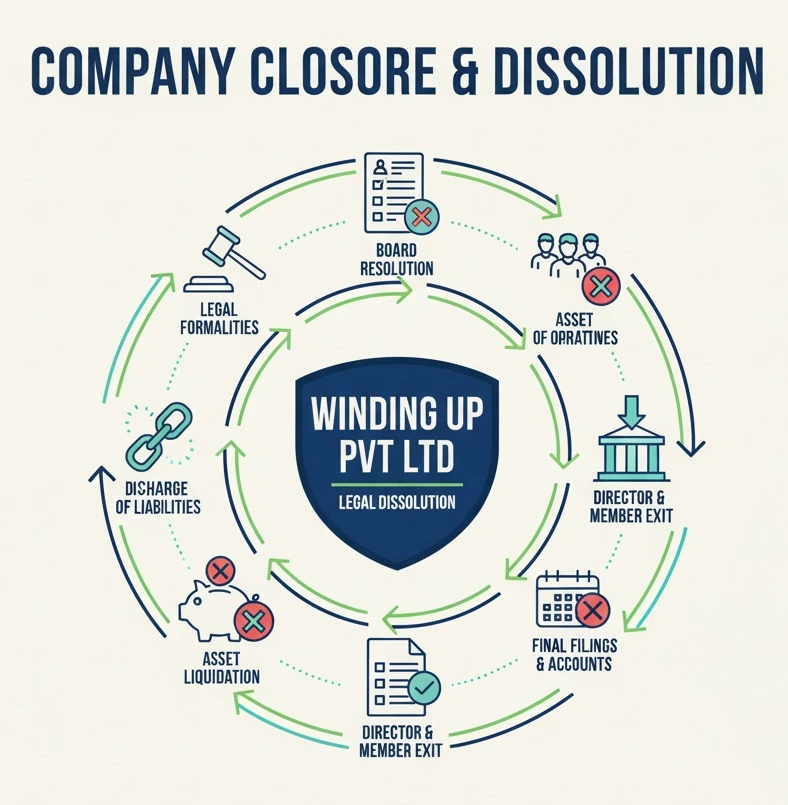
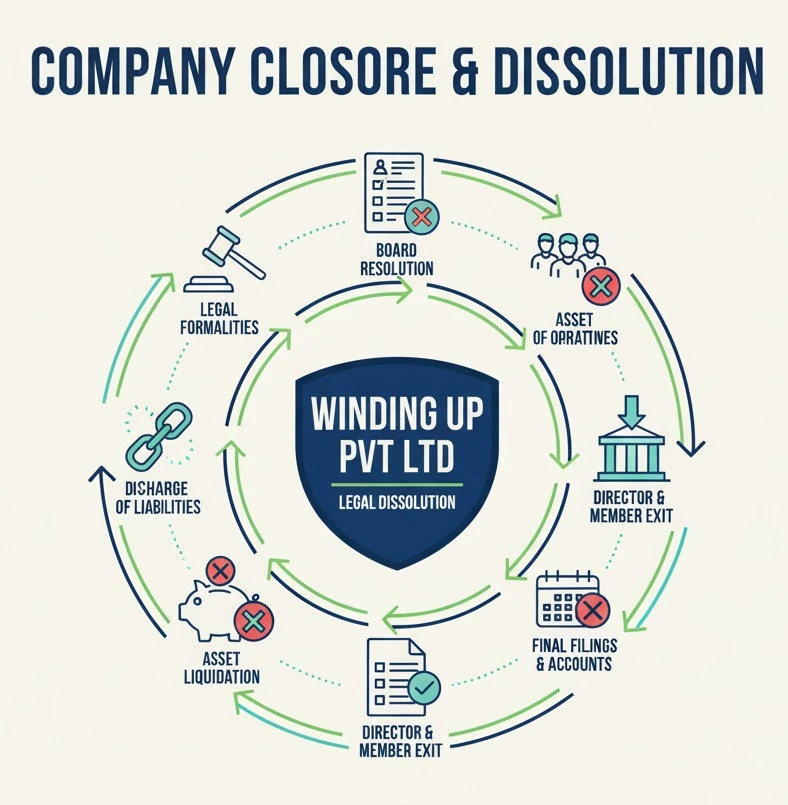
How to Close a Company in India
Closing a Company in India involves several critical steps to ensure a lawful and smooth dissolution:
- Passing Resolutions: Obtain necessary approvals from shareholders and board members to initiate closure.
- Appointing a Liquidator: Designate a licensed professional to manage asset liquidation and debt settlement.
- Settling Debts: Clear outstanding liabilities with creditors and ensure all financial obligations are met.
- Selling Assets: Convert company assets into cash or other forms to pay off debts.
- Compliance with Tax Authorities: Ensure all taxes are paid and obtain clearance from relevant tax departments.
- Clearance of Government Dues: Settle any pending statutory or regulatory obligations.
- Filing Final Documents with ROC: Submit required forms and documents to the Registrar of Companies to officially dissolve the company.
Proper Documentation and Statutory Adherence: Maintain accurate records and follow legal requirements to avoid delays
Consequences of Winding up a Company
1. Loss of Legal Status
Once a company is wound up, it ceases to exist as a legal entity and cannot engage in any business activities. All operations, contracts, and obligations are effectively terminated.
2. Cessation of Directors Powers
The powers of the directors end upon winding up. Control of the company passes to the appointed liquidator, who manages the closure process and ensures compliance with legal obligations.
3. Asset Disposal and Creditor Repayment
All company assets are sold to repay creditors. The liquidator oversees asset liquidation and ensures that outstanding liabilities are settled according to legal priorities.
4. Distribution to Shareholders
After settling creditors, any surplus funds are distributed to shareholders in proportion to their shareholding. This completes the financial closure of the company.
5. Impact on Credit and Business Relationships
Winding up may affect the companys credit ratings and existing business relationships, as it signals the end of operations to partners, suppliers, and financial institutions.
6. Removal from Registrar Records
The companys name is officially removed from the records of the Registrar of Companies (ROC), formalizing its dissolution.
7. Expert Management of Consequences
Legal Papers India ensures that all legal and financial consequences of winding up are anticipated and properly managed, protecting stakeholders interests and enabling a smooth, compliant closure process.
Sequence of Claim
The sequence of claim determines the order in which creditors and stakeholders are paid during liquidation. It starts with insolvency resolution costs, followed by secured creditors and workmens dues.
- Next are other employee wages, unsecured creditors, and finally, government dues.
- Remaining funds, if any, go to shareholders.
- This sequence is mandated by the Insolvency and Bankruptcy Code, 2016.
- Legal Papers India ensures each claim is settled in compliance with legal requirements, preventing disputes and ensuring transparent financial closure.
Following this order guarantees a fair and lawful distribution of assets during the liquidation process.
Authorities involved in the Liquidation of a Company
Key authorities involved in company liquidation include the Registrar of Companies (ROC), National Company Law Tribunal (NCLT), Official Liquidator, and the Insolvency and Bankruptcy Board of India (IBBI).
- Tax authorities also play a role in clearing dues before final closure.
- Each authority has a specific role in ensuring the process follows legal guidelines.
- Legal Papers India coordinates with all these bodies to manage submissions, hearings, and approvals.
This coordination ensures an efficient and legally compliant liquidation process, minimizing delays and procedural issues.
Why Legal Papers?
Frequently Asked Questions
How long does it take to wind up a company in India?
The process generally takes 6 to 12 months, depending on the case complexity.
Can a company with debts be closed?
Yes, but debts must be settled through liquidation proceeds before closure.
Is a liquidator mandatory?
Yes, a licensed liquidator is required for the process.
Can directors initiate winding up?
Yes, through voluntary winding up with shareholder approval.
What happens to the company name after closure?
It is removed from the ROC records and cannot be used again.
Social Share:





Why Choose Us












Log in
Or sign in with:
LOGIN WITH GOOGLE
Create Account
Sign up for early Sale access plus tailored new arrivals, trends and promotions. To opt out, click unsubscribe in our emails.
Reset Your Password
Forgot your password? No worries! Enter your registered email to receive a link and securely reset it in just a few steps.