
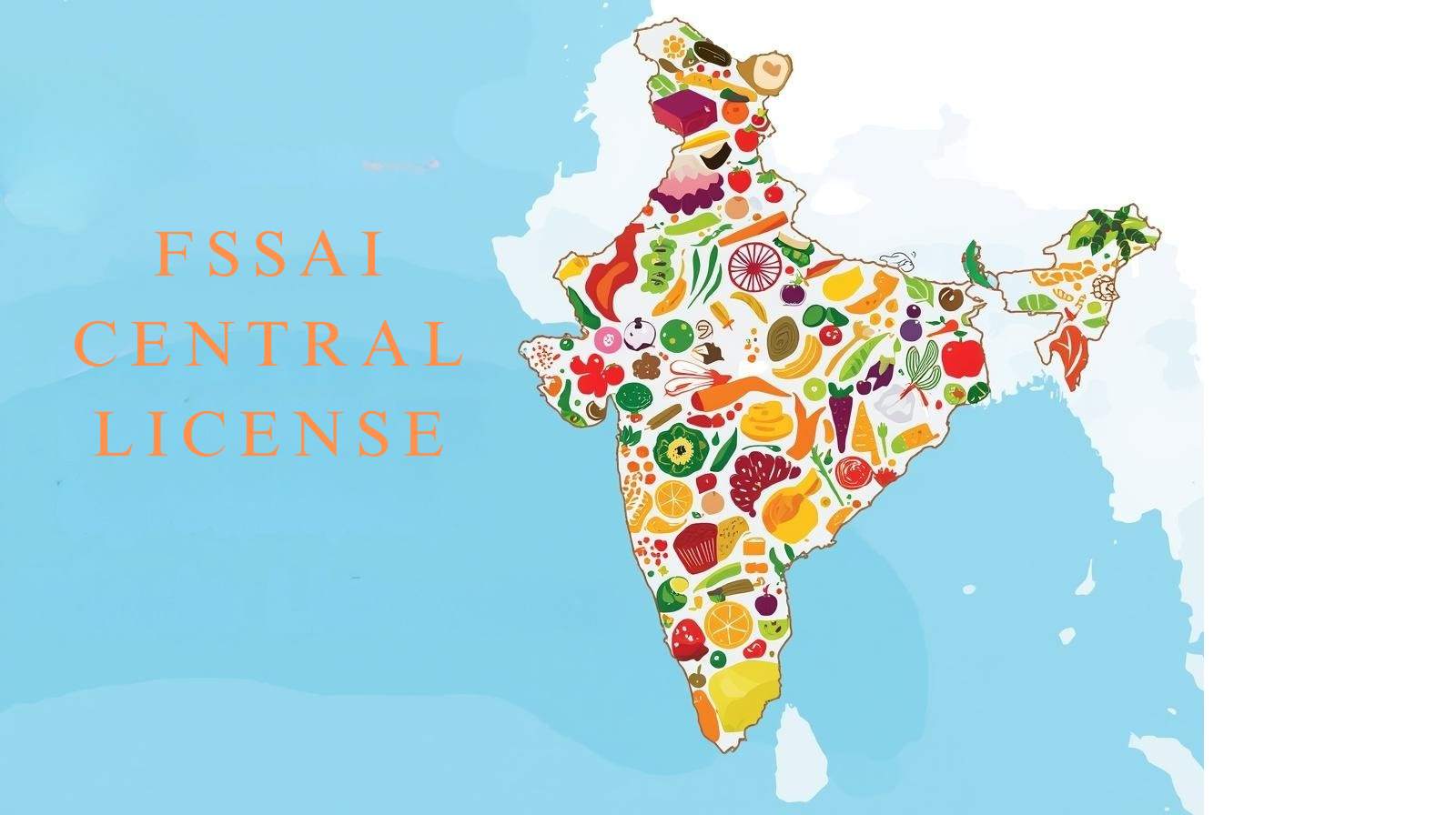
FSSAI Central License Registration in Surat
FSSAI Central License Registration in Surat applies when a Food Business Operator meets the current Central Licensing Authority criteria through turnover or a specially designated Kind of Business. Legal Papers India can coordinate eligibility review and FoSCoS documentation remotely from Delhi and Noida without representing a physical Surat office or local licensing centre.
The uploaded brief specifically requires remote Pan-India service positioning and prohibits false local presence.
| Licence Category |
General Turnover Band |
|
FSSAI Registration |
Up to ₹1.5 crore |
|
State License |
Above ₹1.5 crore and up to ₹50 crore |
|
Central License |
Above ₹50 crore |
Turnover is only one part of the decision. FoSCoS continues to classify food importers, e-commerce FBOs and head offices of multi-state food businesses under Central licensing irrespective of the normal turnover threshold.
Decision guideline: Identify the actual Kind of Business first, then apply the current turnover or special-category rule.
Why Surat’s Agro-Trading and Food Supply Chain Needs a Different Licence Review
Surat’s commercial profile creates FSSAI questions around food trading, warehousing, rice, fruits, packaged foods and interstate distribution rather than only conventional food manufacturing. Businesses dealing with agricultural commodities, processed fruit products or large distribution networks should therefore map both their activity and premises before selecting a Central licence category.
Gujarat Agro Industries Corporation lists rice, banana, mango and chikoo among crops associated with Surat, and identifies a rice-flake mill project at APMC Kosamba in Surat. Gujarat also highlights terminal-market, cold-chain and value-added fruit-processing opportunities within its agro-processing ecosystem.
This creates locally relevant situations:
| Surat Food Business Scenario |
Central Licence Question |
|
Large rice or grain wholesaler |
Has turnover crossed ₹50 crore? |
|
Mango/banana processor |
Which manufacturing KoB and food categories apply? |
|
Food importer |
Is Central licensing mandatory regardless of turnover? |
|
Packaged-food distributor |
Does revised ₹50 crore classification apply? |
|
E-commerce food seller |
Does the e-commerce KoB require Central licensing? |
|
Multi-state food brand |
Is a separate head-office Central License needed? |
Surat also remains a major commercial and trading centre, which matters for food businesses expanding through wholesale, distribution or cross-state supply.
Common mistake: Treating food trading, warehousing and manufacturing as one activity in the application.
Expert recommendation: List each operational KoB separately before opening the FoSCoS application.
Which Surat FBOs Should Review Central Licensing in 2026?
A Central FSSAI License in Surat may be required for FBOs crossing the revised ₹50 crore general threshold and for businesses whose activity is specifically placed under Central jurisdiction. Importers and e-commerce operators require particular attention because Central licensing can apply irrespective of turnover.
Relevant applicants can include:
- Large food manufacturers
- Fruit and vegetable processors
- Rice and cereal businesses
- Packaged-food manufacturers
- Food importers
- Merchant exporters
- E-commerce food businesses
- Large wholesalers and distributors
- Food warehouses and cold-storage businesses
- Restaurant and cloud-kitchen groups
- Institutional food suppliers
- Multi-state FBO head offices
Under the revised 2026 eligibility material, wholesalers and distributors move into Central licensing above ₹50 crore annual turnover. Importers and e-commerce businesses are separately treated as Central categories without a turnover restriction.
Premises Matter as Much as Turnover
A Surat company may operate a registered office, processing unit and warehouse under one corporate entity.
That does not necessarily mean one licence covers all locations.
FoSCoS guidance states that each location generally requires a separate licence or registration, while a business operating in more than one state also needs an additional Central License for its head office or registered office.
Overlooked requirement: Licensing follows the premises and activity—not merely the company PAN.
How FSSAI Central License Online in Surat Should Be Prepared
FSSAI Central License Online in Surat is filed through FoSCoS, but the main compliance work should happen before submission. Eligibility, KoB, food categories, premises details and turnover evidence should be reconciled first so that Form B and the supporting documents describe the same business operation.
A practical application workflow is:
| Stage |
What to Verify |
Common Mistake |
|
Eligibility |
Central vs State under 2026 rules |
Using old ₹20 crore threshold |
|
KoB Mapping |
Every relevant activity |
Listing only the main activity |
|
Premises Mapping |
Exact unit being licensed |
Combining several locations |
|
Product Mapping |
Correct food categories |
Omitting products |
|
Turnover Review |
Supporting financial evidence |
Using estimated figures |
|
Document Preparation |
KoB-specific records |
Generic checklist |
|
FoSCoS Filing |
Form B details |
Address/entity mismatch |
|
Scrutiny |
Authority observations |
Unsupported response |
|
Licence Review |
Approved KoBs and products |
Not checking final scope |
FoSCoS continues to provide the online route for new licence/registration applications and business-specific KoB selection.
Approval-delay reason: Applicants often discover during scrutiny that the product list used by accounts does not match the food categories used by production or quality teams.
Expert tip: Prepare one product-category sheet before filing.
Documents Required for Central Food License in Surat
Documents required for a Central Food License in Surat vary according to business constitution and Kind of Business. Manufacturers generally need technical production information, importers need IEC evidence, while restaurants, warehouses and e-commerce FBOs need documentation matching their own activities. A single generic checklist is therefore inadequate.
| Business Type |
Typical Records to Prepare |
|
Proprietorship |
Identity, business and premises records |
|
Partnership |
Partnership and partner information |
|
LLP |
Incorporation and designated-partner details |
|
Private Limited Company |
Incorporation, directors and authorised-person records |
|
OPC |
Company and authorised-signatory information |
|
Manufacturer |
Layout, machinery, capacity and food categories |
|
Importer |
IEC, business details and imported-food information |
|
Warehouse |
Premises, storage and activity records |
|
Restaurant/Cloud Kitchen |
Premises and food-service activity details |
|
E-commerce FBO |
Platform and food-business information |
FoSCoS's Central documentation page specifically includes turnover proof, IEC issued by DGFT, Form IX for companies where applicable, declarations and business-specific supporting documents. It also sets qualification expectations for the person supervising food production.
For manufacturing businesses, product and technical information should reflect the actual unit rather than an old project report or licence application.
Compliance tip: Check machinery, food categories and premises details against current operations immediately before submission.
Why Professional Review Matters for Surat Food Businesses
Professional assistance is most useful when it determines whether Central licensing is actually required and whether the licence scope matches the real business. This matters particularly after the 2026 reforms because relying on old thresholds can result in an unnecessary Central application or an incorrect State-level filing.
A structured review can clarify:
- Current Central vs State eligibility
- All applicable KoBs
- Import/export status
- E-commerce activity
- Head-office requirements
- Separate premises licensing
- Product categories
- Manufacturing documentation
- Authority-query responses
- Future modification requirements
Practical example: A Surat packaged-fruit brand may manufacture locally, sell through its own e-commerce platform and later begin importing a speciality ingredient. The licence assessment should change when those activities change.
Buyer hesitation point: Before paying for filing, ask the advisor to explain exactly why Central licensing applies under the criteria.
Current Cost, Validity and Approval Expectations in Surat
The current government fee for a Central FSSAI License is ₹7,500 under the revised structure. Professional charges depend on KoB, manufacturing complexity, multiple premises and document readiness. FSSAI has also introduced perpetual validity, so routine one-to-five-year renewal advice is no longer current for the revised framework.
The revised eligibility material lists ₹7,500 as the Central licence fee for applicable categories.
FSSAI's March 2026 FAQ explains that perpetual validity means a licence remains valid unless suspended, cancelled or surrendered, and routine renewal is no longer required.
Professional scope can vary with:
- Number of KoBs
- Manufacturing documentation
- Product categories
- Import activity
- Multiple premises
- Existing licence discrepancies
- Scrutiny responses
- Modification work
Compliance warning: Perpetual validity does not mean permanent immunity from compliance. Hygiene, safety, inspection and other statutory obligations continue.
Timeline guideline: Avoid guaranteed approval-date claims because scrutiny and inspection depend on the application and business activity.
Annual Returns and Post-License Controls for Surat FBOs
A Central licence may have perpetual validity, but eligible FBOs can still have annual-return and modification responsibilities. Manufacturers, repackers, relabellers, importers and manufacturer-exporters should therefore maintain product and quantity records throughout the year rather than treating the licence certificate as the end of FSSAI compliance.
FSSAI currently requires eligible manufacturers, importers and manufacturer-exporters to submit annual returns online through FoSCoS by 31 May for the previous financial year. Late filing attracts ₹100 per day, subject to a maximum penalty of five times the annual licence fee.
For Surat businesses handling seasonal agricultural products, maintaining records throughout procurement and processing cycles is especially useful.
Common mistake: Waiting until May to reconstruct production quantities from invoices.
Expert recommendation: Reconcile monthly production, purchase and product-category records so Form D1 does not become a year-end data-reconstruction exercise.
Frequently Asked Questions
1. What is the Central FSSAI License turnover limit in Surat?
For new applications from 1 April, the general Central License threshold is annual turnover above ₹50 crore. State licensing generally covers turnover above ₹1.5 crore and up to ₹50 crore, while Registration applies up to ₹1.5 crore. Special business activities can follow separate Central licensing criteria.
2. Does a food importer in Surat need a Central License below ₹50 crore turnover?
Yes. FoSCoS lists food importing as a Central License activity without a turnover restriction. A Surat importer should therefore not apply the general ₹50 crore threshold as an exemption. IEC and importer-specific records should be prepared along with the other Central licence documents.
3. Does an e-commerce food business in Surat require Central FSSAI licensing?
FoSCoS treats e-commerce as a Central licensing category without a turnover restriction. A business operating a food-commerce platform should therefore identify whether it falls within the e-commerce KoB rather than relying only on turnover. The licence analysis should also distinguish the platform activity from any separate warehouse or manufacturing premises.
4. Can one Surat FSSAI licence cover a factory and warehouse?
Not automatically. FoSCoS guidance states that each location generally receives its own licence or registration. One premises can have multiple KoBs endorsed on the same licence, but physically separate locations should be assessed separately according to their activity and eligibility.
5. Is the old ₹20 crore Central FSSAI threshold still applicable?
No, not as the general threshold for new applications from 1 April. FSSAI revised the general Central licensing threshold to above ₹50 crore. Older articles quoting ₹20 crore may therefore be outdated, although special KoB rules still need to be checked separately.
6. What is the government fee for a Central FSSAI License in Surat?
The revised FSSAI eligibility structure lists a ₹7,500 Central licence fee. Consultancy charges are separate and can vary based on manufacturing documents, product categories, import/export activity, premises count and scrutiny support. Businesses should compare the professional scope separately from the statutory fee.
7. Does a Central FSSAI License still need renewal?
FSSAI introduced perpetual validity in 2026. A licence or registration continues unless suspended, cancelled or surrendered, so routine periodic renewal is no longer required under the amended framework. The FBO must still maintain food-safety standards and comply with applicable returns, inspections and modifications.
8. When should a Surat food business modify its licence?
A modification should be reviewed when licence particulars no longer match the actual business—for example, when new food categories, KoBs, manufacturing activities or relevant premises details are introduced. Businesses should make this assessment before starting the changed activity rather than waiting until an inspection or customer due-diligence process exposes the mismatch.
9. Do Surat manufacturers need to file FSSAI annual returns?
Licensed manufacturers, including repackers and relabellers, along with importers and manufacturer-exporters, fall within FSSAI's annual-return framework. The return is submitted online through FoSCoS by 31 May for the preceding financial year. Late filing attracts the prescribed daily penalty.
10. Can Legal Papers India assist a Surat business without having an office there?
Yes. The uploaded brief identifies Legal Papers India's head-office locations as Delhi and Noida and requires services to be delivered remotely unless a physical local office is verified. Surat applicants can therefore coordinate eligibility review and documentation digitally without the website claiming a Surat branch.
Confirm Your Licence Category Before Scaling the Business
Before applying for FSSAI Central License Registration in Surat, confirm that Central licensing is actually required under the rules effective from April 2026. Legal Papers India can remotely review the Kind of Business, turnover, premises and documents so the FoSCoS application reflects the actual operating structure rather than an outdated licensing assumption.
Before consultation, keep ready:
- Business constitution and PAN
- Premises details
- Turnover evidence
- Product/food-category list
- Manufacturing information
- Machinery details where relevant
- IEC for importers
- E-commerce/export details
- Warehouse or branch information
- Existing FSSAI licence details
The practical sequence is:
Check 2026 eligibility → map every KoB → separate premises → organise evidence → file through FoSCoS → address scrutiny → maintain return and modification compliance
Grow Your Business with Legal Papers India. Contact Us
Legal Papers India Business Solution Private Limited, F 2, Sector 8, Noida, Uttar Pradesh, 201301
Monday to Saturday 10:00 AM to 06:30 PM





Please submit all general enquiries in the contact form below and we look forward to hearing from you soon.


Captcha:











Or sign in with:
LOGIN WITH GOOGLESign up for early Sale access plus tailored new arrivals, trends and promotions. To opt out, click unsubscribe in our emails.
Forgot your password? No worries! Enter your registered email to receive a link and securely reset it in just a few steps.