
Sep 04, 2026
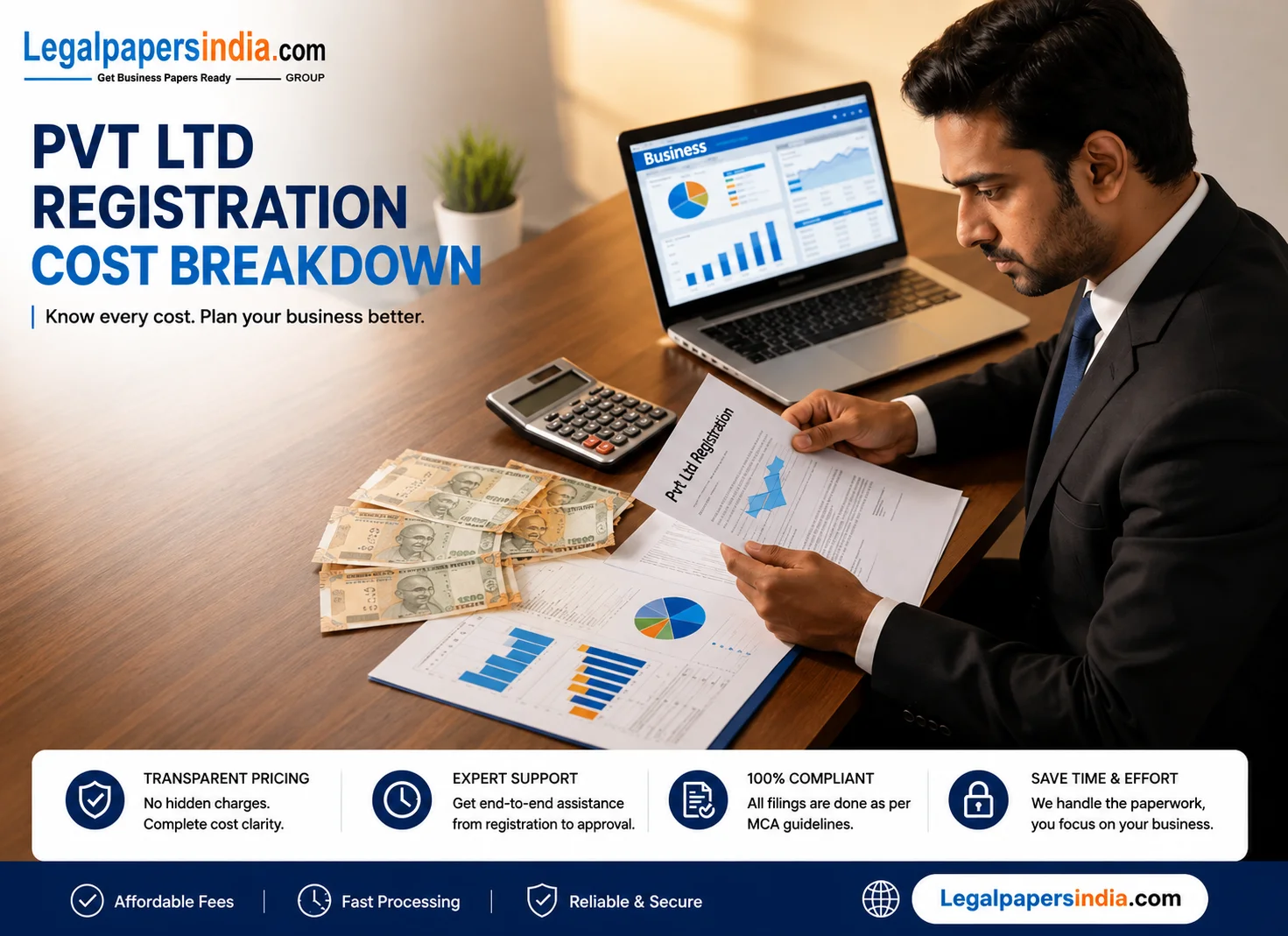
Pvt Ltd Registration Cost Breakdown
The real cost confusion most people face
“I saw a ₹4,999 offer… but someone else quoted ₹25,000. What’s the actual cost?”
That’s where most people get stuck.
Private Limited registration pricing often looks simple on the surface—but once you dig deeper, the numbers vary wildly depending on scope, compliance, and how the service is structured. What feels like a “cheap deal” at first can quietly expand with add-ons, delays, or corrections.
This guide clears that confusion—so you understand not just what you might pay, but why.
What does Pvt Ltd registration actually cost?
The cost of Private Limited Company registration in India generally falls within a moderate professional service range, influenced by government fees, compliance requirements, and service provider scope.
Basic setups cost less, but documentation complexity, director count, and post-incorporation compliance can significantly increase the total. There is no single fixed price—it varies case by case.
Who Should Consider This Cost Range—and Who Shouldn’t
This cost structure makes sense if:
- You want a legally compliant company structure from day one
- You plan to raise funding or scale operations
- You need limited liability protection
- You want structured ownership (multiple directors/shareholders)
It may not be ideal if:
- You’re testing a small idea with minimal risk
- You want ultra-low initial compliance
- You’re unsure about long-term business commitment
In those cases, alternatives like sole proprietorship or LLP (Limited Liability Partnership) may feel more cost-efficient initially.
What Determines the Cost of Pvt Ltd Registration
Here’s the reality: most users assume the cost is “just a registration fee.” It’s not.
The cost is built from multiple layers:
1. Government Fees
- Depends on authorized capital
- Includes incorporation filing charges, stamp duty, etc.
- Varies slightly by state
2. Digital Signatures (DSC)
- Required for directors
- Cost increases with number of directors
3. Director Identification Number (DIN)
- Applied during incorporation
- Usually bundled but still contributes to cost
4. Name Approval Process
- One attempt may be included
- Additional attempts can add cost if rejected
5. Professional Fees
- The biggest variation factor
- Depends on:
- Expertise
- Documentation support
- Turnaround time
- Post-registration guidance
6. Compliance Setup
- Includes:
- PAN & TAN
- MOA & AOA drafting
- Initial filings
Cost Breakdown (Factor-by-Factor Explanation)
Instead of looking at a lump sum, break it down like this:
Basic Components
- Government filing charges
- DSC for directors
- Name approval
- Incorporation application
Professional Service Layer
- Documentation preparation
- Error handling / corrections
- Consultation support
- Filing management
Value-Added Components
- GST registration (optional but common)
- MSME registration
- Accounting setup
- Compliance calendar
Many low-cost providers only include the first layer. Everything else becomes an “add-on.”
Typical Price Range
Instead of exact numbers, here’s how pricing usually behaves:
- Entry-level pricing: Covers minimal filing + basic compliance
- Mid-range pricing: Includes documentation support + smoother processing
- Higher-end pricing: Includes advisory, compliance setup, and ongoing support
The key difference isn’t just price—it’s what’s included vs what’s deferred.
A very low quote often means:
- Limited support
- Hidden add-ons
- Extra cost for corrections
Cost Based on Different Scenarios
Scenario 1: Solo Founder (2 Directors Minimum)
- Lower documentation complexity
- Faster processing
- Lower professional fees
Scenario 2: Startup with Multiple Founders
- More DSCs required
- Shareholding structure complexity
- Higher documentation effort
Scenario 3: Urgent Registration Requirement
- Priority handling increases cost
- Faster turnaround adds service premium
Scenario 4: Non-Standard Business Activities
- Additional approvals or structuring
- Higher professional involvement
Hidden or Additional Costs to Watch Out For
This is where most people miscalculate.
Common overlooked costs:
- Multiple name approval attempts
- Changes in documents after submission
- GST registration fees (if not included)
- Annual compliance setup
- Registered office changes
- Late filing penalties
Many users assume “registration complete = no more cost.”
That’s rarely true.
How to Optimize or Reduce Cost
You don’t need the cheapest option—you need the right one.
Smart ways to manage cost:
- Finalize company name carefully (avoid rejections)
- Keep documents accurate (reduces revisions)
- Choose a provider offering bundled services
- Avoid unnecessary add-ons at initial stage
- Plan compliance in advance
The biggest cost saver is getting it right the first time.
Common Mistakes That Increase Cost
1. Chasing the Lowest Quote
Often leads to:
- Missing inclusions
- Additional charges later
- Poor support
2. Incomplete Documentation
- Causes delays
- Triggers re-filings
- Increases professional fees
3. Ignoring Compliance Requirements
- Leads to penalties
- Adds avoidable future costs
4. Not Understanding Scope
- Assuming GST, compliance, etc. are included
- Getting surprised later
Practical Cost Examples (Real-World Understanding)
Example 1: “Low-Cost Package Trap”
A founder chooses a low-cost provider.
Later:
- Name rejected twice
- GST charged separately
- Documentation correction fee added
Final cost → significantly higher than expected.
Example 2: “Structured Mid-Range Service”
Another founder opts for a slightly higher package.
Includes:
- Proper documentation
- Consultation
- Compliance setup
Result:
- Smooth registration
- No hidden charges
- Predictable cost
What Affects Cost the Most (Critical Insight)
If you strip everything down, these matter the most:
- Number of directors
- Accuracy of documents
- Scope of services included
- Need for additional registrations
- Speed requirements
Pricing is less about “company registration” and more about how much support you need around it.
Frequently Asked Questions
1. How much does it cost to register a Pvt Ltd company in India?
The cost varies based on services included, number of directors, and compliance needs. Basic registration is more affordable, but complete setup with support and compliance can increase the total cost.
2. Why do different providers quote different prices?
Because they include different things. Some only handle filing, while others include documentation, advisory, and compliance support—making their pricing higher but more comprehensive.
3. Is GST included in Pvt Ltd registration cost?
Not always. Some providers include it in packages, while others treat it as an add-on. Always confirm before choosing.
4. Can I reduce the registration cost legally?
Yes—by preparing accurate documents, avoiding rework, and choosing the right service scope. Cutting essential compliance, however, can lead to higher costs later.
5. Are there ongoing costs after registration?
Yes. A Pvt Ltd company requires annual compliance, filings, and accounting—these are separate from registration costs.
When It Makes Sense to Get Professional Help
If your priority is:
- Accuracy
- Faster processing
- Avoiding compliance issues
- Structured company setup
Then professional assistance becomes less of a cost—and more of a risk reduction.
For a detailed understanding of the full process and service scope, you can explore the Private Limited registration services offered by Legal Papers India through their Private Limited Company page.
If you’re evaluating providers across locations, reviewing their service availability through their presence page can also help you assess reach and support.
Decision Bridge: Turning Cost Clarity into Action
At this point, the goal isn’t to find the cheapest option.
It’s to answer:
- What level of support do I actually need?
- Am I prepared for compliance after registration?
- Do I want a smooth process or a trial-and-error approach?
Once you’re clear on that, the “right cost” becomes obvious.
Conclusion
Private Limited registration cost isn’t a fixed number—it’s a reflection of how your business is structured and supported during setup.
The biggest mistake isn’t paying more—it’s not knowing what you’re paying for.
Take time to understand inclusions, avoid shortcuts, and prioritize clarity over low pricing.
If you want to explore your options or understand what’s realistically required for your case, reviewing the background and approach of Legal Papers India can help you make a more confident decision.
Social Share: