
Sep 04, 2026
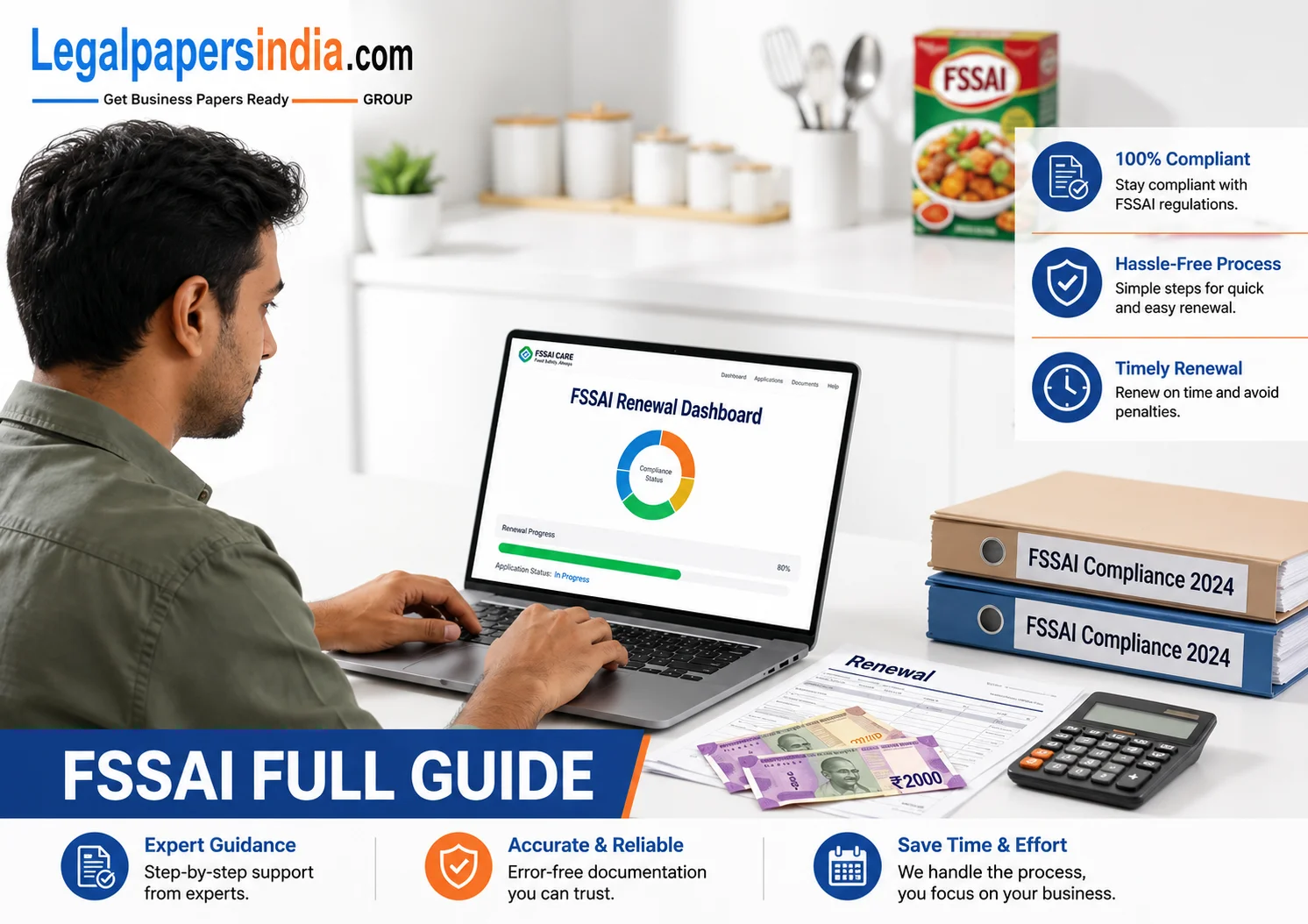
FSSAI Renewal Fees: What Businesses Should Evaluate Before Renewing
A lot of food business owners don’t start worrying about FSSAI renewal until the expiry date gets uncomfortably close. Then the questions begin.
“Is renewal mandatory if my business details haven’t changed?”
“Will late renewal affect operations?”
“Why do renewal fees vary so much between businesses?”
If you’re already running a food-related business, this usually isn’t a beginner-level confusion anymore. You’re trying to avoid disruption, unnecessary penalties, or compliance issues while figuring out whether your current license category still fits your operations.
And that’s where most businesses pause longer than they should.
FSSAI renewal fees are not fixed in a one-size-fits-all format. The amount depends on license type, business scale, validity period selected, and whether your business has evolved since the last registration cycle. At this stage, the smarter question is not just “how much is the fee?” but whether your renewal approach still aligns with your actual business activity.
Who Should Choose FSSAI Renewal Immediately
Renewal is usually the right step if your food business is active and your existing license is approaching expiry within the next few months.
This commonly applies to:
- Restaurants and cafes
- Home-based food sellers
- Food manufacturers
- Cloud kitchens
- Importers and exporters
- Grocery businesses
- Packaged food brands
- Food transporters and distributors
Many businesses delay renewal because operations are “small” or temporarily slow. In practice, FSSAI compliance is tied to business activity legitimacy, not just revenue momentum.
If your operations are continuing, renewal generally makes more sense than allowing the license to lapse and restarting the process later.
At this stage, businesses operating across multiple regions often review whether their current license structure still supports expansion. If your business presence is evolving geographically, reviewing your operational footprint through the service coverage locations can help clarify whether additional licensing adjustments may become necessary.
Who Should Reconsider Before Renewing
Not every business should blindly renew the same license category.
In many real cases, businesses outgrow their earlier registration type without realizing it.
You may need reassessment before renewal if:
- Your turnover has significantly increased
- You added manufacturing activities
- You now sell interstate
- Product categories have expanded
- Ownership structure changed
- The business address changed permanently
- Multiple units now operate under the same brand
One common mistake is renewing a Basic Registration when operationally the business already qualifies for a State License.
That creates future compliance exposure.
If you’re unsure whether this applies to you, you’re not alone. Many growing businesses continue renewing outdated categories simply because “that’s what was approved earlier.”
Key Decision Criteria Before Paying FSSAI Renewal Fees
Before proceeding, evaluate these factors carefully.
Renewal Readiness Checklist
- Is your current FSSAI license still active?
- Has your turnover crossed a new threshold?
- Have you changed premises or operational address?
- Are all food categories accurately listed?
- Has your ownership or partnership structure changed?
- Are inspection records or notices pending?
- Have you selected an appropriate renewal validity period?
- Are GST and business documents consistent with FSSAI details?
- Is your product labeling aligned with current requirements?
Businesses that review these points before filing usually avoid the most common rejection or clarification issues.
Cost & Compliance Considerations
This is where most decision-stage confusion happens.
People search for “FSSAI renewal fees” expecting a single number, but actual costs vary based on compliance category.
Typical Fee Factors Include:
- License type (Basic, State, Central)
- Number of years selected for renewal
- Nature of food activity
- Manufacturing capacity
- Import/export involvement
- Government fee structure
- Professional filing assistance, if used
At this stage, many businesses also start comparing whether self-filing is worth the risk versus taking guided assistance through a dedicated FSSAI renewal service.
The decision usually depends on complexity.
For example:
- A small home baker renewing a Basic Registration may comfortably manage independently.
- A packaged food manufacturer with multiple SKUs often benefits from structured compliance review before submission.
An Important Observation Most Businesses Miss
Longer renewal validity sometimes reduces recurring administrative effort.
But selecting a longer validity period without reviewing whether your business model may change soon can create complications later if modifications become necessary.
That balance matters.
Risk Factors to Evaluate Before Renewal
At this stage, most businesses are less worried about the fee itself and more concerned about operational risk.
That concern is valid.
Risks of Delayed or Incorrect Renewal
- Late penalties
- License expiry
- Business interruptions
- Marketplace compliance issues
- Distributor onboarding delays
- Problems during inspections
- Difficulty renewing linked registrations
Food aggregators and e-commerce platforms increasingly verify compliance validity automatically. An expired FSSAI license can create downstream operational issues faster than many businesses expect.
Another Common Risk
Businesses often assume renewal is only a payment process.
It isn’t always.
Authorities may review:
- Documentation consistency
- Food activity classification
- Address accuracy
- Operational changes
- Previous compliance history
If mismatches appear, clarification requests or delays can follow.
Step-by-Step Action Plan Before Renewal
Here’s a practical approach businesses usually benefit from following.
Step 1: Check Expiry Timeline
Ideally, renewal should begin well before expiration. Waiting until the final weeks increases the likelihood of rushed documentation and avoidable errors.
Step 2: Review Operational Changes
Ask yourself:
- Has turnover changed?
- Have products expanded?
- Has distribution widened?
- Is the current license category still accurate?
This step prevents category mismatch problems later.
Step 3: Validate Documentation
Ensure:
- Business name consistency
- Address accuracy
- Updated identity proofs
- Correct food activity descriptions
- Current contact details
Minor inconsistencies cause more delays than businesses expect.
Step 4: Evaluate Whether Professional Review Is Necessary
If your business has:
- Multiple units,
- Manufacturing activity,
- Interstate operations, or
- Import/export involvement,
a compliance review before filing is often worth considering.
Step 5: File Before Pressure Builds
Most filing mistakes happen when businesses rush renewal near the deadline.
A calmer review process generally leads to smoother approval outcomes.
Common Decision-Stage Mistakes
Assuming Renewal Means “No Review”
Renewal applications can still face scrutiny if operational details no longer match the existing license profile.
Selecting the Wrong License Category Again
This is surprisingly common among growing businesses.
Earlier approval does not guarantee ongoing category suitability.
Ignoring Address or Product Updates
Businesses sometimes renew without updating product categories or new operational addresses. That creates inconsistencies during inspections or future modifications.
Waiting Until Marketplace Compliance Fails
Some businesses only notice license expiry when onboarding, vendor verification, or food delivery platform approvals get blocked.
By then, urgency becomes unavoidable.
Practical Scenarios That Help Clarify the Decision
Scenario 1: Home-Based Food Seller Expanding Online
A small bakery initially registered under Basic FSSAI Registration starts selling across multiple cities through online platforms.
At this point, renewal alone may not be enough. Category reassessment becomes equally important.
Scenario 2: Restaurant With Stable Operations
A local restaurant with unchanged operations and stable turnover usually benefits from straightforward renewal with updated documentation verification.
Scenario 3: Packaged Food Brand Scaling Distribution
A food brand moving into interstate retail often discovers that its earlier license structure no longer supports expanded operations.
This is where many businesses accidentally remain under-classified.
Scenario 4: Business That Allowed License Expiry
Some businesses assume renewal can happen anytime after expiration.
In reality, prolonged delays may require a fresh application instead of standard renewal. That increases compliance effort significantly.
Final Decision Summary
If your food business is operational, compliant, and continuing under the same structure, FSSAI renewal is generally the practical next step.
But renewal should not be treated as a routine payment exercise.
The smarter approach is to evaluate:
- whether your business category still fits,
- whether compliance details remain accurate,
- and whether operational growth has changed your licensing requirements.
Most renewal complications happen not because businesses ignore compliance entirely, but because they assume nothing has changed when, operationally, quite a lot actually has.
Frequently Asked Questions
1. What are the typical FSSAI renewal fees for businesses?
FSSAI renewal fees vary based on license type, validity period, and business category. Basic registrations usually involve lower government fees, while State and Central Licenses carry higher charges due to broader compliance requirements and operational scale.
2. Can I renew my FSSAI license after expiry?
Yes, but delays can lead to penalties or even require a fresh application if the expiry period becomes too long. Businesses usually benefit from initiating renewal well before the license expiration date.
3. Does business growth affect FSSAI renewal requirements?
Absolutely. Increased turnover, interstate operations, manufacturing expansion, or additional product categories may require a different license category during renewal rather than simply extending the existing one.
4. Is professional assistance necessary for FSSAI renewal?
Not always. Small businesses with straightforward operations may handle renewal independently. However, businesses with manufacturing, imports, multiple branches, or evolving compliance structures often prefer guided review to reduce filing risks.
5. What documents are usually checked during renewal?
Authorities commonly review identity proofs, address documents, food activity details, existing license information, and operational consistency. Any mismatch between business activity and license classification can trigger clarification requests.
Conclusion
By the time businesses start searching for FSSAI renewal fees, the real concern is usually bigger than cost alone. It’s about maintaining continuity, avoiding compliance gaps, and making sure the business structure still aligns with current operations.
If you’re evaluating renewal and finding conflicting information online, that hesitation is understandable. A careful review before filing often prevents far larger issues later.
Businesses looking for clarity on documentation, category suitability, or renewal readiness can also learn more about Legal Papers India and its compliance support approach before deciding on the next step.
Get in touch with Legal Papers India for fast and hassle-free FSSAI Renewal services. Our team helps food businesses with timely renewal, documentation, and compliance support.
Social Share: