
Sep 04, 2026
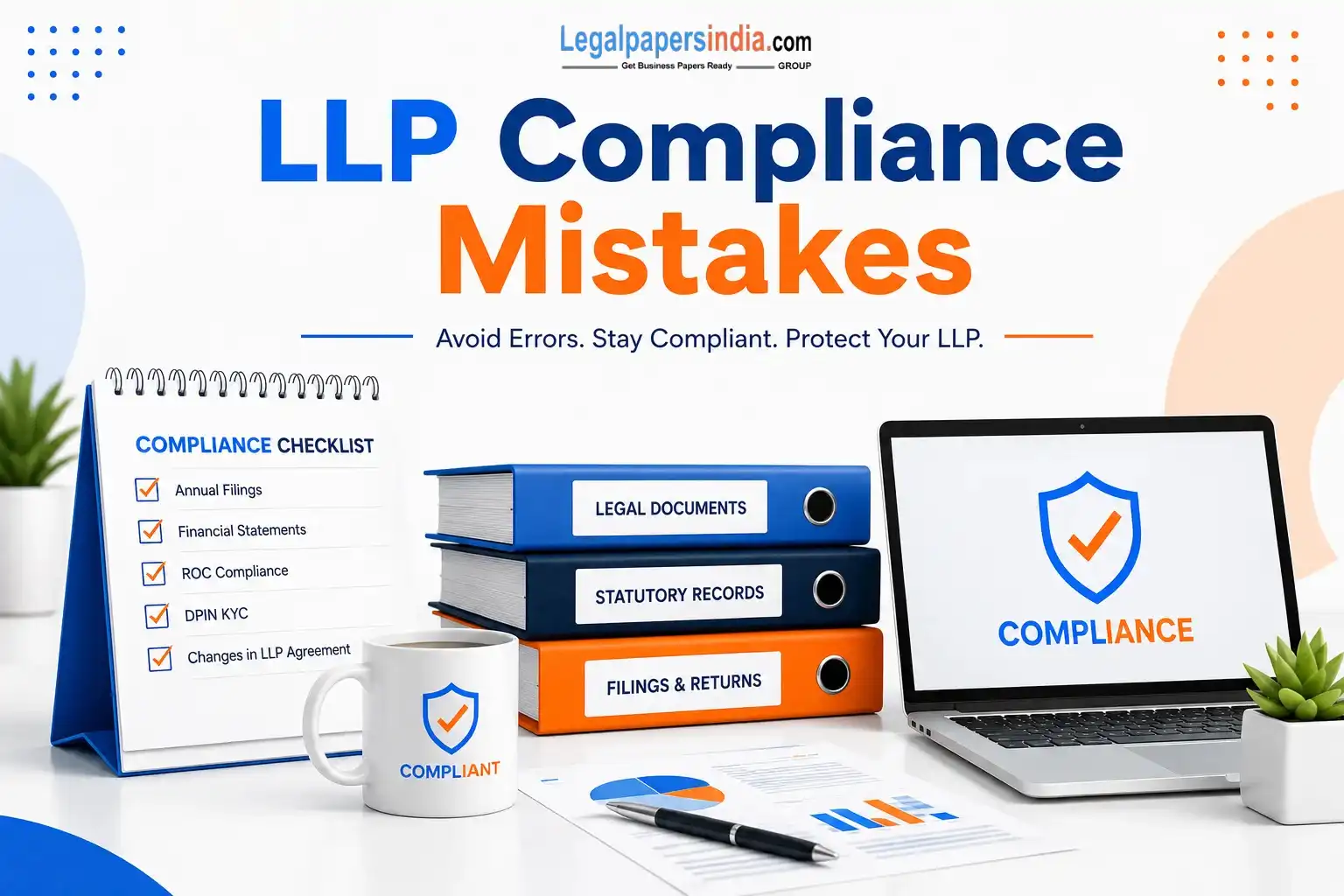
LLP Compliance Mistakes: What They Really Cost Businesses Over Time
Why do some LLPs end up paying far more than expected for compliance?
A lot of business owners assume LLP compliance is “mostly annual filing” and budget accordingly. Then the notices start coming — late filing penalties, missed ROC deadlines, unmaintained agreements, partner disputes, or tax mismatches.
What surprises many LLP owners is that the actual financial damage rarely comes from the original compliance fee itself. It usually comes from delays, corrections, penalties, and preventable mistakes that quietly compound over time.
That’s where confusion begins. One provider quotes a very low package, another gives a higher estimate, and most businesses struggle to understand what they’re actually paying for — and what’s excluded.
What do LLP compliance mistakes usually cost?
LLP compliance costs vary depending on filing status, turnover, number of partners, missed deadlines, accounting complexity, and whether penalties or corrections are involved. Businesses with timely filings and proper documentation usually spend far less than LLPs dealing with delayed ROC filings, tax mismatches, or agreement-related corrections. The biggest cost increases often come from avoidable non-compliance penalties rather than standard annual filing fees.
Who Usually Faces Higher LLP Compliance Costs — And Who May Not
Not every LLP faces the same compliance burden.
Businesses more likely to incur higher compliance costs include:
- LLPs with multiple designated partners
- Firms operating in multiple states
- Businesses with delayed bookkeeping
- LLPs that missed earlier ROC filings
- Startups that changed business activities frequently
- LLPs with partner restructuring or ownership changes
- Businesses combining GST, TDS, and LLP compliance under different consultants
On the other hand, relatively lower compliance complexity is common for:
- Small service-based LLPs
- LLPs with limited annual transactions
- Businesses maintaining monthly accounting discipline
- Newly formed LLPs with clean records
- Firms that complete filings before due dates
One important point many business owners overlook: compliance cost is often linked more to operational discipline than company size alone.
What Actually Determines the Cost of LLP Compliance?
People often assume the fee is based only on “filing forms.” In reality, compliance pricing is usually influenced by the amount of correction, reconciliation, review, and risk involved.
Here are the biggest cost drivers.
1. Timeliness of Filing
Late filing dramatically changes cost structure.
Even a small missed filing can trigger additional government penalties and professional correction work. In some cases, penalties continue accumulating daily until compliance is completed.
This is where many LLPs unintentionally overspend.
2. Accounting Readiness
If bookkeeping is incomplete, professionals often spend extra time:
- Reconciling bank statements
- Correcting ledger mismatches
- Organizing invoices
- Identifying missing GST entries
- Revising financial statements
Clean accounting records usually reduce overall compliance effort significantly.
3. Number of Compliance Requirements
An LLP may require:
- ROC annual filings
- Income tax filings
- GST compliance
- TDS filings
- Audit support
- Partner agreement updates
The more interconnected filings involved, the higher the coordination effort.
4. Business Activity Complexity
An LLP handling exports, interstate operations, multiple service categories, or vendor-heavy transactions generally requires more detailed review than a small consulting LLP.
5. Past Non-Compliance Issues
Old unresolved notices or missed filings can substantially increase professional fees because corrective filing work is more time-intensive than standard annual compliance.
Understanding the Cost Breakdown of LLP Compliance
Instead of looking at compliance as one single fee, it helps to understand where the money typically goes.
Government Filing Fees
These may include:
- ROC filing charges
- Form submission fees
- Additional late filing penalties where applicable
These are generally standardized but can increase sharply after missed deadlines.
Professional Charges
This portion varies widely because it depends on:
- Filing complexity
- Review requirements
- Financial preparation work
- Documentation quality
- Advisory support needed
Extremely low-cost packages often exclude correction work, notice handling, or accounting adjustments.
Accounting and Reconciliation
Some LLPs underestimate this entirely.
If records are incomplete, bookkeeping correction can become one of the most time-consuming parts of compliance preparation.
Audit-Related Costs
Certain LLPs may cross thresholds requiring additional compliance review or audit-related support, which affects total expenditure.
Typical LLP Compliance Cost Range
There is no single “standard” LLP compliance cost that fits every business.
However, in practical terms:
- Small LLPs with organized records and timely filings usually face moderate annual compliance expenses.
- Mid-sized LLPs with GST, TDS, and recurring transactions often see higher professional coordination costs.
- LLPs correcting previous-year non-compliance may spend significantly more due to penalty accumulation and corrective work.
Businesses often make the mistake of comparing only the headline package price instead of comparing:
- What is included
- Whether accounting support is covered
- Notice handling availability
- Late fee exposure
- Response timelines
- Experience with LLP-specific filings
This is why two providers can quote very different numbers for what appears to be the same service.
For businesses trying to understand broader LLP filing requirements and procedural obligations, the LLP Registration and compliance guidance section explains the overall framework in more detail.
Cost Differences Based on Business Scenarios
Scenario 1: Freelance or Consulting LLP
Usually lower complexity.
Common compliance needs:
- Annual ROC filing
- Income tax filing
- Basic bookkeeping
Costs remain manageable when filings are completed on time.
Scenario 2: Growing Startup LLP
Typically involves:
- GST filings
- Investor documentation
- Expense categorization
- Vendor reconciliation
Compliance effort increases because transaction volume rises quickly.
Scenario 3: LLP With Missed Compliance for 1–2 Years
This is where costs can escalate unexpectedly.
Additional expenses may include:
- Late filing penalties
- Backdated accounting
- Rectification filings
- Professional representation
Many businesses discover here that delaying compliance rarely saves money long term.
Scenario 4: Multi-Partner Operational LLP
Partnership changes, revised agreements, and profit-sharing updates often require additional documentation and filing effort.
Hidden or Additional LLP Compliance Costs Businesses Often Miss
Some expenses are rarely discussed upfront.
Late Filing Penalties
This is one of the biggest hidden cost areas.
Even businesses with low turnover can face heavy cumulative penalties if filings remain pending.
Agreement Modification Costs
Changes in:
- Partners
- Capital contribution
- Business activity
- Registered office
may require document updates and filings.
Notice Response Costs
If government notices are issued, professional assistance may involve separate charges depending on complexity.
Reconciliation Work
Businesses that delay bookkeeping throughout the year often end up paying much more during annual compliance season.
Ironically, trying to “save accounting costs” earlier frequently increases total year-end expenses.
How Businesses Can Reduce LLP Compliance Costs
Reducing cost does not always mean choosing the cheapest provider.
In practice, businesses usually save more by reducing correction work.
Maintain Monthly Bookkeeping
This prevents year-end backlog and reduces reconciliation effort.
Avoid Last-Minute Filing
Urgent filing often increases professional coordination costs and risk of mistakes.
Keep Partner Documents Updated
Outdated partner records create unnecessary compliance complications later.
Use Consolidated Compliance Support
Handling GST, accounting, tax, and LLP filings through disconnected vendors sometimes creates duplication errors.
Review Scope Before Accepting Low Quotes
Many businesses later realize the “low-cost package” excluded:
- Notice handling
- Accounting support
- Corrections
- Revised filings
- Advisory assistance
Common LLP Compliance Mistakes That Increase Cost
Ignoring Annual ROC Deadlines
This remains one of the most expensive avoidable mistakes.
Assuming Nil Transactions Mean No Compliance
Even inactive LLPs may still have mandatory filing obligations.
Using Incomplete LLP Agreements
Poorly drafted agreements can create legal and operational disputes later.
Delaying Tax Reconciliation
Small mismatches become bigger correction exercises when ignored for months.
Treating Compliance as a One-Time Task
LLP compliance works best as a continuous process, not a year-end emergency.
Practical Real-World Cost Situations Businesses Commonly Face
Example 1: The “Cheap Package” Problem
A startup chooses the lowest annual filing quote.
Later they discover:
- GST reconciliation excluded
- Accounting cleanup extra
- Penalty response separate
- Revised filings billed additionally
Final cost becomes much higher than expected.
Example 2: Delayed Filing Spiral
A small LLP postpones annual filing for two years believing penalties will remain minor.
Instead, cumulative late fees and correction work become larger than their original yearly compliance budget.
Example 3: Multiple Consultants, Multiple Errors
One consultant handles GST, another handles ROC filing, and bookkeeping is done internally.
Data inconsistencies lead to repeated revisions and additional professional review costs.
A Small but Important Decision-Clarity Check
If you are comparing LLP compliance providers, the smartest approach is not asking “Who is cheapest?”
A better question is:
- What exactly is included?
- What happens if corrections are needed?
- Will someone handle notices?
- Are penalties explained transparently?
- Is accounting review part of the scope?
That clarity usually prevents more financial stress than negotiating a slightly lower fee.
Frequently Asked Questions
1. How much does LLP compliance usually cost annually?
Annual LLP compliance cost depends on filings required, bookkeeping condition, GST applicability, transaction volume, and whether any delays or penalties exist. Small LLPs with organized records generally spend less than businesses requiring correction filings or complex reconciliation work.
2. Why do LLP compliance costs vary between providers?
Pricing differs because service scope differs. Some providers only file forms, while others include accounting review, reconciliation, advisory support, notice handling, and compliance monitoring. Lower pricing sometimes excludes important corrective or support work.
3. Can late LLP filing increase costs significantly?
Yes. Delayed ROC filings can lead to accumulating penalties and additional professional work. In many cases, the penalty and correction expenses become larger than the original compliance fee itself.
4. Do inactive LLPs still need compliance filing?
In many situations, yes. Even LLPs with limited or nil business activity may still have mandatory filing obligations under applicable regulations. Ignoring these filings can still trigger penalties.
5. Is it cheaper to manage LLP compliance internally?
It depends on the business structure and internal expertise. Very small LLPs with simple operations may manage some compliance internally, but growing businesses often reduce long-term risk by using professional review and structured filing support.
When Professional Help Actually Makes Sense
Not every LLP needs extensive advisory support.
But professional assistance becomes more valuable when:
- Compliance deadlines were missed previously
- Multiple filings overlap
- Accounting records need cleanup
- Partners are changing
- Notices have been received
- Business operations are scaling quickly
The goal is not simply “filing forms.” It is reducing future correction cost, legal exposure, and operational disruption.
Businesses exploring operational jurisdictions or compliance support availability across regions can also review the service presence information where relevant.
Conclusion
LLP compliance costs are rarely just about government filing fees. The real financial impact usually comes from delays, incomplete records, avoidable penalties, and misunderstanding what services are actually included.
A transparent compliance process often costs less over time than repeatedly fixing missed obligations.
If you're evaluating LLP compliance support, focus on clarity, scope, responsiveness, and long-term reliability rather than headline pricing alone. You can also learn more about the experience and approach of Legal Papers India before making a decision that fits your business structure and compliance comfort level.
Legal Papers India offers reliable LLP Registration services for startups, professionals, and growing businesses in India. We help clients complete the registration process smoothly with expert guidance and documentation support.
Reach out to Legal Papers India for quick and hassle-free LLP Registration assistance. Our team provides professional support for online filing and legal documentation services.
Social Share: