
Sep 04, 2026
IEC Process: How Import Export Code Registration Actually Works for Businesses
When a Shipment Is Ready but Customs Says “IEC Required”
It usually starts with a small milestone. A business owner receives their first overseas inquiry, a manufacturer finalizes a supplier order from another country, or an Amazon seller decides to ship products internationally. Everything looks ready — until the freight forwarder or customs broker asks for an IEC.
That is often the moment people search for the “IEC process.”
Many assume Import Export Code registration is a lengthy approval system similar to licensing. In reality, the process is comparatively straightforward, but confusion happens because businesses are unsure about eligibility, documentation, timelines, and whether IEC is even mandatory in their situation.
Understanding how the IEC process works before applying can prevent delays, document mismatches, and unnecessary compliance issues later.
What Is the IEC Process?
The IEC process refers to the procedure for obtaining an Import Export Code (IEC) from the Directorate General of Foreign Trade (DGFT). It involves submitting business and identity details, verifying bank and address documents, completing online authentication, and receiving a unique 10-digit code required for import or export activities in India.
IEC Process Explained in Simple Terms
An IEC registration process is essentially the government verification procedure that allows a business or individual to legally participate in international trade. Once approved by DGFT, the IEC acts as a permanent business identification number for customs clearance, export transactions, and overseas trade operations.
Why Businesses Suddenly Need an IEC
A surprising number of businesses discover the IEC requirement only after expanding operations.
For example:
- A small manufacturer receives a bulk inquiry from Dubai
- A startup imports machinery components from China
- A seller starts exporting through online marketplaces
- A freelancer receives foreign payments linked to physical goods exports
- A food processing business plans overseas distribution
In each of these situations, customs and banking systems usually require an Import Export Code.
Without it, shipments may not clear, export incentives may become inaccessible, and international trade transactions can face operational interruptions.
The IEC is regulated by the Directorate General of Foreign Trade under the Ministry of Commerce and Industry.
Who Should Consider IEC Registration — and Who May Not Need It
Businesses That Typically Need IEC
IEC registration is generally relevant for:
- Importers bringing goods into India
- Exporters shipping products overseas
- E-commerce exporters
- Manufacturers sourcing from foreign suppliers
- Traders involved in international commerce
- Service providers receiving foreign currency for certain cross-border activities
- Businesses applying for export benefits or incentives
Even small businesses and proprietorships may require IEC if international trade activities are involved.
In many cases, businesses operating from multiple regions later expand geographically. Companies exploring operational presence across different states sometimes review regional business accessibility through pages like the business presence locations section for service coordination and compliance support.
Situations Where IEC May Not Be Required
Certain transactions or entities may not require IEC, including:
- Goods imported or exported for personal use and not connected to trade
- Some government departments and ministries
- Specific exempted categories notified by DGFT
- Certain service exports where no customs clearance is involved
However, exemptions depend on transaction type and applicable regulations. Businesses often misunderstand this part and assume all foreign transactions are exempt from IEC requirements.
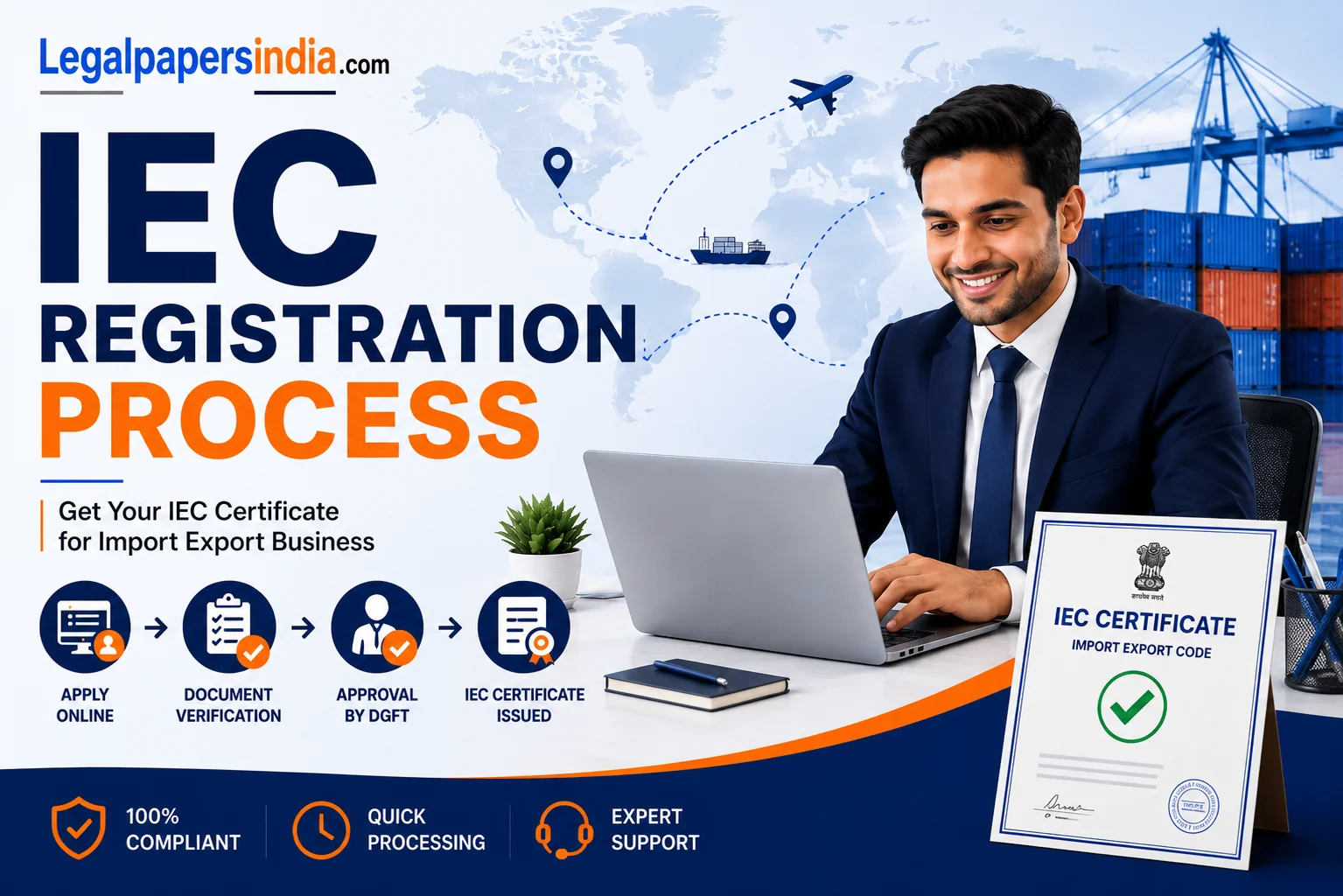
How the IEC Process Works Step by Step
Although the process is online, practical delays usually happen because of mismatched documents or incorrect business details rather than technical filing itself.
Step 1: Business Structure Identification
The applicant first determines the business category:
- Sole Proprietorship
- Partnership
- LLP (Limited Liability Partnership)
- Private Limited Company
- One Person Company (OPC)
The registration details must align with PAN records and business documentation.
Step 2: PAN Verification
The IEC is linked directly with the PAN of the business or proprietor.
For proprietorships, the owner’s PAN is typically used.
For companies and LLPs, organizational PAN details become mandatory.
Step 3: Document Preparation
Applicants generally need:
- PAN card
- Address proof
- Business incorporation documents (where applicable)
- Bank account proof or cancelled cheque
- Mobile number and email verification
This stage seems simple, but businesses often face rejection because bank names, addresses, or legal entity names do not exactly match official records.
Step 4: Online DGFT Application Submission
The IEC application is submitted through the DGFT portal with digital verification and authentication.
The application includes:
- Business details
- Director or proprietor information
- Bank information
- Nature of import-export activity
Step 5: OTP and Verification Checks
The system verifies:
- Mobile number
- Email ID
- PAN linkage
- Aadhaar or DSC authentication in applicable cases
Step 6: IEC Generation
Once approved, the IEC number is generated electronically.
Unlike many registrations, the IEC itself generally does not expire, although annual updates and compliance confirmations may still apply under DGFT norms.
Step 7: Post-Registration Usage
After receiving IEC, businesses may use it for:
- Customs clearance
- International shipments
- Foreign trade documentation
- Export incentive applications
- Bank remittance processing
Businesses looking for deeper procedural clarity often review detailed guidance around IEC registration services and documentation workflows before filing.
Documents Commonly Required During the IEC Process
The required documents may vary slightly based on business structure.
For Sole Proprietorships
Typically required:
- PAN card of proprietor
- Aadhaar or identity proof
- Bank certificate or cancelled cheque
- Address proof
For Companies or LLPs
Additional documents may include:
- Certificate of Incorporation
- Partnership deed or LLP agreement
- Board resolution or authorization
- Director identification details
Why Document Accuracy Matters
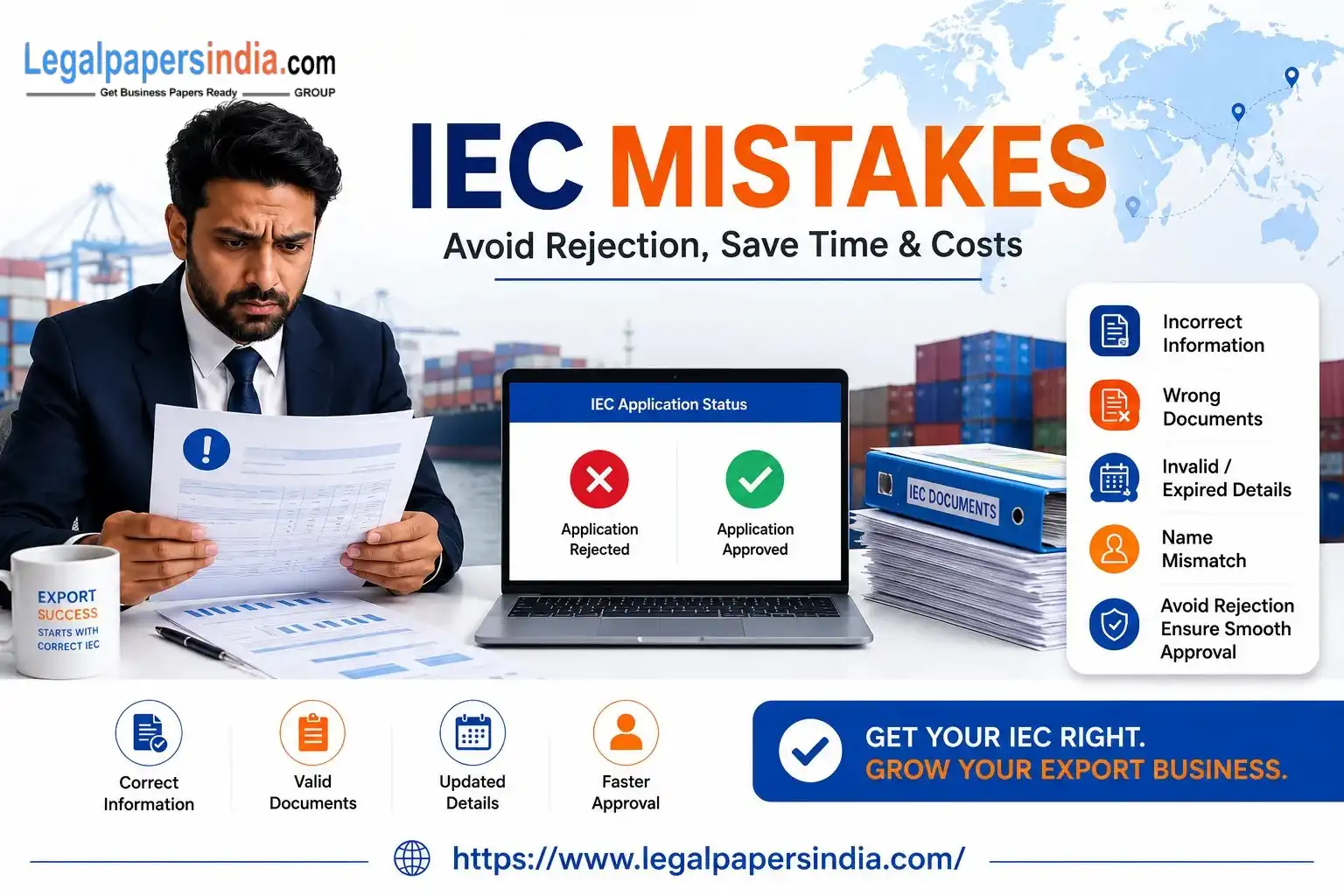
One practical issue businesses face is inconsistency across records.
For example:
- Bank account name differs from PAN name
- Address mismatch between GST and bank records
- Abbreviated company names used inconsistently
Even minor inconsistencies can trigger clarification requests or delays.
Common Challenges Businesses Face During IEC Registration
Incorrect Business Classification
Some applicants select the wrong constitution type during filing, especially when transitioning from proprietorship to company structure.
PAN and Bank Mismatch
This remains one of the most frequent practical problems.
Assuming GST Automatically Covers IEC
GST registration and IEC are separate compliances. Having GST does not automatically authorize import-export activities.
Delayed Post-Approval Compliance Awareness
Businesses sometimes assume the process ends after approval. However, DGFT compliance updates and record maintenance still matter.
Using Temporary or Inactive Contact Details
Since verification is digital, inactive email IDs or inaccessible phone numbers often create unnecessary filing delays.
Key Things to Consider Before Starting the IEC Process
Understand Your Trade Model
A manufacturer exporting finished goods may have different documentation considerations compared to an online reseller importing inventory.
Check Whether Additional Licenses Apply
IEC itself is not a universal permission for all products.
Certain industries may still require:
- FSSAI approvals
- APEDA registration
- BIS compliance
- Customs-specific permissions
- Sectoral clearances
Plan Banking and Logistics Early
In practice, businesses that coordinate with banks, customs agents, and logistics providers early usually experience smoother onboarding into international trade.
Think Beyond the First Shipment
Many businesses apply for IEC reactively. But businesses planning long-term exports often structure compliance, invoicing, and documentation systems properly from the beginning.
IEC vs GST: Are They the Same Thing?
This confusion appears frequently in search behavior.
| Aspect |
IEC |
GST |
|
Purpose |
International trade identification |
Taxation compliance |
|
Issuing Authority |
DGFT |
GST Department |
|
Required For |
Import/export activities |
Taxable supply of goods/services |
|
Customs Relevance |
Yes |
Limited |
|
Foreign Trade Use |
Essential |
Supporting role |
A business engaged in exports may require both, depending on operational structure.
How Long Does the IEC Process Usually Take?
Typical Timeline
In many straightforward cases, IEC approval may happen within a few working days after successful submission and verification.
However, timelines can vary because of:
- Document discrepancies
- PAN verification issues
- Portal-related delays
- Authentication mismatches
- Clarification requests
Real-World Observation
Businesses that prepare documents carefully beforehand often complete the process much faster than those correcting records midway.
What Happens If a Business Operates Without IEC?
The consequences are usually operational rather than punitive in the beginning.
Possible issues include:
- Customs clearance delays
- Inability to process imports or exports legally
- Banking transaction complications
- Export incentive limitations
- Shipment holding at ports
In some cases, businesses discover the requirement only when goods are already in transit, which creates avoidable logistical stress.
Frequently Asked Questions About the IEC Process
1. Is IEC mandatory for every exporter in India?
IEC is generally required for businesses involved in importing or exporting goods. Certain exemptions may apply for government departments or specified categories, but most commercial international trade activities require an IEC issued by DGFT.
2. Can an individual apply for IEC without a company?
Yes. Sole proprietors and individuals engaged in eligible import-export activities can apply for IEC using their PAN and supporting documents. A private limited company is not mandatory for obtaining IEC registration.
3. Does IEC registration need renewal every year?
Traditionally, IEC did not require periodic renewal. However, DGFT has introduced compliance-related update requirements, and businesses should keep registration details updated to avoid deactivation or operational issues.
4. What is the biggest reason IEC applications get delayed?
Document inconsistency is one of the most common reasons. Differences in business name spelling, address records, bank details, or PAN-linked information frequently create verification complications during the process.
5. Can a business have multiple IEC numbers?
Generally, one business entity is permitted one IEC linked to its PAN. Multiple IECs for the same entity are usually not allowed under standard DGFT regulations.
When Professional Assistance Becomes Useful
Some IEC applications are straightforward. Others become complicated because of:
- Multiple business partners
- Entity restructuring
- Export incentive planning
- Industry-specific compliance overlap
- Incorrect prior filings
- International trade documentation confusion
In such cases, professional guidance can help businesses avoid repeated corrections or compliance misunderstandings.
Businesses unfamiliar with import-export regulations sometimes prefer reviewing the background and operational approach of firms through pages like the About Us section of Legal Papers India before seeking procedural assistance.
Contact Legal Papers India for quick IEC Registration assistance. Our team provides professional support for online filing and documentation for import-export businesses.
Social Share: