
Sep 04, 2026
Applying for GST? Understanding the Real Costs Before You Register
You finally decide to apply for GST registration, and the first thing you see is a surprisingly low “starting price.”
Then the questions begin.
Is DSC extra?
Why is professional support charged separately?
Will there be filing costs immediately after registration?
And perhaps the biggest hesitation: “Am I looking at the actual GST registration cost, or just the entry-level fee?”
If you’re evaluating GST registration right now, this confusion is extremely common. Most businesses are not worried about the registration itself — they’re worried about unexpected compliance expenses that appear after the process starts.
That’s why understanding GST total cost hidden charges matters before you proceed. Not because GST registration is inherently expensive, but because incomplete pricing often leads to poor decisions, rushed filings, or avoidable compliance issues later.
At this stage, you’re likely not looking for theory. You want practical clarity: what costs are normal, what charges are optional, and what should genuinely influence your decision before applying.
Professional Fees for GST Registration
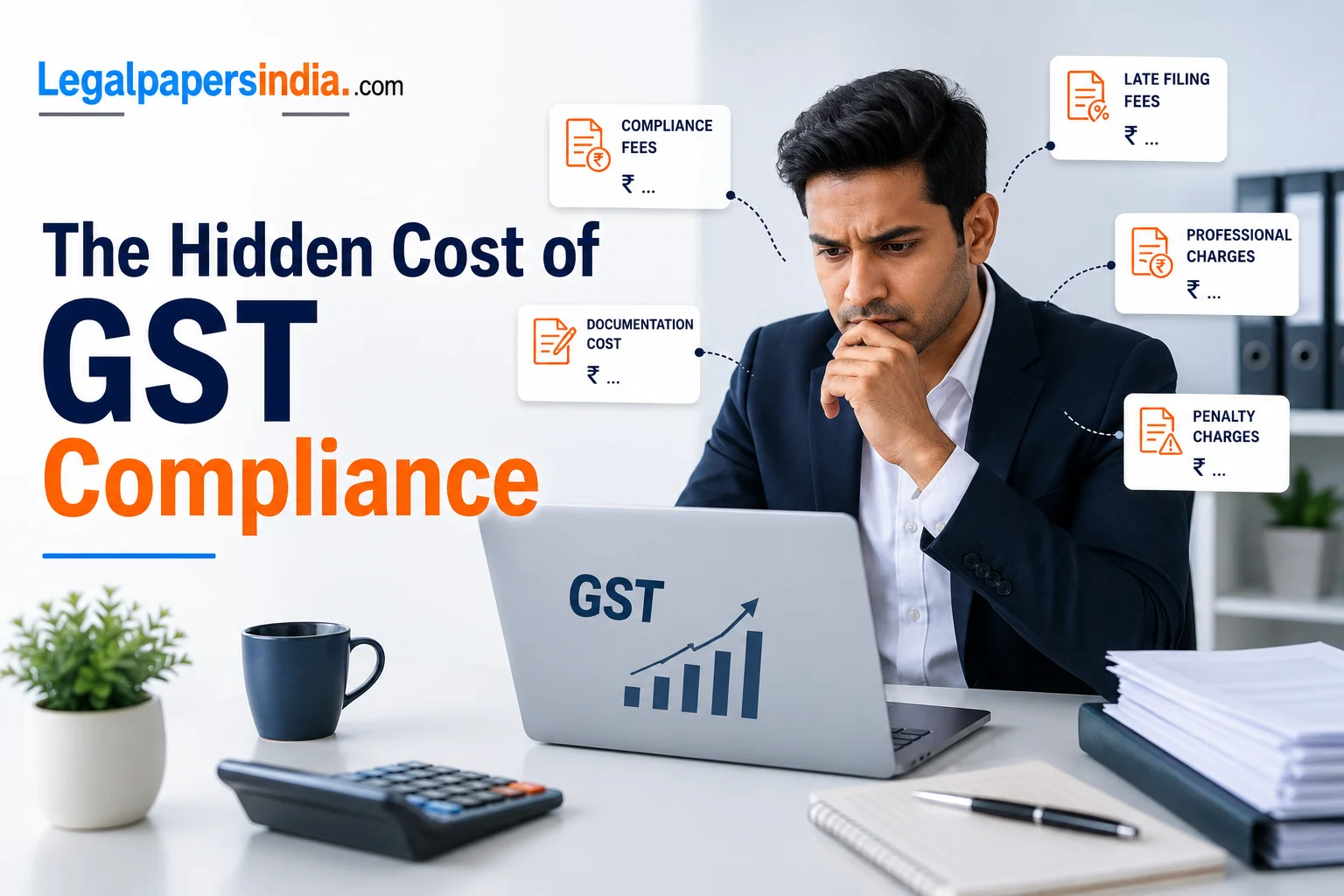
GST registration itself may be free on the government portal, but businesses often incur professional fees, DSC costs, document correction charges, post-registration filing expenses, and compliance-related support costs. The total expense depends less on registration alone and more on business structure, preparedness, and ongoing GST responsibilities.
Why People Feel Misled About GST Registration Costs
One pattern appears repeatedly in real client situations: people compare only the advertised registration fee.
But GST compliance is not a one-step process.
For example:
- A freelancer may only need basic registration support.
- A private limited company may require DSC setup, authorized signatory verification, and ongoing return filing assistance.
- An e-commerce seller may discover additional compliance obligations after registration.
- A business with incorrect documents may face revision costs and delays.
The issue usually isn’t “hidden charges” in the unethical sense.
The real problem is incomplete decision-stage clarity.
Many applicants don’t yet know which parts are:
- Mandatory,
- Optional,
- Situational,
- Or Recurring.
That’s where confusion begins.
Who Should Choose GST Registration Despite Additional Costs
GST registration still makes sense for many businesses, even when associated compliance expenses are considered.
You should seriously consider proceeding if:
You sell through marketplaces
Platforms like Amazon or Flipkart generally require GST registration for most sellers.
Your turnover is approaching threshold limits
Waiting too long can create compliance complications later.
You want input tax credit benefits
Businesses purchasing inventory, raw materials, or services often recover value through GST credits.
You work with larger clients
Many companies prefer or require GST-compliant vendors.
You plan to scale beyond local operations
Expansion typically becomes easier once GST infrastructure is already in place.
If you're already evaluating formal registration support, reviewing a detailed GST registration service process can help clarify what is usually included versus separately chargeable.
Who Should Reconsider or Delay GST Registration
Not every business needs immediate GST registration.
You may want to pause and evaluate further if:
- Your business is extremely early-stage with inconsistent revenue
- You operate entirely below exemption thresholds
- Your compliance readiness is weak
- You are uncomfortable with recurring filing obligations
- You expect long periods of inactive business activity
One practical reality many first-time applicants overlook: GST registration creates ongoing responsibilities even when revenue fluctuates.
At this stage, most people start wondering whether registration itself is the challenge — or whether maintaining compliance afterward becomes the real burden.
Often, it’s the second one.
Key Decision Criteria Before Comparing GST Costs
Before focusing purely on pricing, evaluate these factors first.
Decision Checklist
|
Evaluation Area |
What You Should Check |
|
Business Type |
Proprietorship, LLP, partnership, or company |
|
Expected Revenue |
Near threshold or voluntary registration |
|
Marketplace Selling |
GST usually required |
|
Interstate Supply |
Compliance obligations may increase |
|
Document Readiness |
PAN, Aadhaar, address proof, authorization |
|
Digital Signature Requirement |
Common for companies and LLPs |
|
Return Filing Capability |
Self-managed or professional support |
|
Long-Term Scalability |
Future expansion plans |
|
Accounting Setup |
Ability to maintain GST records |
|
Compliance Comfort Level |
Monthly and annual obligations |
A lower upfront fee rarely matters if your operational setup is not prepared for compliance afterward.
Understanding GST Total Cost Hidden Charges
Here’s where most decision-stage confusion actually happens.
1. DSC (Digital Signature Certificate) Costs
For companies and LLPs, DSC usage is commonly required.
This may involve:
- DSC purchase
- Token setup
- Renewal costs
Many low-cost service advertisements exclude this completely.
2. Professional Filing or Consultation Fees
Some providers only handle application submission.
Additional support may be charged for:
- Document Review,
- Arn Tracking,
- Notice Response,
- Clarification Handling,
- Or Registration Amendments.
3. Post-Registration Compliance Costs
This is the biggest overlooked area.
After registration, businesses may need:
- Monthly Return Filing,
- Nil Returns,
- Reconciliation Support,
- Invoice Structuring Guidance,
- Bookkeeping Alignment.
A business that ignores this often struggles within the first few filing cycles.
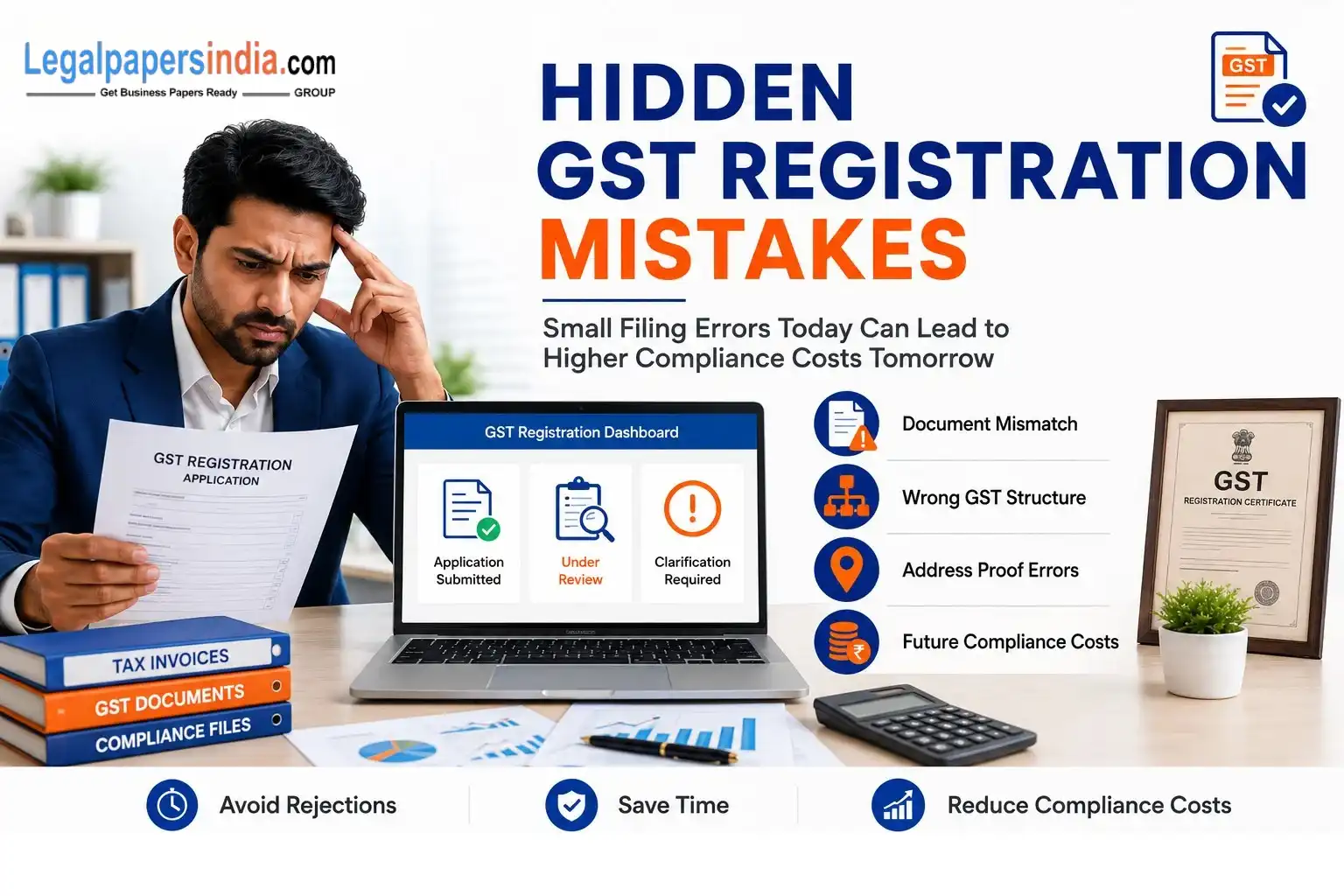
4. Document Correction or Resubmission Costs
Incorrect business details can trigger:
- Application Rejection,
- Clarification Notices,
- Or Rework Fees.
This is particularly common when address proofs or business activity details are inconsistent.
5. State-Specific or Operational Complexity
Businesses operating in multiple states or through warehouses sometimes face additional registration and compliance layers.
The registration fee itself may not rise dramatically, but compliance management complexity often does.
Risk Factors to Evaluate Before Proceeding
The biggest risk is not “paying extra.”
The bigger risk is proceeding without understanding recurring compliance obligations.
Common Risk Areas
- Applying without proper accounting support
- Using inaccurate business activity classification
- Registering too early without operational need
- Ignoring future filing timelines
- Choosing ultra-low-cost providers without clarity on scope
- Assuming GST registration is a one-time process
If you're unsure whether this applies to you, you're not alone. Many businesses only realize the operational side of GST after receiving filing reminders or notices.
A Practical Step-by-Step Action Plan
Instead of comparing only pricing, use this approach.
Step 1 — Identify Whether GST Registration Is Actually Necessary
Check:
- Turnover,
- Interstate Supply,
- E-Commerce Activity,
- Client Expectations.
Avoid registering purely because “everyone else is doing it.”
Step 2 — Clarify Total Cost Scope
Ask directly:
- Is DSC included?
- Are notice responses included?
- Is post-registration support included?
- Are return filing costs separate?
Transparent scope matters more than the cheapest fee.
Step 3 — Prepare Documents Properly
Ensure:
- PAN details match,
- Address proof is current,
- Authorization documents are valid,
- Business activity description is accurate.
Step 4 — Plan for Ongoing Compliance
This is where long-term costs emerge.
Decide whether:
- You Will Self-Manage Filings,
- Hire An Accountant,
- Or Use Professional Compliance Support.
Step 5 — Choose Support Based on Business Complexity
A freelancer and a growing private limited company do not need the same compliance setup.
That distinction matters more than most pricing comparisons online.
Common Decision-Stage Mistakes
Focusing only on “lowest registration fee”
This often ignores future compliance costs completely.
Registering before operational readiness
Businesses sometimes register before invoicing systems or accounting processes are ready.
Ignoring recurring filings
Even NIL returns may still require timely submission.
Choosing providers without scope clarity
Many disputes happen simply because users assumed services were included.
Delaying clarification notices
GST notices are manageable when addressed early. Delays usually increase complications.
Practical Scenarios That Help Clarify the Decision
Scenario 1 — Freelance Designer
A freelancer working with domestic clients below threshold limits may not need immediate registration.
But if clients begin requesting GST invoices, voluntary registration could become strategically useful.
Scenario 2 — Amazon Seller
An online seller often requires GST registration early due to marketplace requirements.
In this case, ongoing filing readiness matters more than initial registration cost.
Scenario 3 — Growing Private Limited Company
A company planning expansion usually benefits from structured GST compliance from the beginning.
Here, choosing reliable support often matters more than minimizing upfront expense.
Scenario 4 — Small Local Shop
A purely local business operating below thresholds with no interstate sales may reasonably delay registration until growth justifies compliance obligations.
Final Decision Summary
If you’re evaluating GST total cost hidden charges, the most important insight is this:
The registration fee itself is rarely the complete financial picture.
The real decision should include:
- Compliance Readiness,
- Filing Responsibilities,
- Business Scalability,
- Operational Complexity,
- And Support Requirements.
For some businesses, GST registration creates clear operational advantages.
For others, registering too early creates unnecessary compliance pressure.
The right choice usually becomes clearer once you stop asking, “What is the cheapest GST registration option?” and start asking, “What will this realistically require over the next 12 months?”
Frequently Asked Questions
1. Is GST registration free from the government side?
Yes, GST registration on the official portal itself does not usually carry a government registration fee. However, businesses may still incur professional assistance, DSC, or compliance-related costs.
2. Why do GST registration charges vary so much?
The variation usually depends on business structure, document complexity, professional support scope, DSC requirements, and whether post-registration services are included.
3. Are GST return filing charges separate from registration?
In many cases, yes. Registration and ongoing return filing are often billed separately because return compliance continues monthly or quarterly after approval.
4. Is a Digital Signature Certificate mandatory for GST registration?
For companies and LLPs, DSC usage is commonly required during the GST registration process. Proprietorships may not always require it.
5. What is the biggest hidden cost after GST registration?
The most overlooked cost is ongoing compliance management — including return filing, reconciliation, accounting coordination, and notice handling if issues arise.
Conclusion
Choosing GST registration is less about the application itself and more about understanding the long-term compliance responsibility attached to it.
A well-informed decision usually comes from clarity, not urgency.
If you want to evaluate your situation more carefully, review how Legal Papers India approaches compliance guidance and documentation support before moving ahead. Businesses operating across different regions can also review their service presence locations if local coordination matters to their setup.
Need help with GST registration or compliance? Our team is here to assist you with complete support and professional guidance. Contact us .
Legal Papers Indiaprovides quick and affordable GST Registration services across India with expert support, easy documentation, and hassle-free processing.
Social Share: