
Sep 04, 2026
IEC Mistakes That Can Disrupt Your Import-Export Plans
What Are IEC Mistakes?
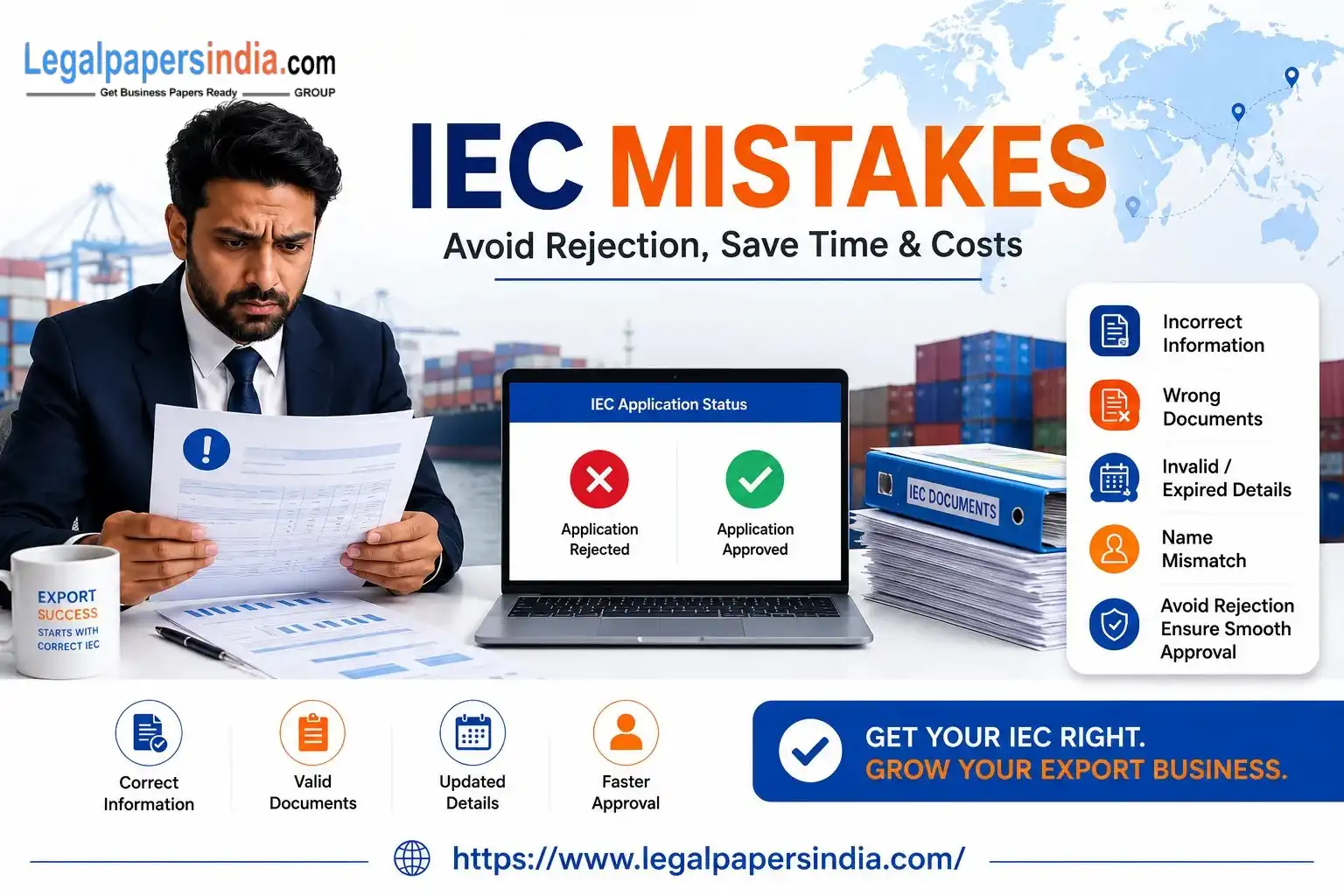
IEC mistakes refer to errors made while applying for or managing an Import Export Code issued by the Directorate General of Foreign Trade. These include incorrect documentation, mismatched business details, or misunderstanding compliance rules—often leading to delays, rejection, or operational disruptions in international trade activities.
Where Most People Get Stuck Before They Even Realize It
It usually starts with a simple assumption:
“IEC registration is just a formality.”
That’s where things quietly go wrong.
Many applicants approach IEC casually because the process appears straightforward online. But in reality, the smallest mismatch—whether in a bank detail or business classification—can create complications later, especially when actual import-export transactions begin.
This isn’t about complexity. It’s about precision.
Why These Mistakes Happen More Often Than Expected
There’s a pattern behind most IEC-related errors:
- Over-reliance on incomplete online guidance
- Confusion between business and personal documentation
- Lack of clarity about regulatory expectations
- Treating IEC as a one-time task instead of an ongoing compliance element
And sometimes, it’s simply rushing through the application.
The system itself doesn’t always warn you immediately. The consequences often appear later—during customs clearance, payment processing, or regulatory checks.
Most Common IEC Mistakes to Avoid
1. Using Inconsistent Business Information
What This Mistake Actually Means
Providing business details that don’t exactly match across PAN, GST, bank account, and IEC application.
Why People Make This Mistake
They assume minor variations—like abbreviations or formatting differences—don’t matter.
What Happens If Ignored
Discrepancies can trigger verification issues or delays during import/export transactions.
How to Avoid It
- Ensure exact name matching across all documents
- Verify spelling, punctuation, and format consistency
- Cross-check with PAN database before submission
2. Selecting the Wrong Business Constitution
What This Mistake Actually Means
Choosing an incorrect business type (e.g., individual vs. proprietorship vs. company).
Why People Make This Mistake
Terminology confusion and lack of clarity on legal structures.
What Happens If Ignored
You may face compliance mismatches or complications when linking IEC with other registrations.
How to Avoid It
- Confirm your legal business structure beforehand
- Align IEC details with your GST and PAN classification
- Avoid guessing—this isn’t a field to “figure out later”
3. Submitting Incorrect Bank Details
What This Mistake Actually Means
Providing bank account details that are outdated, inactive, or not linked to the business.
Why People Make This Mistake
They assume any account will work or forget to update recently changed details.
What Happens If Ignored
Issues may arise during export proceeds realization or verification processes.
How to Avoid It
- Use an active current account in the business name
- Ensure IFSC and account number are accurate
- Double-check uploaded documents
4. Ignoring Address Verification Accuracy
What This Mistake Actually Means
Entering an address that doesn’t match supporting documents or official records.
Why People Make This Mistake
They use temporary addresses or outdated proof.
What Happens If Ignored
Application rejection or future compliance queries.
How to Avoid It
- Use a valid, verifiable business address
- Ensure documents like electricity bills or rent agreements are current
- Keep address consistent across registrations
5. Treating IEC as a One-Time Task
What This Mistake Actually Means
Assuming IEC doesn’t require updates or maintenance after issuance.
Why People Make This Mistake
Lack of awareness about annual updates and compliance expectations.
What Happens If Ignored
IEC may become inactive, affecting your ability to trade.
How to Avoid It
- Stay aware of update requirements
- Review IEC details periodically
- Update changes in business information promptly
6. Misunderstanding the Scope of IEC
What This Mistake Actually Means
Believing IEC alone is sufficient for all import-export activities.
Why People Make This Mistake
Confusion between IEC and other licenses or registrations.
What Happens If Ignored
Operational delays due to missing additional approvals (e.g., product-specific regulations).
How to Avoid It
- Understand sector-specific compliance requirements
- Check if additional licenses are needed
- Don’t rely solely on IEC for regulatory clearance
Legal, Financial, or Compliance Consequences
IEC errors rarely create immediate visible problems. But once trade activity begins, they surface in practical ways:
- Delays in customs clearance
- Payment settlement issues with banks
- Queries from regulatory authorities
- Temporary suspension of trade operations
These are not penalties in the traditional sense—but they can disrupt business flow and credibility.
A Simple Preventive Checklist Before You Apply
Before submitting your IEC application, pause and verify:
- ✔ Business name matches PAN exactly
- ✔ Correct legal structure is selected
- ✔ Bank account is active and business-linked
- ✔ Address proof is current and valid
- ✔ All documents are clearly readable
- ✔ You understand if additional licenses apply
This small checklist prevents most downstream issues.
Real-World Scenarios That Reflect These Mistakes
- A business owner used a savings account instead of a current account—payments got delayed during export transactions.
- A startup registered IEC under an individual name but later operated as a company—leading to compliance confusion.
- An exporter forgot to update address details after relocation—triggering verification issues.
These are not rare cases. They’re patterns.
When Professional Guidance Becomes Necessary
If your situation involves:
- Multiple business registrations
- Planned international expansion
- Sector-specific compliance requirements
- Frequent updates or structural changes
…it may be worth understanding the process in more detail before proceeding.
For a broader understanding of the application process and compliance expectations, you can explore the official guidance on IEC registration process.
Frequently Asked Questions
1. Can IEC mistakes be corrected after approval?
Yes, most IEC details can be updated online. However, corrections may require document verification and can delay ongoing transactions if not handled promptly.
2. Is IEC required for all import-export activities?
In most cases, yes. But depending on the product or sector, additional approvals may also be required beyond IEC.
3. What is the most common IEC mistake?
The most common issue is mismatched business details across documents, especially between PAN and application data, which can lead to verification problems later.
4. How often should IEC details be reviewed?
IEC details should be reviewed periodically, especially after any business change. Annual updates are recommended to keep the code active and compliant.
Final Protective Guidance
IEC registration isn’t difficult—but it does demand attention to detail.
Most mistakes don’t happen because people lack intent. They happen because the process feels simpler than it actually is.
Taking a few extra minutes to verify information, understand requirements, and align documentation can save significant effort later.
If you want to better understand how compliance processes are handled in practice, you may find it useful to learn more about Legal Papers India and how structured guidance can help avoid such errors.
Legal Papers India provides professional IEC Mistakes registration services for startups and businesses across India. We assist with company incorporation, documentation, and compliance support for a smooth registration process.
Contact Legal Papers India for fast and reliable IEC Mistake registration assistance. Our experts help with online filing, legal documentation, and business registration support.
Social Share: