
Sep 04, 2026
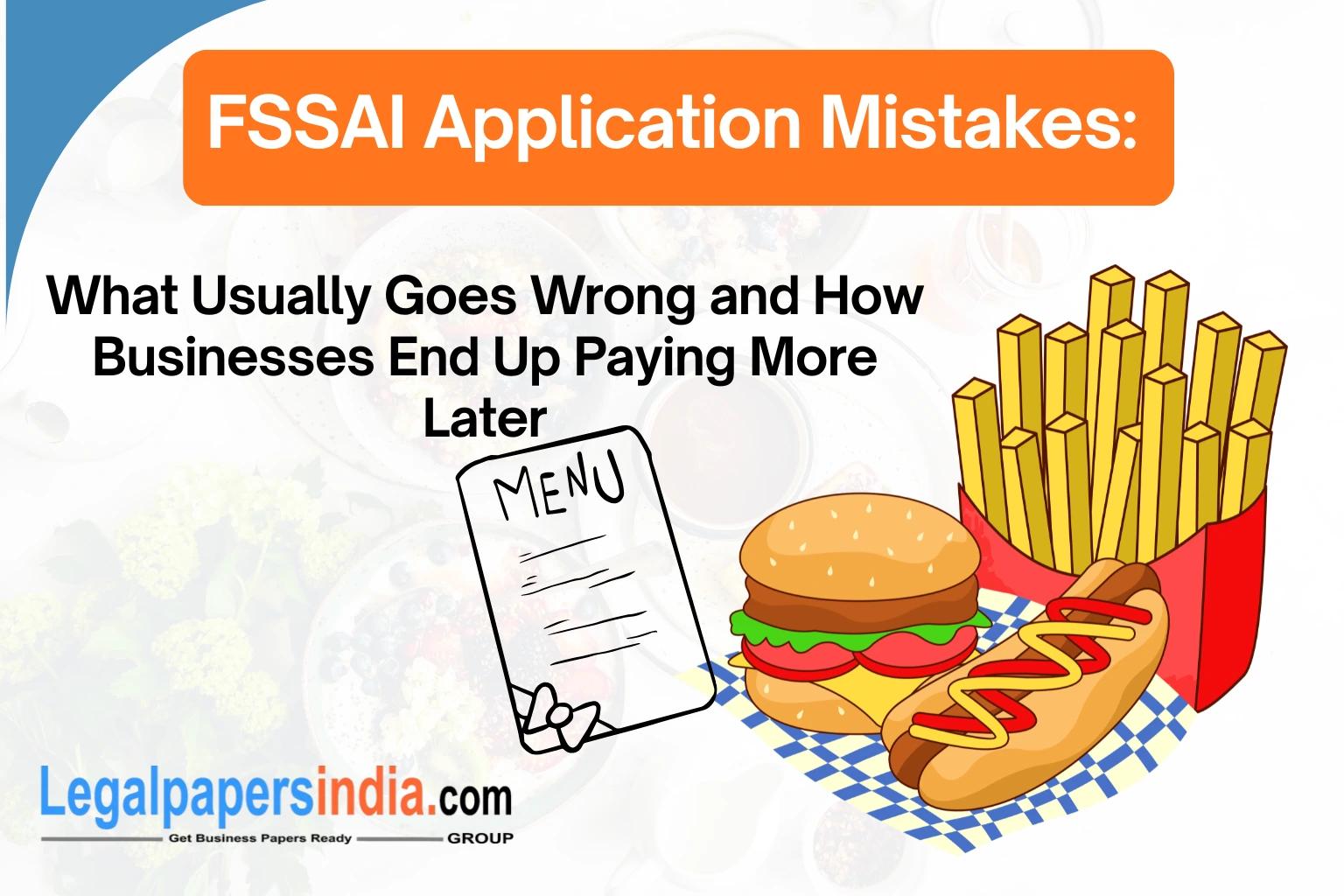
FSSAI Application Mistakes: What Usually Goes Wrong and How Businesses End Up Paying More Later
Why So Many Businesses Struggle With FSSAI Applications
A lot of food business owners assume FSSAI registration is a quick paperwork formality until the application gets delayed, rejected, or marked for clarification.
Some apply under the wrong license category to save money. Others rely on incomplete documentation or incorrect business details because “it looked simple online.” The actual problem is not always the government fee. It’s the extra time, repeat filings, corrections, and operational delays that follow avoidable mistakes.
For small food startups, cloud kitchens, home bakers, grocery sellers, distributors, and manufacturers, these mistakes often create hidden costs that were never expected in the beginning.
Understanding where businesses usually go wrong can help you avoid unnecessary expenses and make better filing decisions from the start.
What Are the Most Common FSSAI Application Mistakes?
The most common FSSAI application mistakes include choosing the wrong license type, submitting mismatched documents, incorrect business activity classification, address inconsistencies, and ignoring renewal timelines. These issues can lead to delays, rejection, reapplication costs, compliance notices, and operational interruptions, especially for growing food businesses.
Why FSSAI Mistakes Often Cost More Than the Registration Itself
Most businesses focus only on the registration fee.
But the real financial impact usually comes from:
- Delayed business launch
- Marketplace onboarding issues
- Restaurant aggregator approval delays
- Packaging reprints
- Repeat documentation work
- Consultant correction charges
- Lost sales during approval delays
For example, a home-based snack seller may think a basic registration is enough. Later, when expanding to interstate sales or listing products online, they realize the license category was incorrect from the beginning. That often means refiling instead of upgrading smoothly.
This is one reason many businesses compare providers not just on price, but on whether the filing is handled correctly the first time.
If you're still understanding which registration category applies to your business, reviewing the complete process through the FSSAI Basic Registration service page can help clarify the broader compliance requirements before filing.
Who Usually Faces These Application Problems
FSSAI filing mistakes are more common among:
- First-time food business owners
- Home kitchens and cloud kitchens
- Small manufacturers
- Local grocery brands
- Online food sellers
- Import-export food traders
- Businesses shifting from offline to online sales
Interestingly, businesses expanding too quickly also face issues. Many start under a basic registration but continue operating under the same category even after turnover or operational scale exceeds eligibility limits.
What Determines Whether an FSSAI Application Gets Delayed or Rejected
1. Wrong License Category Selection
This is probably the most expensive long-term mistake.
Businesses often choose:
- Basic registration instead of state license
- State license instead of central license
- Incorrect operational category
The issue is not only compliance. Wrong classification affects future scalability.
A growing packaged food business may later discover that supplier agreements or marketplace approvals require a different license category entirely.
2. Mismatch in Business Information
Even small inconsistencies can trigger clarification notices.
Common examples include:
- Different business names across documents
- Address mismatch
- Incorrect owner details
- GST and FSSAI details not aligning
- Wrong business constitution selection
These errors seem minor but often restart the review process.
3. Poor Documentation Quality
Many applications fail because:
- Utility bills are outdated
- NOC documents are incomplete
- Kitchen layout details are unclear
- Product categories are vaguely defined
- Identity proof is unclear or expired
Businesses trying to rush the filing process usually underestimate how strict document validation can become.
4. Misunderstanding Food Activity Classification
A business may identify itself as a “retailer” while actually operating partially as:
- Manufacturer
- Repacker
- Distributor
- Storage operator
- E-commerce seller
This confusion creates compliance gaps later.
The Hidden Costs Most Businesses Don’t Expect
Reapplication Expenses
If the application is rejected or withdrawn, businesses may need:
- Fresh documentation
- Professional correction support
- Refiling fees
- Additional approvals
This creates double spending that could have been avoided.
Packaging and Label Correction Costs
One common issue is printing packaging before approval clarity.
Businesses sometimes:
- Use incorrect license numbers
- Print incomplete labeling details
- Mention wrong business classification
Reprinting packaging materials can become surprisingly expensive for small brands.
Operational Delays
Food businesses increasingly depend on:
- Zomato onboarding
- Swiggy approvals
- Amazon or Flipkart seller requirements
- Distributor partnerships
Without valid FSSAI compliance, these processes may pause entirely.
The indirect business loss is often larger than the filing expense itself.
Renewal Penalties
Many small businesses forget renewals because they assume registration “stays active.”
Late renewals can result in:
- Penalty charges
- Fresh applications
- Temporary compliance gaps
This becomes more problematic during audits or marketplace verification.
Typical Cost Impact of Common FSSAI Mistakes
The financial impact varies depending on business size and operational complexity.
Lower-Risk Scenarios
Usually seen in:
- Home bakers
- Small local sellers
- Single-location kitchens
Mistakes here may only cause:
- Minor correction charges
- Short approval delays
- Documentation updates
Medium-Cost Scenarios
Common among:
- Packaged food startups
- Online food brands
- Multi-city delivery businesses
Potential impact includes:
- Product launch delays
- Relabeling costs
- Marketplace onboarding interruptions
Higher-Cost Scenarios
Often affects:
- Import-export food businesses
- Manufacturers
- Businesses operating across states
Here, errors may involve:
- Full reapplication
- Compliance scrutiny
- Operational hold-ups
- Distribution delays
Where Businesses Usually Overpay During FSSAI Filing
Many businesses overspend in areas they don’t initially notice.
Paying for Urgent Corrections
Some providers quote a low initial filing price but charge separately for:
- Clarifications
- Document revisions
- License modifications
- Activity changes
The final cost becomes much higher than expected.
Filing Without Business Planning
A food business expecting rapid growth should not always choose the lowest-level registration simply to reduce immediate cost.
Short-term savings can create:
- Upgrade complications
- Duplicate filings
- Regulatory inconsistencies
Ignoring Future Operational Requirements
Businesses often apply without considering:
- Interstate supply
- Franchise expansion
- E-commerce selling
- Manufacturing scale-up
Later adjustments can become more expensive than proper planning from the beginning.
How to Reduce FSSAI-Related Costs Without Cutting Corners
Understand Your Actual Business Activity
Don’t file based only on current size.
Consider:
- Future sales plans
- Product type
- Geographic expansion
- Storage or manufacturing involvement
Verify Documentation Before Submission
Simple pre-checks help reduce correction risk:
- Name consistency
- Updated address proof
- Clear business activity details
- Correct food category information
Avoid “Fast Approval” Shortcuts
Applications filed with incomplete details to speed up approval often create larger delays later.
Quick filing and correct filing are not always the same thing.
Ask About Scope Before Comparing Prices
When comparing consultants or service providers, clarify:
- Is modification support included?
- Are clarification responses covered?
- Will they help with renewals?
- Is license category guidance included?
A slightly higher service fee may actually reduce long-term compliance cost.
Common FSSAI Application Mistakes That Keep Repeating
Choosing the Cheapest Option Without Understanding Eligibility
This is extremely common among startups.
Businesses sometimes apply under a basic category even when:
- Turnover projections exceed limits
- Manufacturing is involved
- Interstate operations are planned
The short-term saving creates future licensing problems.
Using Generic Business Descriptions
Descriptions like:
- “Food business”
- “Trading”
- “Kitchen services”
are often too vague.
Clear activity definitions help avoid clarification notices.
Delaying Compliance Until Marketplace Requirement Appears
Many businesses only apply when:
- An aggregator asks for it
- A supplier demands it
- A marketplace rejects onboarding
This reactive approach often creates rushed filings and documentation errors.
Practical Examples Businesses Relate To
Example 1: Home Bakery Expansion
A home baker initially filed under a basic registration.
Six months later:
- Orders increased
- Interstate shipping started
- Marketplace onboarding required updated compliance
Instead of a smooth upgrade, the business had to revise operational details and resubmit documents.
Example 2: Cloud Kitchen Address Issue
A cloud kitchen used a temporary address proof that didn’t fully match the application details.
Result:
- Clarification notice
- Approval delay
- Delayed onboarding on delivery platforms
The business launch shifted by several weeks.
Example 3: Small Manufacturer Label Printing Error
A packaged spice seller printed labels before final compliance verification.
The printed details later required modification due to license classification issues.
Packaging reprint costs became significantly higher than the original filing expense.
FAQs About FSSAI Application Mistakes
1. How much does correcting an FSSAI application usually cost?
Minor corrections may involve small professional or administrative charges, but major mistakes like wrong license category selection or rejected filings can lead to reapplication expenses, document revision costs, and business delays.
2. Can an incorrect FSSAI license affect online food selling?
Yes. Many marketplaces and food delivery platforms verify FSSAI details before onboarding businesses. Incorrect registration categories or expired licenses may delay approvals or restrict listings.
3. What is the most common reason FSSAI applications get delayed?
Document mismatch is one of the most common reasons. Differences in address, business name, ownership details, or unclear business activity descriptions often trigger clarification requests.
4. Is it cheaper to file FSSAI registration yourself?
It can be for very small businesses with straightforward operations. However, businesses with manufacturing, interstate supply, multiple activities, or expansion plans often face higher correction costs if the filing is done incorrectly.
5. Can an FSSAI application be modified later?
Yes, certain modifications are possible. However, major operational changes sometimes require category upgrades or revised applications depending on business growth and activity type.
Turning Cost Understanding Into Better Decisions
The goal is not simply to find the lowest filing price.
A better question is:
“Will this registration still support the business six months from now?”
That shift in thinking helps avoid many common mistakes.
Businesses that understand:
- Their operational scope,
- Future expansion plans,
- Documentation requirements,
- And compliance category
usually spend less correcting problems later.
In many cases, clarity reduces cost more effectively than trying to minimize the initial fee.
When Professional Guidance Makes Sense
Not every business needs extensive compliance support.
But professional help becomes useful when:
- Multiple food activities are involved
- Manufacturing is included
- Interstate operations are planned
- Marketplace onboarding matters
- Future expansion is expected
The real value is often not faster filing. It is avoiding preventable compliance issues that create larger expenses later.
Businesses looking for broader compliance understanding or registration guidance can also review the experience and service background of Legal Papers India before deciding how to proceed.
Conclusion
FSSAI application mistakes rarely look serious in the beginning. A wrong category selection, unclear document, or incomplete business description may seem minor at filing stage.
But these issues often become expensive once operations begin growing.
The safest approach is usually not the cheapest filing option. It is the one that matches your actual business activity, future plans, and compliance needs clearly from the start.
If you're evaluating your options, take time to understand the registration scope properly before submitting the application. A little clarity early can prevent repeated costs, delays, and unnecessary compliance stress later.
Get expert assistance for FSSAI Basic Registration from Legal Papers India. Our team helps food businesses with registration, documentation, and compliance support.
Legal Papers India provides quick and reliable FSSAI Basic Registration services across India with expert support, simple documentation, and hassle-free food license registration assistance.
Social Share: