
Sep 04, 2026
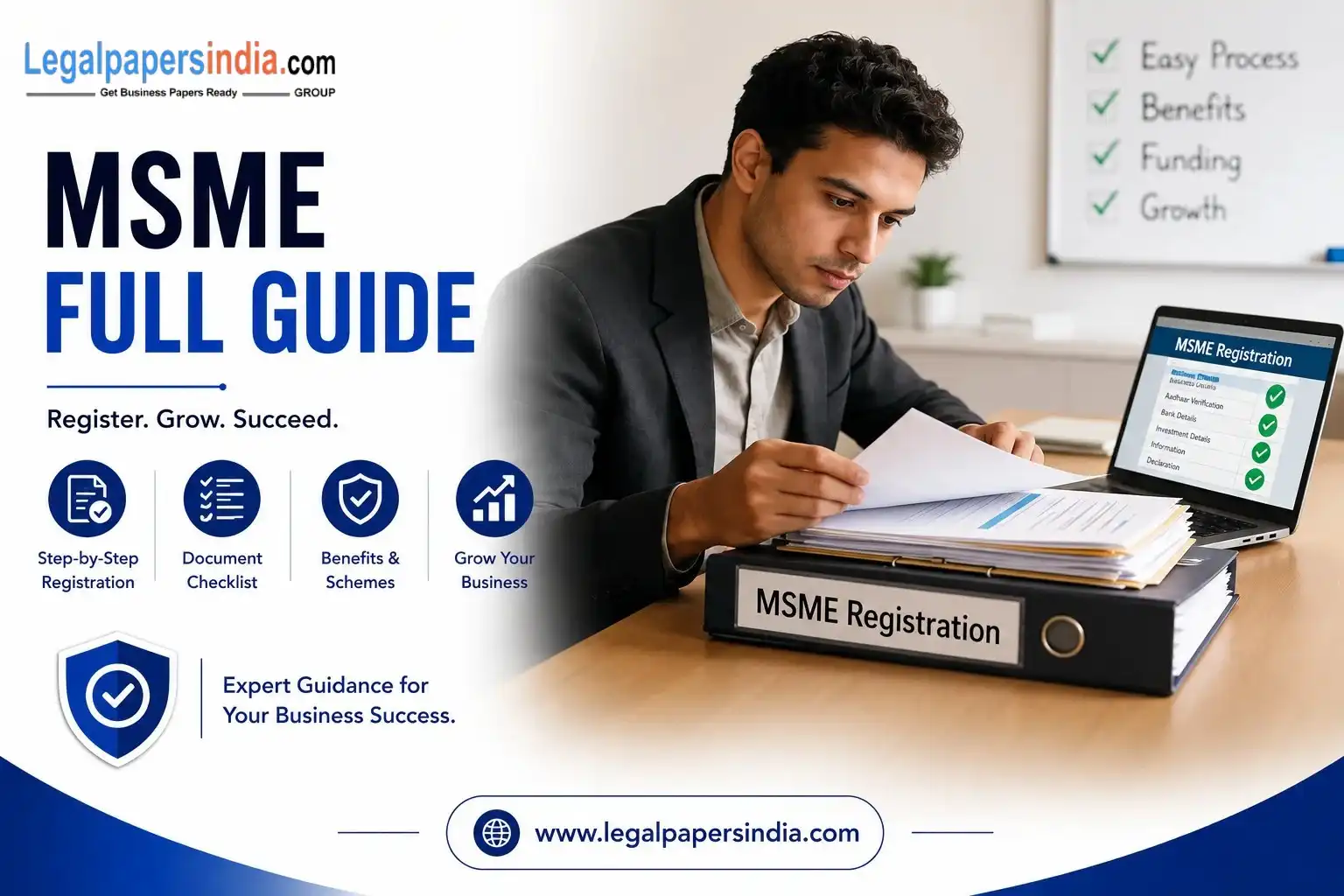
MSME Full Guide: Eligibility, Process, Benefits, and Common Mistakes Explained
When a Small Business Starts Growing, Compliance Questions Usually Follow
A home-based food brand starts receiving bulk orders from retailers. A freelance designer begins hiring two people to handle increasing client work. A small manufacturer wants to apply for a government tender but suddenly notices one requirement appearing repeatedly: MSME registration.
This is usually the stage where confusion begins.
Many business owners assume MSME registration is mandatory for every business. Others think GST registration automatically covers it. Some delay registration until a loan application or tender opportunity forces them to revisit it urgently.
The reality is more practical than most people expect.
MSME registration is primarily designed to formally recognize eligible micro, small, and medium enterprises under the Government of India framework. That recognition can influence financing access, government scheme eligibility, delayed payment protections, and business credibility in certain situations.
Understanding how it works before your business reaches a compliance bottleneck can save time later.
What Is MSME Registration?
MSME registration is the official recognition of a business as a Micro, Small, or Medium Enterprise under the Government of India’s Udyam Registration system. It is based primarily on investment and annual turnover criteria and helps eligible businesses access various government benefits, financial support schemes, and compliance-related protections.
MSME Registration Explained in Simple Terms
In practical terms, MSME registration acts like an identity classification for small and medium businesses. Once registered through the Udyam portal, a business may become eligible for certain government-backed benefits such as easier credit access, participation in schemes, protection against delayed payments, and preference in some procurement opportunities.
Why MSME Registration Matters for Many Businesses
Not every business immediately needs MSME registration. But for many growing enterprises, it gradually becomes relevant as operations expand.
A few common situations where MSME status starts becoming useful include:
- Applying for business loans
- Participating in government tenders
- Seeking subsidies or incentive schemes
- Working with larger corporations requiring vendor classification
- Protecting against delayed payments from buyers
- Building operational credibility with banks and institutions
One important point often overlooked is that MSME registration is not limited to manufacturers anymore. Service providers, consultants, agencies, freelancers with structured operations, traders in eligible categories, and technology businesses may also qualify depending on their structure and activities.
Businesses exploring formal compliance structures often review broader registration requirements through services likeMSME Registration while planning future growth.
Who Should Consider MSME Registration?
MSME registration is commonly suitable for:
- Proprietorship businesses
- Partnership firms
- LLPs
- Private limited companies
- Startups
- Manufacturing units
- Service-based businesses
- Small exporters
- Online sellers
- Professional agencies with operational scale
Practical Examples
A few real-world scenarios make eligibility easier to understand:
- A digital marketing agency with recurring clients and annual turnover growth may qualify.
- A small garment manufacturer supplying retailers may benefit from government procurement access.
- A food processing unit applying for machinery financing may find MSME recognition useful during loan assessment.
- An IT support company seeking startup-linked schemes may use MSME classification for documentation support.
Who Does NOT Usually Need MSME Registration?
Some businesses may not immediately require MSME registration, especially when:
- Operations are purely informal or hobby-based
- There is no commercial business activity yet
- The entity does not fall within eligible operational categories
- The business has no foreseeable need for financing, schemes, tenders, or formal vendor recognition
Also, businesses exceeding the prescribed turnover and investment limits may no longer qualify under MSME classification.
That said, many businesses delay registration until a bank, client, or government department unexpectedly asks for it. By then, urgent documentation gaps can create unnecessary delays.
How MSME Registration Works: Step-by-Step Process
1. Business Classification Review
The first step is determining whether the business falls under Micro, Small, or Medium Enterprise criteria.
Classification is generally based on:
- Investment in plant and machinery or equipment
- Annual turnover
These classifications are periodically updated by government notification, so businesses should verify current thresholds before applying.
2. Aadhaar and PAN Verification
The Udyam system links registration primarily through:
- Aadhaar number
- PAN details
- Business information
For companies, LLPs, or partnership entities, authorized signatory details are typically used during filing.
3. Business Activity Declaration
Applicants usually provide details such as:
- Nature of business
- NIC activity classification
- Operational address
- Bank details
- Employee information (where applicable)
This stage is important because incorrect business activity selection can later create confusion during banking or tender processes.
4. Registration Submission
Once details are verified, the application is submitted through the official Udyam registration system.
In many straightforward cases, approval may arrive relatively quickly if documentation and linked government records match correctly.
5. Udyam Certificate Generation
After successful processing, the business receives a Udyam Registration Certificate containing:
- Udyam Registration Number
- Enterprise classification
- Business details
- QR-enabled verification information
This certificate is often requested during loan applications, vendor onboarding, or compliance documentation.
6. Post-Registration Compliance Awareness
Registration itself is not the final step.
Businesses should also monitor:
- Updated turnover thresholds
- GST linkage consistency
- PAN data accuracy
- Business activity updates
- Financial reporting alignment
A mismatch between tax records and MSME declarations can sometimes create complications during verification reviews.
Documents and Information Commonly Required
The documentation requirement is relatively streamlined compared to older registration systems.
Commonly required details include:
- Aadhaar card of proprietor or authorized signatory
- PAN card
- GST details (if applicable)
- Business address
- Bank account details
- Business activity information
- Incorporation documents for companies or LLPs
When Additional Documents May Be Relevant
Some institutions or scheme applications may additionally request:
- Financial statements
- Investment details
- Turnover proof
- Vendor contracts
- Utility bills
Requirements can vary depending on whether MSME registration is being used for banking, subsidy, or procurement-related purposes.
Common Mistakes Businesses Make During MSME Registration
Incorrect Business Activity Selection
Many applicants choose overly broad or inaccurate NIC codes without understanding their implications.
This can later affect:
- Scheme eligibility
- Procurement classification
- Industry mapping
Using Mismatched PAN or GST Information
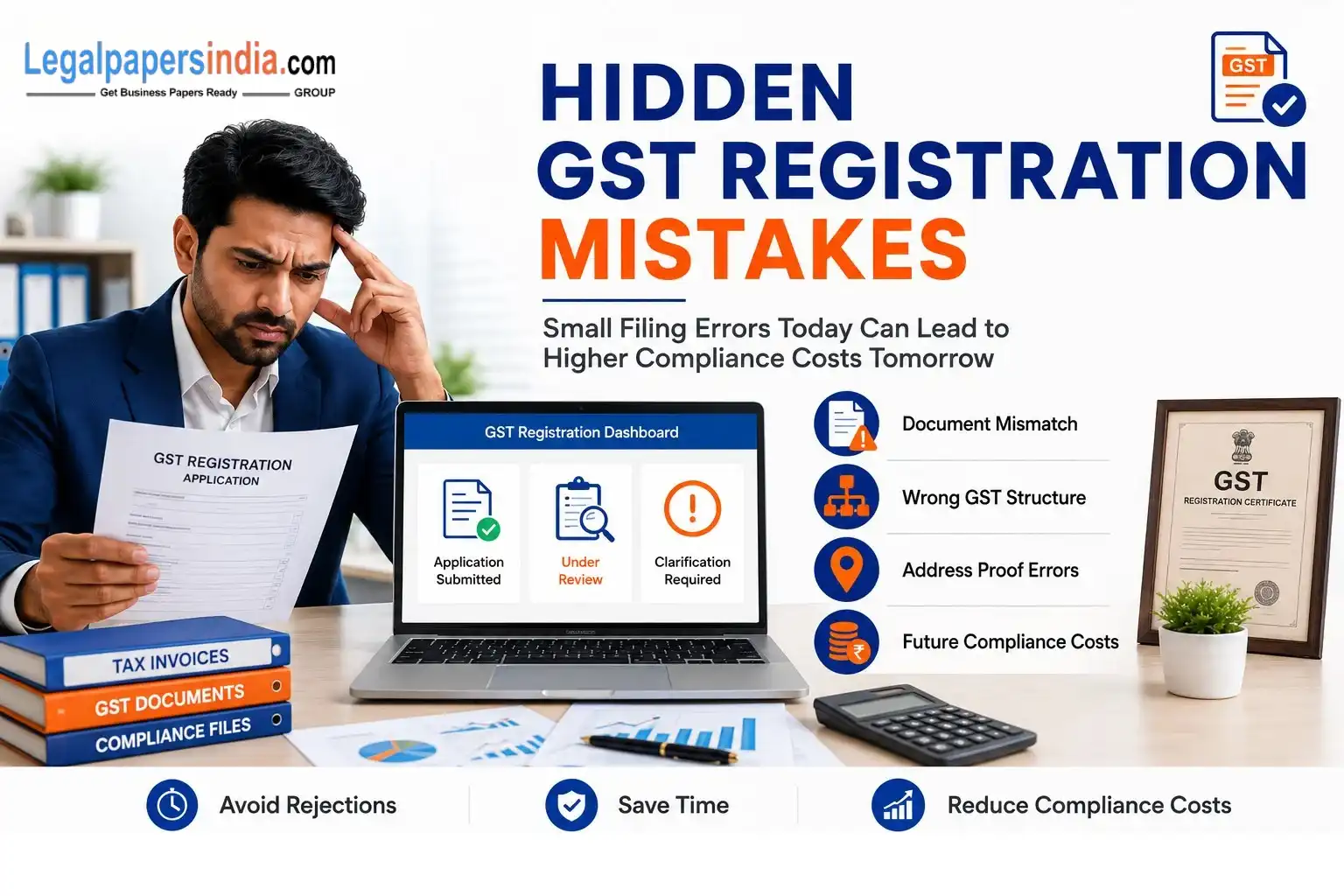
Small inconsistencies between PAN, GST, and registration records can delay approvals or create future compliance confusion.
Assuming MSME Registration Replaces Other Compliance
MSME registration does not replace:
- GST registration
- Company incorporation
- FSSAI licensing
- IEC registration
- Professional tax obligations
It functions as a classification and recognition framework, not a substitute for sector-specific compliance.
Waiting Until an Urgent Requirement Appears
A surprisingly common situation is businesses attempting MSME registration only after:
- Loan rejection
- Tender deadline pressure
- Vendor onboarding delays
At that stage, even minor document mismatches become stressful.
Important Things to Consider Before Applying
Before proceeding, businesses should evaluate:
Whether Current Operations Qualify
Eligibility depends on operational and financial criteria, not simply business intent.
Whether Future Growth May Change Classification
A business classified as Micro today may move into Small Enterprise status later as turnover increases.
Understanding scalability helps avoid future confusion.
Whether Linked Compliance Records Are Updated
If GST, PAN, or incorporation records contain outdated information, correcting those first often prevents downstream issues.
Typical MSME Registration Timeline
For businesses with properly linked records and accurate details:
- Basic filing may take a short time
- Verification timelines vary depending on system validation
- Certificate generation can sometimes occur quickly in standard cases
However, delays may happen due to:
- Aadhaar mismatches
- PAN validation issues
- GST inconsistencies
- Incorrect enterprise classification
- Technical portal verification errors
Businesses handling registrations across multiple operational locations sometimes review location-specific support resources through theLegal Paper India page when coordination becomes necessary.
MSME Registration vs Startup Recognition: What’s the Difference?
This is one of the most searched comparison questions.
| MSME Registration |
Startup Recognition |
|
Focuses on business size classification |
Focuses on innovation-driven startups |
|
Governed under Udyam framework |
Managed through Startup India framework |
|
Available to many traditional businesses |
Typically aimed at scalable startups |
|
Commonly linked with financing and procurement |
Often linked with startup incentives and innovation benefits |
|
Based on turnover and investment criteria |
Includes innovation and incorporation-based conditions |
Some businesses may qualify for both, depending on their structure and activities.
Frequently Asked Questions
1. Is MSME registration mandatory for every small business?
No. MSME registration is generally optional for eligible businesses. However, it may become practically important when applying for loans, government schemes, tenders, or vendor registrations.
2. Can a service-based business apply for MSME registration?
Yes. Many service-oriented businesses, including agencies, consultants, IT firms, and professional service providers, may qualify under MSME criteria if they meet the prescribed conditions.
3. What happens if a business does not register as an MSME?
A business can continue operating legally without MSME registration in many cases. However, it may miss certain benefits, financial opportunities, delayed payment protections, or procurement advantages available to registered enterprises.
4. Does MSME registration require GST registration?
Not always. GST applicability depends on turnover thresholds and business activity. Some businesses may obtain MSME registration even if GST registration is not currently mandatory for them.
5. Can MSME classification change later?
Yes. Classification can change if turnover or investment levels increase beyond the prescribed limits. Businesses should monitor updates to ensure records remain accurate.
When Professional Assistance Becomes Helpful
Some MSME registrations are straightforward. Others become more technical when businesses have:
- Multiple business activities
- Existing GST inconsistencies
- Complex ownership structures
- Export operations
- Tender participation goals
- Previous filing mismatches
Professional guidance often becomes useful not because the filing itself is difficult, but because classification accuracy and linked compliance consistency matter over time.
Businesses wanting to better understand regulatory processes and documentation practices often review the background and operational approach of Legal Papers India before proceeding with compliance-related decisions.
Conclusion
MSME registration is less about paperwork and more about positioning a business within India’s formal economic ecosystem.
For some businesses, it may simply remain a supporting document. For others, it becomes valuable during financing discussions, procurement opportunities, operational scaling, or compliance expansion.
The key is understanding whether it genuinely fits your current stage of business rather than registering purely because others are doing it.
If you are uncertain about eligibility, classification, or document consistency, consulting experienced professionals before filing can help avoid avoidable corrections later.
Legal Papers India offers trusted MSME Registration services for startups and small businesses across India. We help businesses complete their registration process with easy documentation and professional support.
Get in touch with Legal Papers India for fast MSME Registration assistance. Our team provides smooth online filing and reliable registration support for businesses.
Social Share: