
Sep 04, 2026
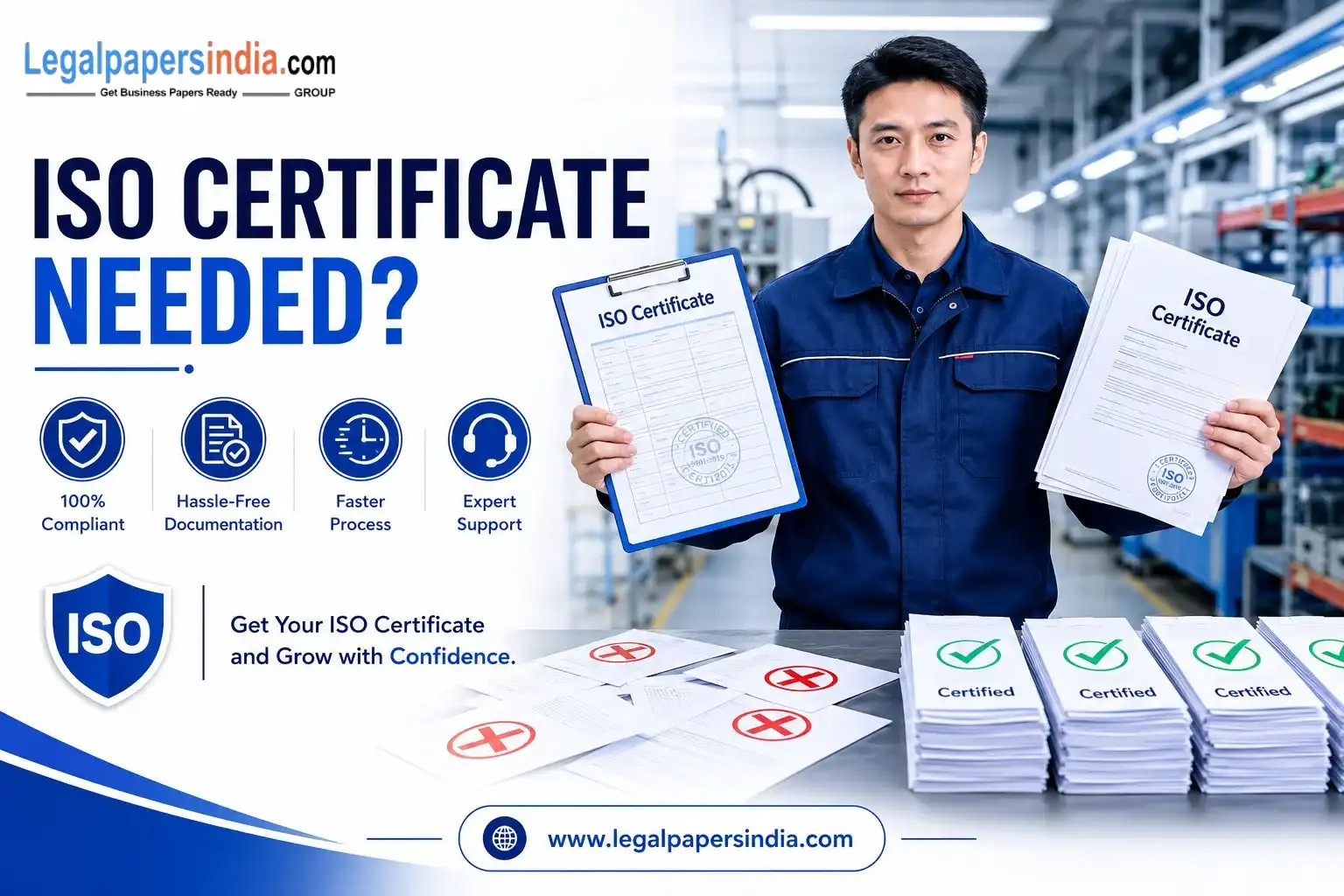
ISO Certificate Needed: How to Decide If Your Business Should Get ISO Certified
“We keep hearing clients ask for ISO certification… but do we actually need it?”
That’s usually where the hesitation starts.
For some businesses, ISO certification becomes a growth enabler almost overnight. For others, it turns into an expensive compliance exercise that adds paperwork without creating real operational value.
The difficult part is that most businesses are not confused about what ISO certification is. They’re confused about whether it’s necessary for their stage, industry, clients, or expansion plans.
If you're currently evaluating whether an ISO certificate is needed for your business, the answer depends less on business size and more on factors like:
- Client expectations
- Tender eligibility
- Process maturity
- Industry risk exposure
- Scalability goals
- Vendor onboarding requirements
At this stage, most people are trying to avoid two mistakes:
- Delaying certification until a business opportunity is lost
- Getting certified too early without practical benefit
This guide is designed to help you make that decision clearly and realistically.
An ISO certificate is usually worth considering when your business deals with corporate clients, government tenders, exports, manufacturing processes, regulated industries, or operational scaling challenges. If your operations are still informal or very early-stage with no compliance-driven demand, certification may not yet provide meaningful value.
Who Should Seriously Consider ISO Certification
Not every business needs ISO certification immediately. But certain situations make it increasingly relevant.
Businesses supplying to corporate clients
Many medium and large companies now include ISO compliance during vendor onboarding.
This is especially common in:
- Manufacturing
- IT services
- Packaging
- Logistics
- Healthcare support services
- Infrastructure contracting
Sometimes the requirement is explicit. Other times, ISO-certified vendors are simply preferred because they appear operationally reliable.
Businesses planning to bid for tenders
Government departments, PSUs, and institutional buyers often ask for ISO-related documentation during technical evaluation.
If your business is entering tender-based opportunities, certification can shift from “optional” to strategically useful very quickly.
Companies struggling with inconsistent processes
This is where many businesses underestimate ISO.
A growing company often reaches a stage where:
- Work quality varies between teams
- Documentation becomes chaotic
- Customer complaints rise
- Internal accountability weakens
ISO systems can help standardize operations before scaling problems become expensive.
Export-oriented businesses
International buyers frequently assess operational standards before onboarding suppliers.
Even when ISO certification is not legally mandatory, it acts as a credibility filter during supplier evaluation.
Businesses preparing for expansion
If you’re planning:
- Multi-location operations
- Franchising
- Investor discussions
- Enterprise partnerships
…structured process systems become more important than most founders initially expect.
You can explore the broader process and certification framework through the ISO Certification services page for practical guidance on documentation and implementation requirements.
Situations Where ISO Certification May Not Be Necessary Yet
This is the part many providers avoid discussing honestly.
There are businesses that pursue ISO certification too early.
You may want to delay certification if:
Your business operations are still unstable
If:
- Roles are unclear
- Processes change weekly
- Core services are still evolving
…formal standardization may create friction instead of improvement.
You only need certification for appearance
Some businesses pursue ISO only because competitors mention it on their websites.
That alone rarely justifies the cost, documentation effort, and maintenance requirements.
Your clients never evaluate compliance standards
For example:
- Local retail shops
- Freelancers
- Small neighborhood service providers
- Very early-stage businesses without institutional clients
In such cases, certification may not meaningfully impact growth.
You are not ready for process discipline
This is a practical reality.
ISO systems work best when businesses are willing to:
- Maintain records
- Follow documented procedures
- Conduct internal reviews
- Improve operational consistency
Without that commitment, certification often becomes superficial.
Key Decision Criteria Before Proceeding
If you're unsure whether this applies to you, use this checklist honestly.
ISO Certification Decision Checklist
Consider certification if most of these are true:
- Your clients ask about quality systems or compliance
- You participate in tenders or vendor registrations
- You want stronger operational consistency
- Your team size is increasing
- You handle regulated products or services
- Customer complaints or process errors are rising
- You plan to scale nationally or internationally
- You want stronger business credibility during partnerships
- Documentation and accountability are becoming difficult to manage informally
If only one or two points apply, you may not need immediate certification yet.
Cost & Compliance Considerations
One reason businesses delay ISO certification is uncertainty around actual effort.
And honestly, that concern is reasonable.
The real cost is not only the certification fee
Businesses often focus only on:
- Audit fees
- Consultant fees
- Certification charges
But the larger investment is usually internal:
- Documentation preparation
- Staff alignment
- Process implementation
- Ongoing compliance maintenance
Different ISO standards create different obligations
For example:
- ISO 9001 focuses on quality management
- ISO 27001 focuses on information security
- ISO 22000 relates to food safety systems
- ISO 14001 addresses environmental management
Choosing the wrong standard is a surprisingly common mistake.
Annual maintenance matters
Many businesses assume certification is a one-time activity.
In reality:
- Surveillance audits
- Record maintenance
- Periodic reviews
- Process updates
…are ongoing responsibilities.
That doesn’t mean the process is excessively difficult. But businesses should evaluate readiness realistically before proceeding.
Risk Factors Businesses Often Ignore
At the evaluation stage, most people focus on benefits.
The smarter approach is to also evaluate risks.
Getting certified without operational implementation
This happens frequently.
Some businesses obtain certification primarily for documentation purposes but never integrate the system internally.
Eventually:
- Audits become stressful
- Compliance gaps increase
- Teams ignore procedures entirely
Choosing certification only because competitors have it
A competitor’s compliance requirement may not match your business model, client base, or operational scale.
Blind imitation creates unnecessary expense.
Working with non-credible certification providers
Not all certification bodies carry equal market credibility.
Some buyers specifically check:
- Accreditation status
- Certification legitimacy
- Audit quality
Low-quality certifications may fail during vendor verification.
Over-documenting small businesses
Smaller companies sometimes adopt unnecessarily complex systems copied from large enterprises.
That creates administrative burden without improving efficiency.
A Practical Step-by-Step Decision Approach
Instead of asking, “Should we get ISO certified right now?”, ask these questions sequentially.
Step 1: Identify the trigger
What’s driving the consideration?
- Client demand?
- Tender requirement?
- Operational issues?
- Market expansion?
The answer changes the urgency.
Step 2: Identify the correct ISO standard
Different industries require different frameworks.
Avoid generic certification decisions.
Step 3: Evaluate operational readiness
Can your team realistically maintain:
- Documentation
- SOPs
- Reviews
- Internal audits
…consistently?
Step 4: Assess business timing
Sometimes certification is strategically valuable six months later rather than immediately.
Timing matters more than businesses realize.
Step 5: Work with experienced guidance
Businesses often underestimate implementation complexity during the early evaluation stage.
Reviewing the background and compliance experience of firms through pages like the About Us section of Legal Papers India can help assess whether the guidance aligns with your business stage and industry requirements.
Common Decision-Stage Mistakes
Treating ISO as only a marketing badge
Good certification systems improve operational clarity.
Weak implementations become decorative logos on websites.
Assuming certification guarantees business growth
ISO can strengthen credibility, but it does not replace:
- Product quality
- Customer service
- Execution capability
Waiting until compliance becomes urgent
Many businesses delay action until:
- A tender deadline appears
- A client requests certification
- An audit requirement arises unexpectedly
At that point, rushed implementation creates avoidable pressure.
Choosing the cheapest route without evaluating credibility
At this stage, most businesses start comparing only pricing.
But long-term usability matters more than short-term cost savings.
Practical Scenarios That Clarify the Decision
Scenario 1: Small IT company targeting enterprise clients
A 12-person software company starts receiving onboarding questionnaires from larger clients asking about data handling and process controls.
In this case, ISO certification may become strategically valuable earlier than expected because enterprise procurement teams often assess operational maturity.
Scenario 2: Local retail business with no institutional clients
A neighborhood retail business serving walk-in customers may see little practical return from immediate ISO certification.
Operational improvement may matter more than formal certification at this stage.
Scenario 3: Manufacturer planning exports
A manufacturer entering overseas markets may face supplier evaluation processes where ISO certification becomes an expectation rather than a competitive advantage.
Scenario 4: Fast-growing service business
A business scaling rapidly across multiple teams often benefits from standardized procedures before inconsistency starts affecting delivery quality.
Final Decision Summary
So, is an ISO certificate needed?
For businesses dealing with structured clients, scaling operations, regulated industries, exports, or tender participation — often yes.
For businesses still validating their market, operating informally, or serving only small local demand — not always immediately.
The better question is:
Will ISO certification solve a real operational or commercial problem for your business right now?
If the answer is clearly yes, delaying the process may eventually create missed opportunities.
If the answer feels uncertain, it may be smarter to first stabilize operations and revisit certification strategically.
Frequently Asked Questions
1. Is ISO certification legally mandatory in India?
In most industries, ISO certification is not legally mandatory. However, many businesses pursue it because clients, tenders, export buyers, or institutional partners expect structured quality or compliance systems during evaluation.
2. Which businesses benefit most from ISO certification?
Manufacturers, exporters, IT companies, healthcare providers, logistics businesses, contractors, and growing service companies usually benefit the most because operational consistency and compliance credibility directly affect business opportunities.
3. Can a small business apply for ISO certification?
Yes. Small businesses can apply for ISO certification if they are ready to maintain documented processes and compliance systems. Size matters less than operational readiness and business requirements.
4. How do I know which ISO standard applies to my business?
The correct ISO standard depends on your industry, operational risks, client requirements, and business goals. For example, ISO 9001 focuses on quality management, while ISO 27001 relates to information security practices.
5. Is ISO certification worth the cost for a growing company?
For many growing businesses, ISO certification becomes worthwhile when it improves client trust, supports vendor approvals, strengthens operational consistency, or enables access to larger contracts and institutional opportunities.
Conclusion
Deciding whether to pursue ISO certification is rarely just a compliance question. It’s usually a business maturity question.
Some companies benefit immediately because certification supports growth, credibility, and operational structure. Others are better served by improving internal systems first and pursuing certification later with clearer intent.
If you’re evaluating whether ISO certification fits your current business stage, speaking with professionals who understand compliance, documentation, and implementation realities can help you avoid unnecessary delays or poorly timed decisions.
You can connect through the Contact Us page to evaluate the next steps based on your specific business situation.
Social Share: