
Sep 04, 2026
IEC Code Requirements: Who Needs an Import Export Code and What Is Required?
Understanding the Confusion Around IEC Registration
A small business owner receives their first inquiry from a buyer in Dubai. An Amazon seller wants to start exporting handmade products overseas. A startup plans to import raw materials from China for manufacturing.
Everything seems ready—until the bank asks for an IEC code.
This is usually the point where confusion begins. Many businesses assume GST registration alone is enough for import-export activities. Others think IEC registration only applies to large exporters. In reality, the Import Export Code (IEC) is one of the basic compliance requirements for cross-border trade in India, even for small businesses and individual proprietors in many situations.
The challenge is not just understanding what IEC is. Most people struggle with questions like:
- Is IEC mandatory for every export?
- Can freelancers or online sellers need it?
- What documents are required?
- Are there exemptions?
- What happens if you import without an IEC code?
Understanding the actual requirements helps avoid delays in customs clearance, rejected bank remittances, and compliance complications later.
What Is an IEC Code?
An Import Export Code (IEC) is a 10-digit business identification number issued by the Directorate General of Foreign Trade (DGFT) that allows businesses and individuals in India to legally import or export goods and services internationally. Without an IEC, most cross-border commercial transactions cannot be processed through customs or banks.
IEC Code Requirements Explained in Simple Terms
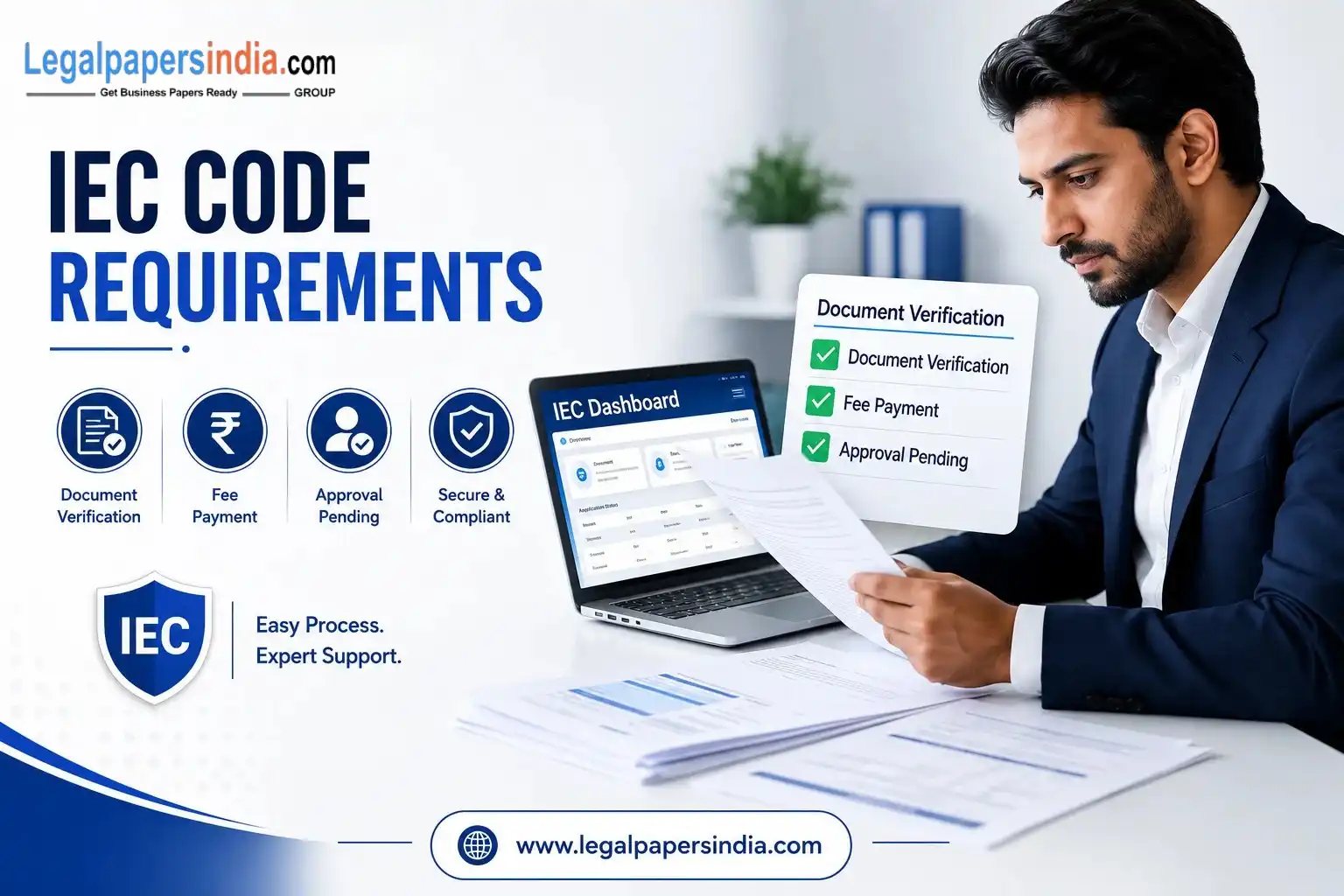
IEC code requirements refer to the eligibility conditions, documents, and compliance criteria needed to obtain an Import Export Code in India. These requirements usually include business identity proof, PAN, bank details, and a valid business structure engaged in international trade activities.
Why IEC Registration Matters More Than Many Businesses Realize
IEC registration is often treated as a “future requirement.” But in practice, businesses usually discover its importance only when a shipment is delayed or a payment cannot be processed.
The IEC acts as a core international trade identifier. It connects multiple parts of the import-export ecosystem:
- Customs authorities
- Banks handling foreign remittances
- DGFT records
- Export incentive systems
- International trade documentation
Without it, even a legitimate business may face operational interruptions.
For example :- An e-commerce seller shipping products internationally through courier services may suddenly find that customs documentation requires IEC details. Similarly, a manufacturer importing machinery parts may encounter payment processing issues if the bank requests IEC-linked documentation.
In many practical situations, IEC becomes less about “registration” and more about enabling smooth trade operations.
Who Needs IEC Registration and Who Does Not Businesses and Individuals Who Usually Need IEC
IEC registration is commonly required for:
- Importers bringing goods into India
- Exporters shipping products overseas
- Businesses receiving foreign currency for export services
- E-commerce exporters selling internationally
- Manufacturers importing machinery or raw materials
- Sole proprietors involved in international trade
- Partnership firms and companies engaged in exports
- Startups planning cross-border trade activities
Even small-scale businesses often require IEC once international commercial transactions begin.
Businesses exploring global trade opportunities across different regions sometimes also review location-specific business support through the business presence network of Legal Papers India to understand operational coverage and compliance assistance availability.
Who May Not Need an IEC Code
There are limited exemptions.
IEC may not be required in situations such as:
- Personal imports or exports not connected to business activity
- Government departments importing/exporting goods
- Certain notified charitable institutions
- Transactions specifically exempted under DGFT notifications
Additionally, some service exports may not require IEC if foreign remittances are handled under specific exempted conditions. However, many banks still request IEC details during international payment processing, making registration practically useful even when technically exempt.
How the IEC Registration Process Works in Real Business Situations
Many people assume IEC registration involves multiple government approvals or physical verification stages. In reality, the process is mostly digital now, though document accuracy remains critical.
Step 1: Business Structure and PAN Validation
The process begins with identifying the business structure:
PAN plays a central role because the IEC is linked directly to the PAN of the applicant entity.
Step 2: DGFT Portal Application
The application is submitted through the DGFT portal with:
- PAN details
- Aadhaar authentication
- Business information
- Bank account details
- Address proof
This stage appears simple, but mismatches between PAN, GST, and bank records often create delays.
Step 3: Document Verification
DGFT verifies the submitted information digitally.
Common verification areas include:
- Legal business name
- Bank account ownership
- Address consistency
- PAN authentication
Minor spelling inconsistencies sometimes trigger clarification requests.
Step 4: IEC Generation
Once approved, the IEC certificate is generated electronically.
There is no physical certificate dispatch in most cases. Businesses can download the IEC directly from the DGFT system.
Step 5: Post-Registration Compliance
This is the part many businesses overlook.
IEC holders are expected to:
- Keep business details updated
- Ensure annual IEC profile updates when applicable
- Maintain consistency across GST, PAN, customs, and bank records
Changes in address, directors, or bank details may require modification filings.
Businesses seeking detailed procedural guidance often review resources related to IEC registration compliance and documentation before applying.
Documents and Information Commonly Required for IEC Registration
The exact requirements can vary slightly depending on the business structure, but most applications involve the following:
Basic Identity Requirements
- PAN card of business or applicant
- Aadhaar details for authentication
- Passport-sized photograph in some cases
Business Proof Documents
Depending on the structure:
- Partnership deed
- Certificate of incorporation
- LLP agreement
- Trust registration documents
Address Proof
Commonly accepted documents include:
- Electricity bill
- Rent agreement
- Property tax receipt
- Sale deed
The address should generally match operational records used in GST or banking systems.
Bank Account Proof
Usually required:
- Cancelled cheque
- Bank certificate
- Passbook copy
The bank account should belong to the applicant entity.
GST Information (Where Applicable)
GST registration is not always mandatory for IEC issuance, but businesses involved in taxable trade activities often provide GST-linked information for consistency.
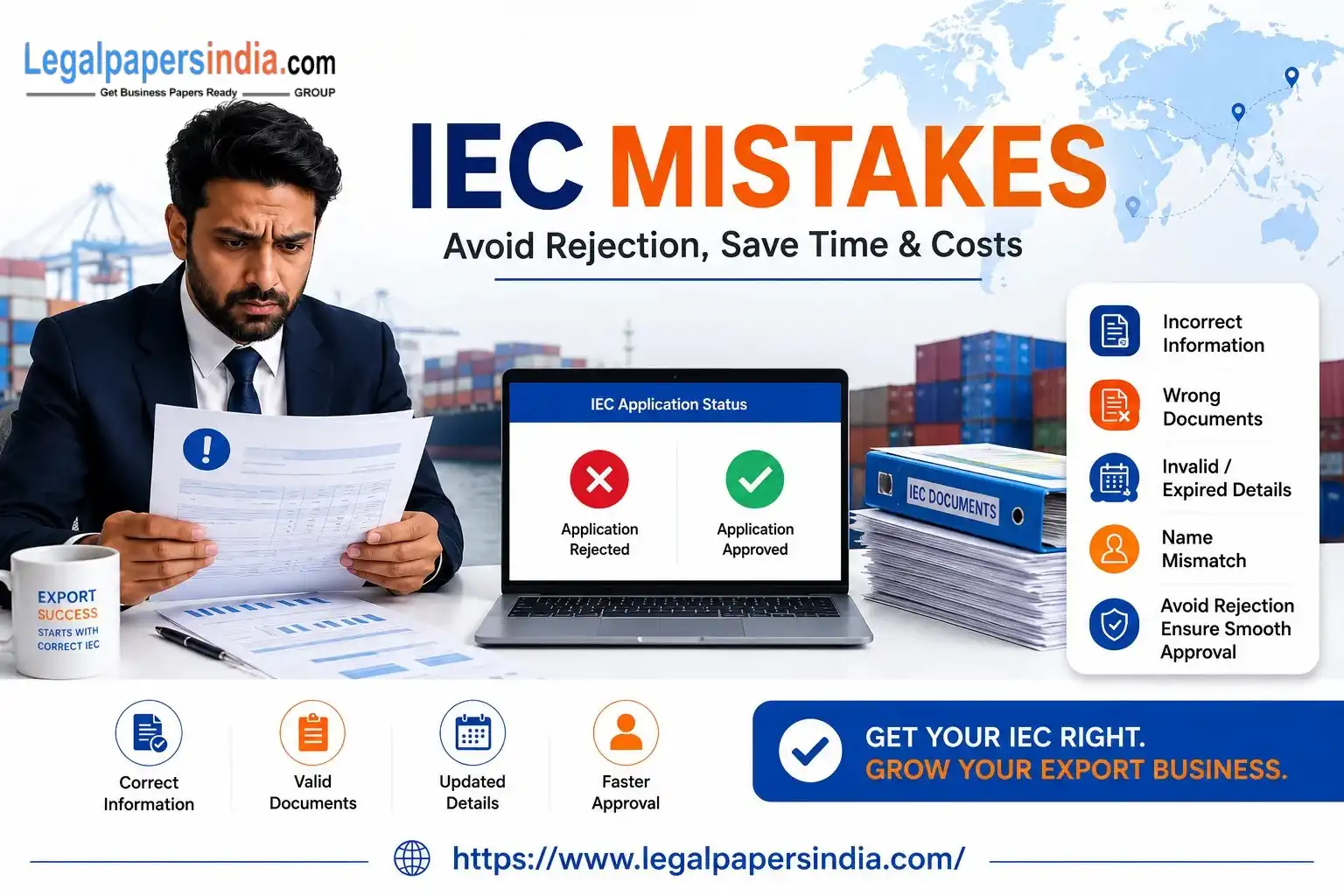
Common IEC Registration Mistakes Businesses Frequently Make
IEC registration is straightforward on paper, but practical issues often arise because of documentation inconsistencies.
Using Incorrect Business Names
A frequent issue occurs when:
- PAN name differs from bank records
- GST name differs from incorporation records
- Trade names are used instead of legal entity names
These mismatches can create verification delays.
Assuming IEC Is Needed Only After First Export
Many businesses wait until:
- A shipment is ready
- An overseas payment arrives
- Customs documentation is requested
At that point, delays become expensive.
Ignoring Post-Registration Updates
Some businesses obtain IEC and never review it again.
Later changes in:
- address,
- directors,
- mobile number,
- or bank details
can create complications during customs or remittance verification.
Confusing GST and IEC Roles
GST registration and IEC registration serve different purposes.
GST Registration |
IEC Registration |
|
Tax compliance within India |
International trade authorization |
|
Managed under GST system |
Issued by DGFT |
|
Required for taxable supply |
Required for most import/export activity |
|
Linked to tax filing |
Linked to customs and foreign trade |
Businesses engaged in international trade often require both compliances together.
Important Considerations Before Applying for IEC
Before proceeding, businesses should evaluate a few practical points.
Nature of International Activity
Are you:
- exporting goods,
- importing machinery,
- receiving overseas service payments,
- or selling globally through e-commerce platforms?
The answer affects documentation and compliance expectations.
Business Structure Stability
Frequent structural changes after IEC issuance can create modification requirements later.
For example:
- converting from proprietorship to LLP,
- changing directors,
- or changing business addresses
may require IEC amendments.
Banking Preparedness
International transactions depend heavily on banking compliance.
Your bank may request:
- IEC details,
- GST information,
- foreign remittance purpose codes,
- and KYC documentation.
Having aligned records reduces transaction friction later.
How Long Does IEC Registration Usually Take?
In straightforward cases, IEC registration can often be completed within a few working days.
However, timelines may vary because of:
- document mismatches,
- Aadhaar authentication issues,
- DGFT clarification requests,
- or bank verification inconsistencies.
Typical flow:
- Document preparation
- Online application filing
- Digital verification
- IEC issuance
- Record updates with banks or customs systems
Businesses planning urgent imports or exports should avoid waiting until shipment schedules are finalized.
Frequently Asked Questions About IEC Requirements
1. Is IEC mandatory for service exports?
In many service export situations, IEC may still be required for receiving international remittances or complying with banking processes. The exact requirement depends on the nature of services and transaction structure.
2. Can a sole proprietor apply for IEC registration?
Yes. Sole proprietors can obtain IEC using their PAN and business-related documentation. Many small exporters and online sellers operate using proprietorship-based IEC registrations.
3. Does IEC registration expire?
IEC generally does not expire permanently, but businesses may need to complete periodic profile updates under DGFT compliance requirements to keep records active and accurate.
4. What happens if goods are imported without IEC?
Customs clearance complications may arise, and banks may refuse transaction processing in applicable situations. Import-export activity without required IEC compliance can lead to operational delays.
5. Is GST compulsory for IEC registration?
GST is not universally mandatory for obtaining IEC. However, businesses engaged in taxable commercial trade activities often maintain GST registration alongside IEC for broader compliance alignment.
When Professional Assistance Makes Sense
Some IEC applications are straightforward. Others become complicated because of:
- Multi-partner businesses,
- Address inconsistencies,
- Foreign remittance concerns,
- Import-sensitive products,
- Or linked compliance requirements.
Professional guidance often becomes useful when businesses want to avoid repeated corrections, documentation confusion, or delays during customs and banking processes.
If you are unsure whether your business activity requires IEC or how your documents should be prepared, learning more about the compliance-focused approach followed by Legal Papers India can help you understand the process more clearly before proceeding.
Conclusion
IEC registration is not just another government formality. For many businesses, it becomes the operational gateway to international trade.
Whether you are exporting products through online marketplaces, importing machinery for manufacturing, or expanding services globally, understanding IEC code requirements early helps prevent avoidable disruptions later.
The process itself is relatively streamlined today, but accuracy matters. Small documentation inconsistencies can create larger operational problems once shipments, payments, or customs processes are involved.
If your business is planning any form of cross-border trade and you are uncertain about eligibility, documentation, or compliance expectations, consulting experienced professionals before applying can help you move forward with greater clarity and fewer surprises.
Legal Papers India provides simple and professional IEC Registration services for import-export businesses in India. We assist with documentation, online application filing, and compliance support for smooth business registration.
Contact Legal Papers India for quick IEC Registration assistance. Our experts help businesses with hassle-free filing and complete documentation support for import-export operations.
Social Share: