
Sep 04, 2026
GST Registration Cost in India: What You Actually Pay (and When It Makes Sense)
“Do I really need to spend money on GST registration right now… or can I delay it?”
That’s the point where most business owners pause. Not because they don’t understand GST—but because the cost vs necessity isn’t always obvious. Some are worried about hidden fees. Others are unsure if they even qualify yet.
Here’s the reality: GST registration itself may be free in some cases, but the decision to register carries financial, compliance, and operational implications. This guide is meant to help you decide—not just understand.
GST registration in India can be ₹0 (government fee) if done directly, but ₹1,000–₹5,000+ when handled professionally. You should proceed if your turnover crosses threshold limits, you sell interstate, or want input tax credit. Avoid rushing if your business model doesn’t yet justify compliance overhead.
Who Should Choose GST Registration
Not everyone needs GST immediately—but if you fall into these categories, delaying can actually cost you more:
- Turnover exceeds ₹20 lakh (₹10 lakh for special category states)
- You sell goods/services across states
- You operate on platforms like Amazon, Flipkart, etc.
- You want Input Tax Credit (ITC) benefits
- Your clients demand GST invoices (common in B2B)
There’s also a subtle but important point:
If your competitors are GST-registered and you’re not, you may look less credible—even if you’re legally compliant.
Who Should Avoid or Delay It
This is where many people go wrong—they register too early.
You might want to hold off if:
- You’re a small local service provider with limited turnover
- You don’t deal with GST-registered clients
- Your pricing advantage depends on not charging GST
- You’re testing a business idea with uncertain revenue
At this stage, most people start wondering:
“Will GST make my services more expensive and harder to sell?”
Sometimes, yes. Especially in price-sensitive markets.
Key Decision Criteria (Checklist)
Before you proceed, run through this:
- Is your turnover nearing threshold limits?
- Do you need Input Tax Credit to reduce costs?
- Are your clients asking for GST invoices?
- Are you selling outside your state?
- Can you handle monthly/quarterly compliance filings?
- Will GST increase your pricing beyond customer comfort?
If you answered “yes” to at least 3–4 of these, registration is usually justified.
Cost & Compliance Considerations
Let’s address the actual concern—GST registration cost in India.
1. Government Cost
- ₹0 for standard GST registration through the official portal
- No official filing fee
2. Professional Charges
If you use a consultant or service provider:
- Typically ranges from ₹1,000 to ₹5,000
- Can go higher if documentation or structuring is complex
3. Hidden or Ongoing Costs
This is where most people underestimate:
- Monthly/quarterly return filing fees
- Accounting support
- Compliance penalties (if missed deadlines)
So the real question isn’t just registration cost.
It’s: “Can I sustain ongoing compliance?”
If you’re evaluating whether to proceed, you can explore how the process works in detail on the
GST registration service page
—but don’t jump straight to action yet unless you’re clear on long-term impact.
Risk Factors to Evaluate
Here’s where decision-stage clarity becomes critical.
1. Compliance Burden
Once registered, you’re expected to:
- File returns regularly
- Maintain proper invoices
- Track input/output tax
Even if you have zero sales, filings may still be required.
2. Pricing Pressure
Charging GST means:
- Your product/service becomes costlier (if you pass tax to customer)
- Or your margins shrink (if you absorb it)
3. Penalties & Notices
Non-compliance can trigger:
- Late fees
- Interest
- Department notices (from authorities like the Central Board of Indirect Taxes and Customs)
4. Operational Complexity
What seemed like a simple business suddenly involves:
- Tax classifications
- HSN/SAC codes
- Filing schedules
This is where many small businesses feel overwhelmed.
Step-by-Step Action Plan
If you’ve reached the point where registration seems necessary, here’s a practical flow:
- Confirm Eligibility
- Check turnover and business nature
- Prepare Documents
- PAN, Aadhaar, business proof, bank details
- Decide Filing Approach
- Self-registration vs professional help
- Apply Online
- Fill GST REG-01 form
- Verification Process
- OTP + possible officer validation
- Receive GSTIN
- Usually within 3–7 working days
- Set Up Compliance System
- Accounting + filing calendar
If you’re unsure whether your business structure or location affects the process, you can check presence and service coverage Legal Papers India service availability across regions.
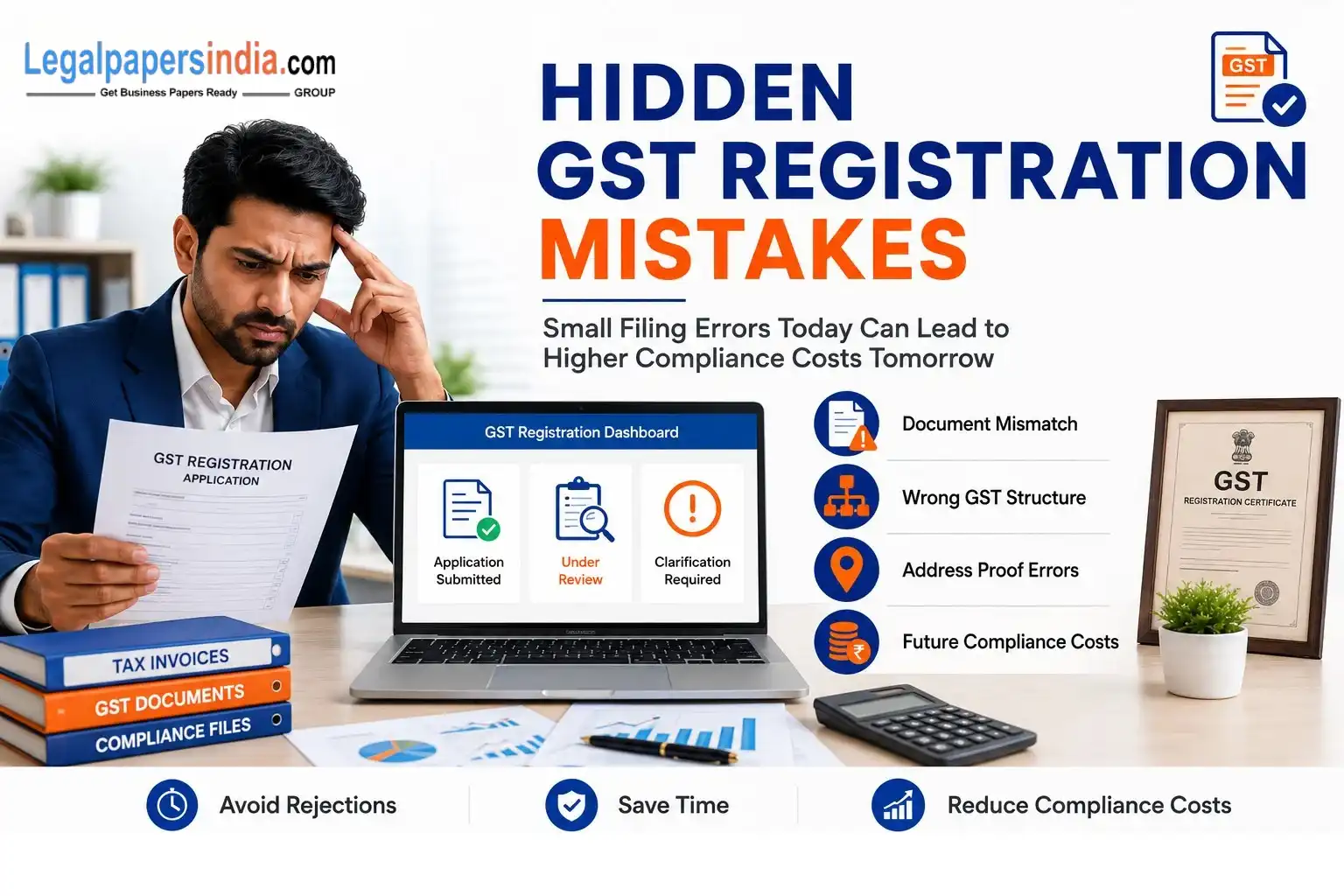
Common Decision-Stage Mistakes
These aren’t theoretical—they happen all the time.
Registering “just in case”
Many assume early registration is safe. It’s not. It adds unnecessary compliance.
Ignoring post-registration responsibility
Getting GSTIN is easy. Managing it isn’t.
Choosing the wrong scheme
For example:
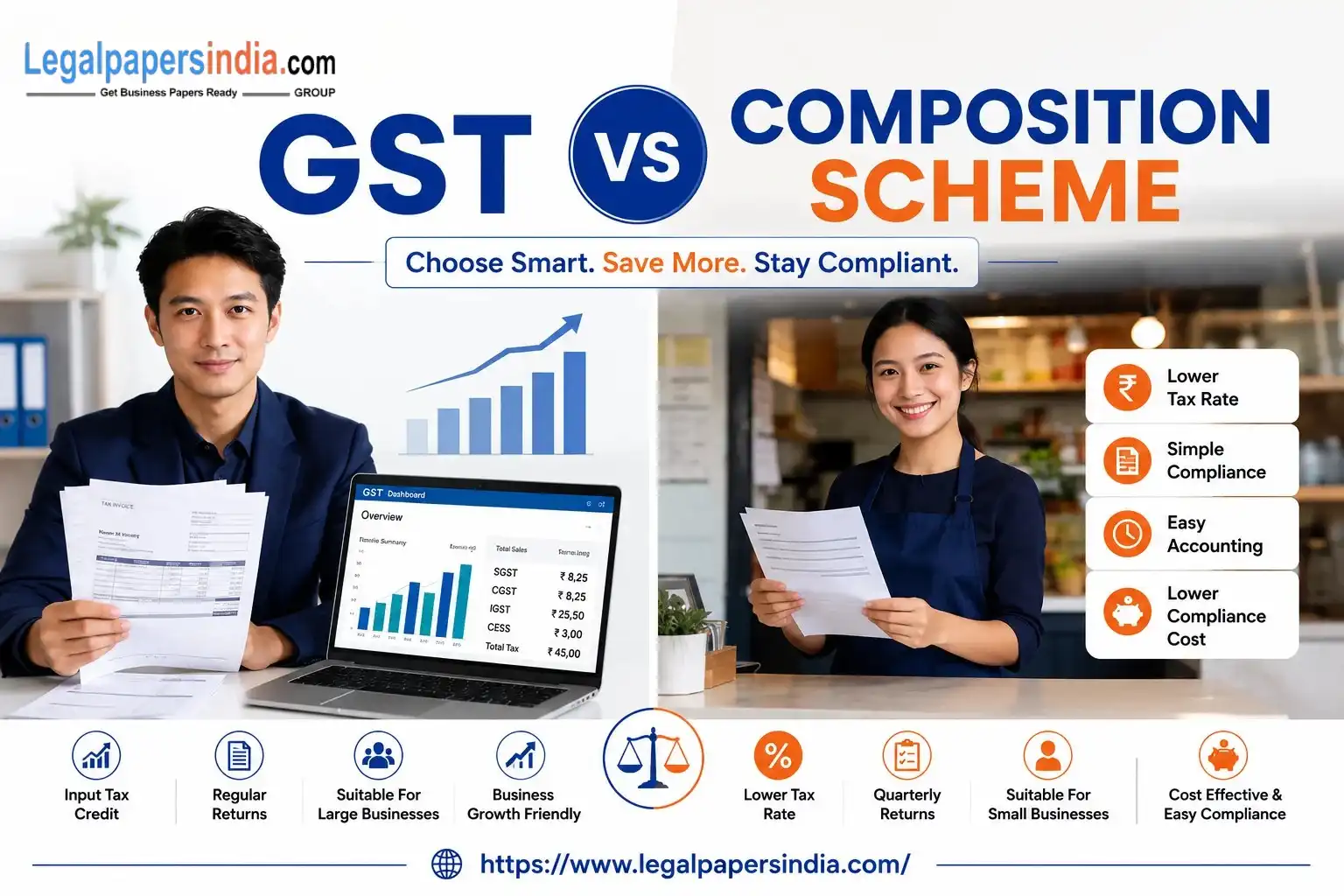
- Regular vs Composition Scheme confusion
- Selecting incorrectly can increase tax liability
Underestimating cost impact
Businesses often realize later:
“GST is affecting my pricing more than expected.”
Practical Scenarios (Real-World Clarity)
Scenario 1: Freelancer earning ₹8 lakh/year
- No interstate clients
- No GST requirement
Registration may hurt pricing competitiveness
Scenario 2: E-commerce seller starting out
- Selling on Amazon
- Interstate supply
GST registration is mandatory
Scenario 3: Small manufacturer scaling fast
- Nearing ₹20 lakh turnover
- Wants ITC benefits
Early registration makes sense
Scenario 4: Local service provider (salon, repair shop)
- Cash-based, local customers
Delaying GST may be practical
Final Decision Summary
If you’re still unsure, here’s the simplest way to think about it:
- Register now if compliance unlocks growth, credibility, or tax savings
- Wait if it only adds cost, complexity, and pricing pressure
GST registration isn’t just a legal step—it’s a business decision.
And the right timing matters more than the process itself.
Frequently Asked Questions
1. Is GST registration completely free in India?
Yes, the government does not charge a registration fee. However, professional assistance can cost ₹1,000–₹5,000 depending on complexity, and ongoing compliance costs should also be considered before deciding.
2. Can I register GST myself without a consultant?
Yes, you can apply directly through the GST portal. But errors in classification or documentation can delay approval or create compliance issues later.
3. What happens if I delay GST registration after crossing the limit?
You may face penalties, interest on tax dues, and compliance complications. It’s better to register as soon as eligibility criteria are met.
4. Does GST registration increase my business cost?
It can. Either you pass the tax to customers (raising prices) or absorb it (reducing margins). The impact depends on your business model.
5. Should a small business voluntarily register for GST?
If your clients require GST invoices or you want Input Tax Credit benefits, voluntary registration can help. Otherwise, it may add unnecessary compliance burden without clear advantages.
Conclusion
At this stage, you’re not looking for information—you’re looking for confidence.
And that confidence comes from understanding one simple thing:
GST registration is valuable only when it aligns with how your business earns and grows.
If you’re still weighing the decision or want clarity tailored to your situation, it’s worth understanding how experienced professionals approach it. You can learn more about the team and their approach here About Legal Papers India .
No pressure to act immediately—just make sure when you do, it’s the right move for your business.
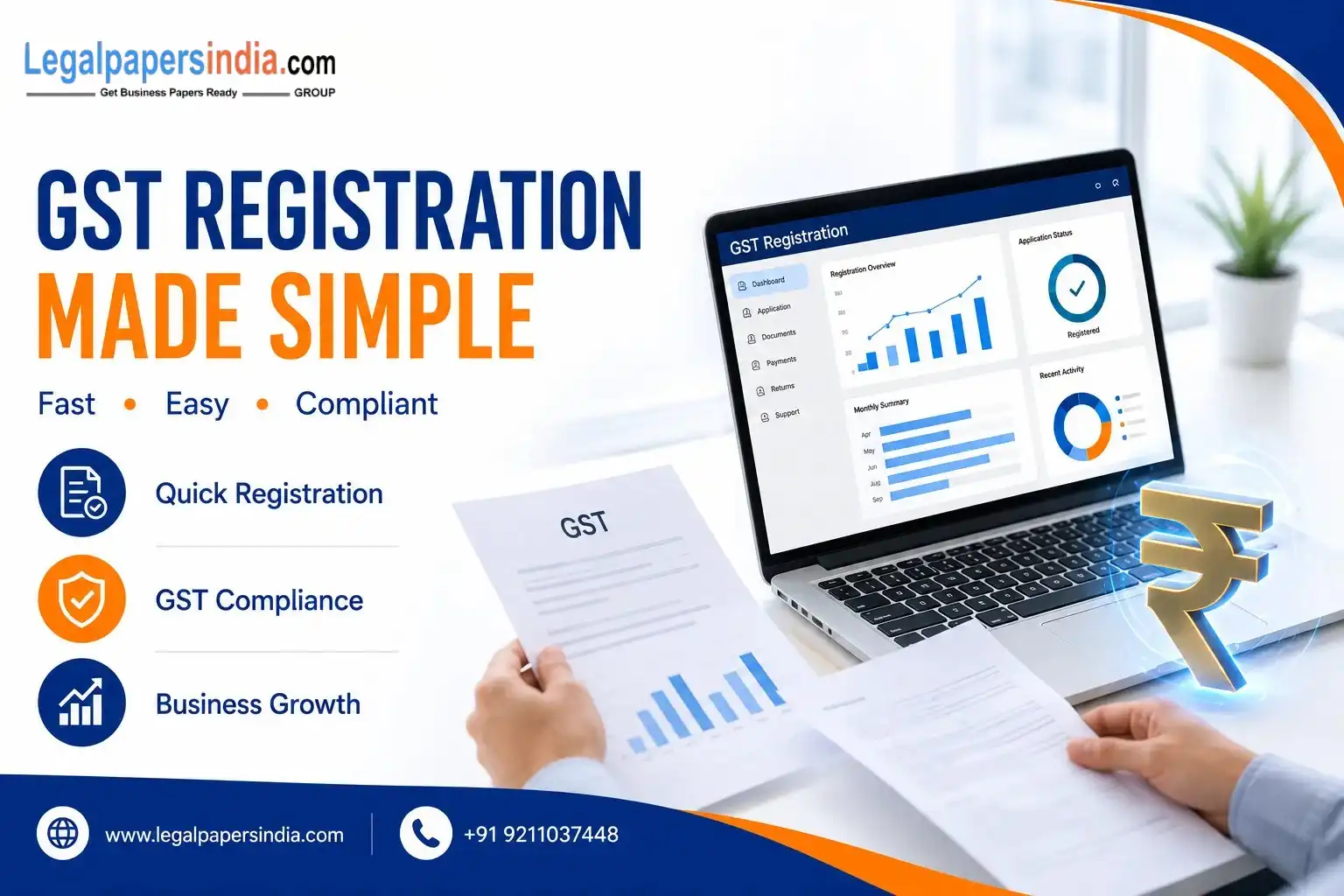
Get in touch with Legal Papers India for hassle-free GST Registration assistance. Our team helps with application filing, documentation, and GST compliance requirements.
Social Share: