
Sep 04, 2026
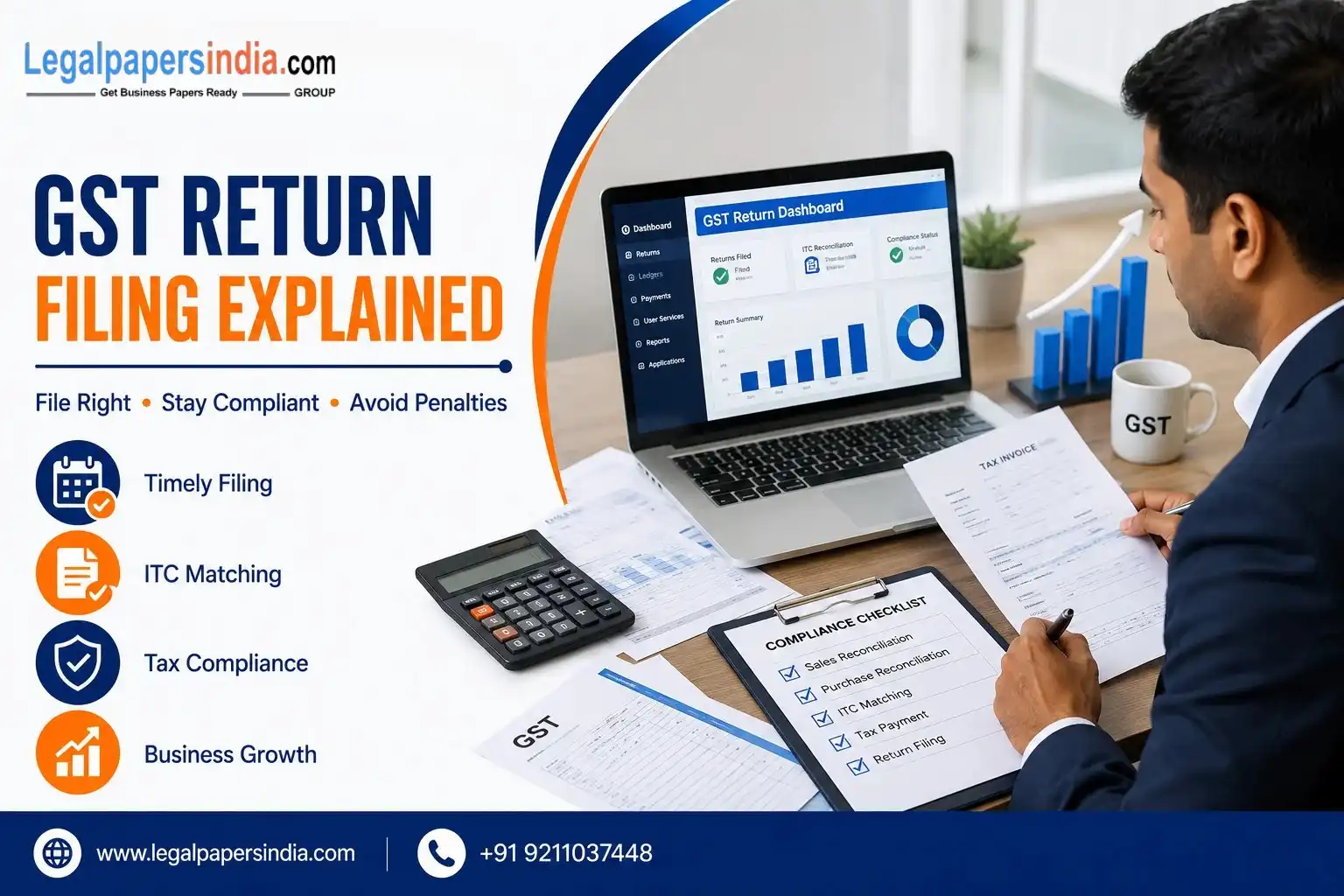
GST Return Filing Explained: What Businesses Actually Need to Know
When “everything is done” but GST still isn’t
You’ve issued invoices, received payments, maybe even reconciled your accounts—and yet, a nagging thought remains: “Have I filed my GST return correctly this month?”
For many business owners, GST compliance doesn’t feel complicated until deadlines approach or notices start appearing. The confusion isn’t just about what to file—it’s about when, how, and why it matters in the bigger picture.
This guide breaks that down in a way that reflects real-world scenarios, not just textbook explanations.
What is GST Return Filing?
GST return filing is the process of reporting your business’s sales, purchases, tax collected, and tax paid to the government through prescribed forms on the GST Portal.
It ensures that tax liability is calculated accurately and allows input tax credit (ITC) to be claimed or verified across the supply chain.
GST Return Filing Explained in Simple Terms
Think of GST return filing as a monthly (or periodic) financial summary you submit to the tax system.
It connects your invoices with your suppliers’ filings and validates whether the tax you collected and paid aligns with the ecosystem. Managed under Central Board of Indirect Taxes and Customs, this system ensures transparency and prevents tax leakage.
Why GST Return Filing Matters More Than It Seems
At first glance, GST returns may feel like a routine compliance task. In reality, they directly impact:
- Cash flow – Incorrect filing can block input tax credit
- Vendor relationships – Your filing affects others’ ITC eligibility
- Compliance rating – Consistency influences business credibility
- Legal exposure – Delays or errors can trigger notices or penalties
In practice, businesses often realize the importance only when ITC mismatches or penalties surface.
Who Needs to File GST Returns—and Who Doesn’t
Businesses That Must File
- Registered taxpayers under GST
- Businesses exceeding threshold turnover
- E-commerce sellers and operators
- Input service distributors
- Casual taxable persons
Even if there’s no transaction, a nil return may still be required.
Businesses That May Not Need to File
- Entities below GST registration threshold
- Fully exempt businesses (specific categories)
- Composition scheme taxpayers (file simplified returns, not regular ones)
That said, eligibility depends on business structure and activity—assumptions often lead to non-compliance.
How GST Return Filing Works
Unlike what many expect, GST filing isn’t just “upload and submit.” It follows a structured flow:
1. Record Transactions
All invoices—sales and purchases—must be properly recorded.
2. Classify Returns
Depending on your business type, forms like:
- GSTR-1 (outward supplies)
- GSTR-3B (summary return)
- GSTR-9 (annual return)
3. Upload Data on Portal
Data is uploaded on the GST Portal manually or via software.
4. Reconcile Data
Match your data with supplier filings to ensure ITC accuracy.
5. Pay Tax Liability
Any tax due must be paid before submission.
6. File and Submit Return
Final submission locks the data.
7. Post-Filing Monitoring
Track mismatches, notices, or corrections if needed.
Documents and Data You’ll Typically Need
The requirement isn’t just paperwork—it’s structured financial data.
- Sales invoices (B2B & B2C)
- Purchase invoices
- Debit/credit notes
- GSTIN details of clients/vendors
- Bank statements (for reconciliation)
- Input tax credit records
The complexity increases with transaction volume and multi-state operations.
Common Mistakes Businesses Make
Even experienced businesses slip on these:
- Filing returns without reconciliation
- Missing invoices in GSTR-1
- Claiming incorrect ITC
- Delayed filings assuming “it can be adjusted later”
- Ignoring notices or mismatch alerts
A practical insight: most GST issues arise not from ignorance, but from partial understanding combined with urgency.
Key Considerations Before You File
Before hitting “submit,” pause and check:
- Have you reconciled GSTR-2B with your books?
- Are all invoices correctly classified?
- Have reverse charge liabilities been accounted for?
- Is ITC eligibility verified?
These small checks prevent larger compliance headaches.
How Long Does GST Return Filing Take?
The actual filing might take minutes—but preparation varies:
- Small businesses: 2–6 hours monthly
- Medium businesses: 1–2 days (with reconciliation)
- Complex operations: Ongoing process throughout the month
Delays often come from missing data or mismatches—not the filing itself.
GST Return Types Compared)
|
Return Type |
Purpose |
Frequency |
|
GSTR-1 |
Sales reporting |
Monthly/Quarterly |
|
GSTR-3B |
Summary return |
Monthly |
|
GSTR-9 |
Annual return |
Yearly |
Each serves a distinct purpose, and confusion between them is a common issue.
Practical Scenarios Where Things Go Wrong
- A supplier delays filing → your ITC gets blocked
- You miss a small invoice → mismatch notice triggered
- Incorrect classification → tax liability increases
These aren’t rare—they’re everyday situations businesses face.
Frequently Asked Questions
1. Is GST return filing mandatory even if there are no sales?
Yes. Registered taxpayers must file a nil return even if no transactions occurred during the period. Skipping it can still attract penalties.
2. What happens if I miss a GST return deadline?
Late filing results in penalties and interest on tax dues. Continuous delays can also restrict return filing functionality on the portal.
3. Can I revise a GST return after submission?
GST returns cannot be revised directly. Corrections are made in subsequent returns, which makes accuracy during initial filing important.
4. How often do I need to file GST returns?
Most businesses file monthly returns, while some may qualify for quarterly filing under specific schemes.
5. Is GST filing complicated for small businesses?
It depends on transaction volume. While basic filing is manageable, reconciliation and compliance checks often create complexity.
When Professional Assistance Makes Sense
GST filing isn’t just about uploading data—it’s about ensuring compliance accuracy.
You may want expert support if:
- Your business deals with multiple vendors
- You face frequent ITC mismatches
- Notices or discrepancies arise
- You’re unsure about classifications
If you’re exploring how structured compliance support works, you can review the process here:
GST Return Filing services
Final Thoughts
GST return filing isn’t just a routine obligation—it’s a system that connects your business to the broader tax ecosystem.
Handled correctly, it keeps your compliance smooth and predictable. Handled casually, it creates recurring friction.
If you ever find yourself unsure—especially when dealing with mismatches, notices, or complex filings—it’s worth understanding the process deeper or seeking clarity from professionals.
To learn more about the team behind structured compliance guidance, you can explore Legal Papers India’s background or reach out through their contact page.
Legal Papers India provides professional GST Return Filing in India Explained registration services for startups and businesses across India. We assist with company incorporation, documentation, and compliance support for a smooth registration process.
Contact Legal Papers India for fast and reliable GST Return Filing in India Explained assistance. Our experts help with online filing, legal documentation, and business registration support.
Social Share: