

Sep 04, 2026
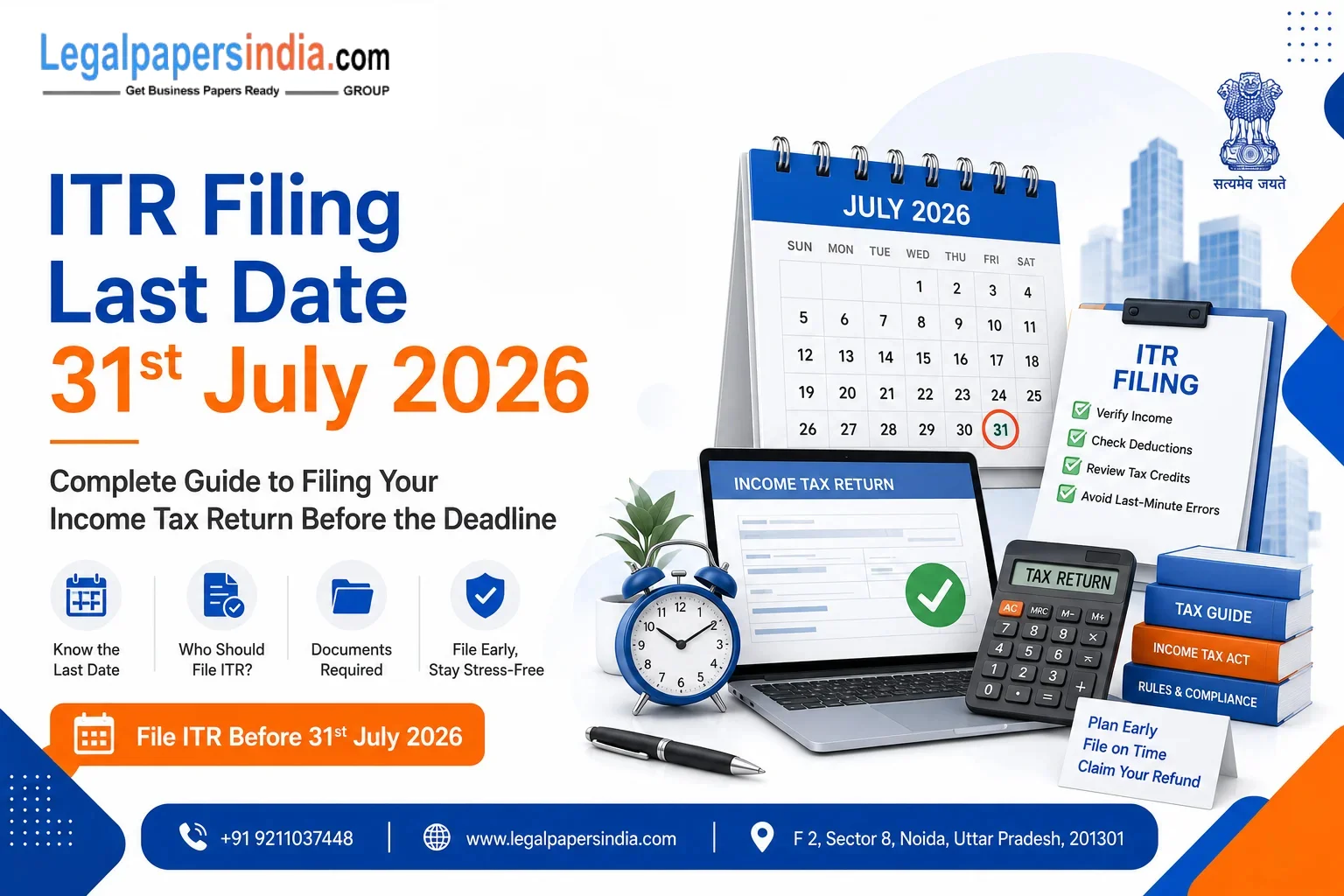
ITR Filing Last Date 31st July 2026
"Should I file my Income Tax Return before 31st July, or can I do it later?"
If this question has crossed your mind, you're certainly not alone. Every year, thousands of taxpayers wait until the final few days before the due date, believing that filing later won't make much difference. Others are unsure whether they are required to file at all, what documents they'll need, or whether mistakes in the return could lead to notices or delays in refunds.
The reality is that filing your Income Tax Return (ITR) isn't just about meeting a statutory deadline. It also helps maintain your financial records, supports future loan and visa applications, facilitates timely tax refunds, and demonstrates tax compliance. Waiting until the last moment can leave little time to resolve issues such as incorrect AIS or Form 26AS entries, PAN-Aadhaar mismatches, or missing tax documents.
For taxpayers whose accounts are not required to be audited, the due date for filing the Income Tax Return for the relevant assessment year is generally 31st July, unless extended by the Income Tax Department. Before filing, it's always advisable to verify the latest due dates and notifications issued by the tax authorities.
Whether you're a salaried employee, freelancer, consultant, business owner, or earning income from multiple sources, understanding your filing obligations before the deadline can help you avoid unnecessary complications.
If you're looking for professional Income Tax Return Filing services in Delhi NCR, choosing the right assistance before the deadline can make the filing process simpler and more accurate.
Who Should File Their Income Tax Return Before 31st July?
Although every taxpayer's situation is different, filing before the due date is generally beneficial for anyone required to submit an Income Tax Return.
You should consider filing before 31st July if you fall into any of the following categories.
Salaried Employees
If you receive salary income and meet the applicable filing requirements, filing your return on time helps maintain a consistent tax record.
Common reasons salaried individuals file before the deadline include:
- Claiming income tax refunds
- Maintaining financial documentation
- Applying for home or personal loans
- Supporting visa applications
- Carrying forward eligible losses where permitted
Even if tax has already been deducted through TDS, filing may still be required depending on your circumstances.
Freelancers and Consultants
Individuals providing professional or consulting services often receive income from multiple clients.
Filing before the deadline allows sufficient time to:
- Reconcile receipts
- Verify TDS deductions
- Report professional income accurately
- Review allowable deductions
Since freelance income may come from different sources, preparing the return early often reduces last-minute complications.
Business Owners
Proprietors and small business owners should review their financial records well before the due date.
Early preparation allows time to:
- Finalise accounts
- Verify expenses
- Confirm tax payments
- Organise supporting documentation
- Resolve accounting discrepancies
Businesses with more complex compliance requirements should avoid leaving tax filing until the final week.
Individuals with Multiple Income Sources
Many taxpayers now earn income from more than one source, such as:
- Salary
- House Property
- Bank Interest
- Fixed Deposits
- Capital Gains
- Dividends
- Freelancing
- Rental Income
The more income streams involved, the greater the importance of reviewing all tax information carefully before filing.
Senior Citizens
Senior citizens often receive income from pensions, investments, interest, and rental properties.
Preparing the return in advance provides additional time to:
- Verify deductions
- Confirm exempt income
- Review tax credits
- Resolve documentation issues
Who May Not Need to Rush Their Filing?
While filing early is generally recommended, not every taxpayer faces the same deadline or filing requirements.
For example:
- Certain taxpayers whose accounts require audit may have different due dates under the Income-tax Act.
- Individuals who are not required to file an Income Tax Return based on the applicable provisions may not need to submit a return.
- Taxpayers with complex financial matters may benefit from gathering complete documentation before filing rather than rushing to meet the deadline with incomplete information.
If you're unsure whether the 31st July deadline applies to your situation, seeking professional clarification can help avoid unnecessary mistakes.
Key Decision Criteria Before Filing Your Income Tax Return
Before you begin preparing your return, it's worth asking yourself a few practical questions.
A little preparation now can save considerable time later.
✔ Have You Collected All Required Documents?
Before filing, ensure you have access to documents such as:
- PAN Card
- Aadhaar Card
- Form 16 (where applicable)
- Form 26AS
- Annual Information Statement (AIS)
- Tax Information Summary (TIS)
- Bank Interest Certificates
- Capital Gain Statements
- Home Loan Interest Certificate
- Investment Proofs
- Insurance Premium Details
- Rent Receipts (where applicable)
Having complete documentation significantly improves filing accuracy.
✔ Have You Verified Form 26AS and AIS?
Many taxpayers file their return without reviewing their tax records.
Always compare your documents with:
- Form 26AS
- Annual Information Statement (AIS)
- Tax Information Summary (TIS)
If discrepancies are identified, they should ideally be addressed before filing.
✔ Have You Selected the Correct ITR Form?
Using the wrong ITR form is one of the most common filing errors.
The appropriate form depends on factors such as:
- Nature of income
- Residential status
- Business or professional income
- Capital gains
- Foreign assets
- Other reporting requirements
Choosing the correct return form is essential for an accurate filing.
✔ Have You Claimed Eligible Deductions?
Before submitting your return, review whether you are eligible for deductions or exemptions available under the applicable provisions of the Income-tax Act.
Examples may include:
- Eligible investments
- Insurance premiums
- Home loan benefits
- Education loan interest
- Medical insurance premiums
- Donations (where applicable)
Reviewing these before filing helps ensure your return accurately reflects your tax position.
✔ Have You Verified Your Bank Account Details?
Incorrect bank details can delay tax refunds.
Before filing, confirm:
- Account Number
- IFSC Code
- Pre-validation status
- Bank account linkage
A simple verification now may help avoid unnecessary follow-up later.
Cost & Compliance Considerations
Many taxpayers believe filing an Income Tax Return is simply a compliance requirement.
In reality, timely filing often supports several important financial objectives beyond taxation.
Direct Considerations
Before filing, consider:
- Accuracy of income reporting
- Applicable deductions
- Tax liability
- Refund eligibility
- Documentation requirements
- Selection of the correct ITR form
Indirect Financial Benefits
An accurately filed Income Tax Return can support:
- Home Loan applications
- Personal Loans
- Business Loans
- Visa processing
- Financial due diligence
- Higher credibility during financial verification
Many financial institutions request copies of recent Income Tax Returns as part of their assessment process.
Compliance Is an Ongoing Process
Filing your Income Tax Return before 31st July should not be treated as a once-a-year task completed at the last moment.
Maintaining organised financial records throughout the year makes future filings considerably easier.
If you require assistance beyond filing a single return, professional Income Tax Return Filing services can help ensure your return is prepared accurately while supporting your long-term tax compliance.
Risk Factors to Evaluate Before Filing Your Income Tax Return
Many taxpayers assume that filing an Income Tax Return is simply about entering income details and clicking "Submit." In practice, most filing issues arise because important information is overlooked or left until the last moment.
Before filing your return, consider these common risk factors.
1. Incorrect Income Reporting
One of the most frequent reasons for tax notices is incomplete income disclosure.
Many taxpayers report only their salary income while unintentionally omitting:
- Bank interest
- Fixed Deposit interest
- Rental income
- Capital gains
- Dividend income
- Freelance or consultancy earnings
- Income from other sources
Even if tax has not been deducted at source, certain income may still need to be reported in your return.
2. Mismatch Between Form 26AS, AIS and Your Return
At first glance, your return may appear correct. However, if the information reported differs from the records available with the Income Tax Department, it may lead to queries or delayed processing.
Before filing, compare your return with:
- Form 26AS
- Annual Information Statement (AIS)
- Tax Information Summary (TIS)
If discrepancies exist, review them carefully before submitting your return.
3. Choosing the Wrong ITR Form
Selecting an incorrect ITR form is a surprisingly common mistake.
The applicable return depends on several factors, including:
- Nature of income
- Residential status
- Business or professional income
- Capital gains
- Foreign assets
- Agricultural income
- Other statutory reporting requirements
Using the correct form from the outset can help avoid unnecessary revisions or complications.
4. Claiming Deductions Without Supporting Evidence
Many taxpayers claim deductions assuming they can provide documents later if required.
A better approach is to keep supporting records ready before filing.
Examples include:
- Investment proofs
- Health insurance premium receipts
- Home loan certificates
- Education loan interest certificates
- Donation receipts
- Rent receipts
Maintaining proper documentation strengthens the accuracy of your return.
5. Waiting Until the Last Few Days
Every year, taxpayers experience issues such as:
- Slow portal response
- Difficulty accessing documents
- Missing Form 16
- Bank account verification delays
- Technical errors
- Limited time to correct mistakes
Filing well before 31st July provides greater flexibility if any corrections become necessary.
Step-by-Step Action Plan for Filing Your Income Tax Return Before 31st July
If you're preparing to file your return, following a structured process can make the experience much smoother.
Step 1 – Collect All Financial Documents
Begin by gathering all relevant tax documents.
Your checklist should include:
- PAN
- Aadhaar
- Form 16
- Form 26AS
- AIS
- TIS
- Bank statements
- Interest certificates
- Investment documents
- Home loan certificates (if applicable)
- Capital gain statements
- Rental income records (where applicable)
Having everything in one place reduces the risk of missing important information.
Step 2 – Verify Tax Information
Cross-check your income and tax details against official records.
Pay particular attention to:
- TDS credits
- Salary details
- Interest income
- Investment income
- Capital gains
- Advance tax payments
Identifying discrepancies early makes them easier to resolve.
Step 3 – Choose the Correct Tax Regime and ITR Form
Before filing, review:
- Applicable tax regime
- Eligible deductions
- Income sources
- Correct ITR form
Many taxpayers overlook this step, even though it can significantly affect the accuracy of the return.
Step 4 – Calculate Your Tax Liability
Before submission, calculate:
- Gross income
- Eligible deductions
- Tax payable
- Advance tax already paid
- Self-assessment tax (if any)
- Refund eligibility
Reviewing these figures carefully helps minimise errors.
Step 5 – File and Verify the Return
Once satisfied with the information:
- Submit the return through the Income Tax e-Filing portal.
- Complete the applicable verification process.
A return is generally considered complete only after it has been verified in accordance with the prescribed procedure.
Step 6 – Keep Your Records Safe
After filing, retain copies of:
- Filed ITR
- Acknowledgement (ITR-V)
- Tax computation
- Supporting documents
- Investment proofs
- Bank records
These documents may be useful for future financial or compliance requirements.
Common Mistakes Taxpayers Make Before the 31st July Deadline
When reviewing tax returns, certain patterns appear repeatedly.
Being aware of them can help you avoid unnecessary complications.
Filing Without Reviewing AIS
Many taxpayers rely solely on Form 16.
However, AIS may contain additional transactions that should also be reviewed before filing.
Ignoring these records may result in incomplete reporting.
Assuming TDS Means No Return Is Required
A common misconception is:
"My employer has already deducted TDS, so I don't need to file."
Whether an Income Tax Return is required depends on the applicable provisions of the Income-tax Act and your individual circumstances—not simply on whether tax has been deducted.
Waiting for the Final Week
Some taxpayers postpone filing because they believe it only takes a few minutes.
In reality, last-minute filings often reveal issues such as:
- Missing documents
- Incorrect PAN details
- AIS mismatches
- Incorrect bank information
- Unreported income
Starting early gives you enough time to resolve these issues without unnecessary pressure.
Ignoring Small Sources of Income
Interest from savings accounts, fixed deposits, dividends, or occasional freelance work may appear insignificant individually.
However, these amounts may still need to be considered while preparing your Income Tax Return.
Not Verifying the Return
Some taxpayers assume filing is complete immediately after submission.
Remember that the return should also be verified through the prescribed method. Failing to complete this step may affect the processing of the return.
Practical Scenarios
Real-life situations often make filing decisions much easier to understand.
Scenario 1 – Salaried Employee Claiming a Refund
A salaried employee notices that excess TDS has been deducted during the financial year.
By filing the Income Tax Return before 31st July, the employee is able to claim the eligible refund without unnecessary delay.
Scenario 2 – Freelancer with Multiple Clients
A freelance graphic designer receives payments from several clients.
Before filing, they reconcile TDS entries reflected in Form 26AS with their own records, ensuring that all professional income is accurately reported.
Scenario 3 – First-Time Home Loan Applicant
A taxpayer planning to apply for a home loan is asked to provide Income Tax Returns for previous years as part of the lender's document verification process.
Having returns filed on time simplifies the application process and strengthens financial documentation.
Scenario 4 – Individual with Capital Gains
An investor sells listed shares during the financial year.
Rather than waiting until the deadline, they review broker statements, reconcile capital gains, and ensure the correct information is reported before filing the return.
Final Decision Summary
If you're required to file an Income Tax Return, waiting until the last moment rarely provides any advantage.
Preparing your documents early, reviewing your income carefully, verifying tax records, and filing before the 31st July due date can help reduce filing errors, improve refund processing, and support your overall financial compliance.
Whether you're a salaried employee, freelancer, business owner, or someone with multiple income sources, taking a structured approach to filing your return is generally more effective than rushing through the process at the last minute.
For taxpayers seeking professional support, Income Tax Return Filing services can assist with document review, return preparation, tax
calculations, and accurate filing, helping ensure your return reflects your financial position correctly.
Frequently Asked Questions (FAQs)
1. What is the last date for filing an Income Tax Return?
For most individual taxpayers whose accounts are not required to be audited, the due date for filing an Income Tax Return is generally 31st July of the relevant assessment year, unless extended by the Income Tax Department. Always check the latest official notification before filing.
2. What happens if I miss the 31st July ITR filing deadline?
If you miss the due date, you may still be able to file a belated return within the time permitted under the Income-tax Act, subject to applicable conditions. However, depending on your circumstances, late filing may result in consequences such as interest, late filing fees (where applicable), delayed refunds, or restrictions on carrying forward certain losses.
3. Which documents are required for Income Tax Return filing?
The documents required depend on your income sources. Commonly required documents include:
- PAN Card
- Aadhaar Card
- Form 16
- Form 26AS
- Annual Information Statement (AIS)
- Tax Information Summary (TIS)
- Bank Statements
- Interest Certificates
- Investment Proofs
- Home Loan Statement (if applicable)
- Capital Gain Statements
- Rental Income Details (if applicable)
4. Can I file my Income Tax Return myself?
Yes. Many taxpayers can file their Income Tax Return online through the Income Tax e-Filing portal. However, if your income includes business or professional income, capital gains, foreign assets, multiple income sources, or complex tax calculations, professional assistance can help improve accuracy and reduce the likelihood of errors.
5. Why should I file my Income Tax Return before 31st July?
Filing before the due date gives you sufficient time to verify your tax information, correct discrepancies, claim eligible deductions, complete return verification, and avoid last-minute technical issues. Early filing also supports faster processing of eligible refunds and helps maintain a clean tax compliance record.
Conclusion
Filing your Income Tax Return before the 31st July deadline is more than a statutory responsibility—it is an important step towards maintaining strong financial discipline.
Whether you're a salaried employee, freelancer, consultant, business owner, or investor, timely filing helps ensure your income is accurately reported, eligible deductions are claimed, and your tax records remain up to date. It can also simplify future financial transactions, including loan applications, visa processing, and income verification.
Instead of waiting until the final few days, review your financial documents early, verify the information available in Form 26AS and AIS, choose the correct ITR form, and complete your filing with confidence.
At Legal Papers India, we assist individuals, professionals, and businesses with accurate Income Tax Return Filing, tax compliance, and advisory services. If you're unsure about your filing requirements or need professional guidance, our experienced team can help you understand your obligations and complete your return correctly. To know more about our expertise and approach, visit our About Us page before making your decision.
Contact Legal Papers India for reliable GST Return filing support. Our experts assist businesses with timely filing, compliance management, and GST-related documentation services.
Social Share: