
Sep 04, 2026
GST Registration Process: What Businesses Should Know Before Applying
When a Simple Invoice Becomes a Bigger Compliance Question
A freelancer lands a long-term client and suddenly gets asked for a GST invoice.
An online seller starts receiving orders from multiple states and notices marketplaces asking for a GSTIN.
A small business owner crosses a turnover threshold but delays registration because the process feels confusing.
These situations are more common than most people expect.
The GST registration process is often treated as just another compliance formality, but in reality, it directly affects invoicing, tax collection, interstate business operations, input tax credit eligibility, and even vendor credibility. Many businesses only look into it after facing payment delays, marketplace restrictions, or notices related to non-compliance.
Understanding how the process actually works — including eligibility, documentation, timelines, and common mistakes — can help avoid unnecessary complications later.
What Is the GST Registration Process?
GST registration is the process through which a business or individual obtains a Goods and Services Tax Identification Number (GSTIN) under India’s indirect tax system. Once registered, the entity becomes legally authorized to collect GST from customers, issue GST-compliant invoices, and file GST returns through the GST portal.
This process applies to eligible businesses involved in the supply of goods or services, interstate trade, e-commerce selling, or operations that fall within mandatory registration categories under GST law.
GST Registration Explained in Practical Terms
In practical business terms, GST registration acts as a formal tax identity for your business under the GST framework. It connects your business activities with tax reporting, invoice generation, input tax credit claims, and compliance tracking maintained by tax authorities.
For many businesses, registration becomes relevant not only because of turnover limits, but also due to vendor requirements, marketplace onboarding, B2B transactions, and expansion into multiple states.
Why GST Registration Matters Beyond Compliance
Many business owners initially assume GST registration only matters once revenue becomes “large enough.” In practice, its impact starts much earlier.
Here’s why it matters:
- It allows businesses to issue GST-compliant invoices
- Helps claim input tax credit on eligible purchases
- Improves credibility with vendors and corporate clients
- Becomes mandatory for certain business models regardless of turnover
- Enables interstate supply without avoidable restrictions
- Supports smoother onboarding on e-commerce platforms
There’s also a practical side to it. Businesses operating without required registration may face delayed payments, rejected invoices, or penalties if authorities determine registration should have been obtained earlier.
Entities connected to the process typically include the Goods and Services Tax Network and tax authorities functioning under the GST framework in India.
Who Should Consider GST Registration — and Who May Not Need It
Businesses Commonly Required to Register
GST registration may apply in situations such as:
- Businesses crossing prescribed turnover limits
- Interstate suppliers of goods
- E-commerce sellers
- Businesses selling through online marketplaces
- Service providers operating across states
- Input service distributors
- Casual taxable persons
- Certain agents and intermediaries
A growing digital business often encounters GST requirements earlier than expected. For example, someone selling through an online marketplace may require registration even before reaching standard turnover thresholds.
Businesses or Individuals Who May Not Need Registration
In some situations, GST registration may not be necessary immediately.
Examples may include:
- Small businesses operating below threshold limits
- Individuals supplying exempt goods or services
- Hobby-level activities without commercial intent
- Certain agriculturists, depending on activity type
However, exemptions are situation-specific. A business may still require registration based on interstate supply, e-commerce participation, or nature of services.
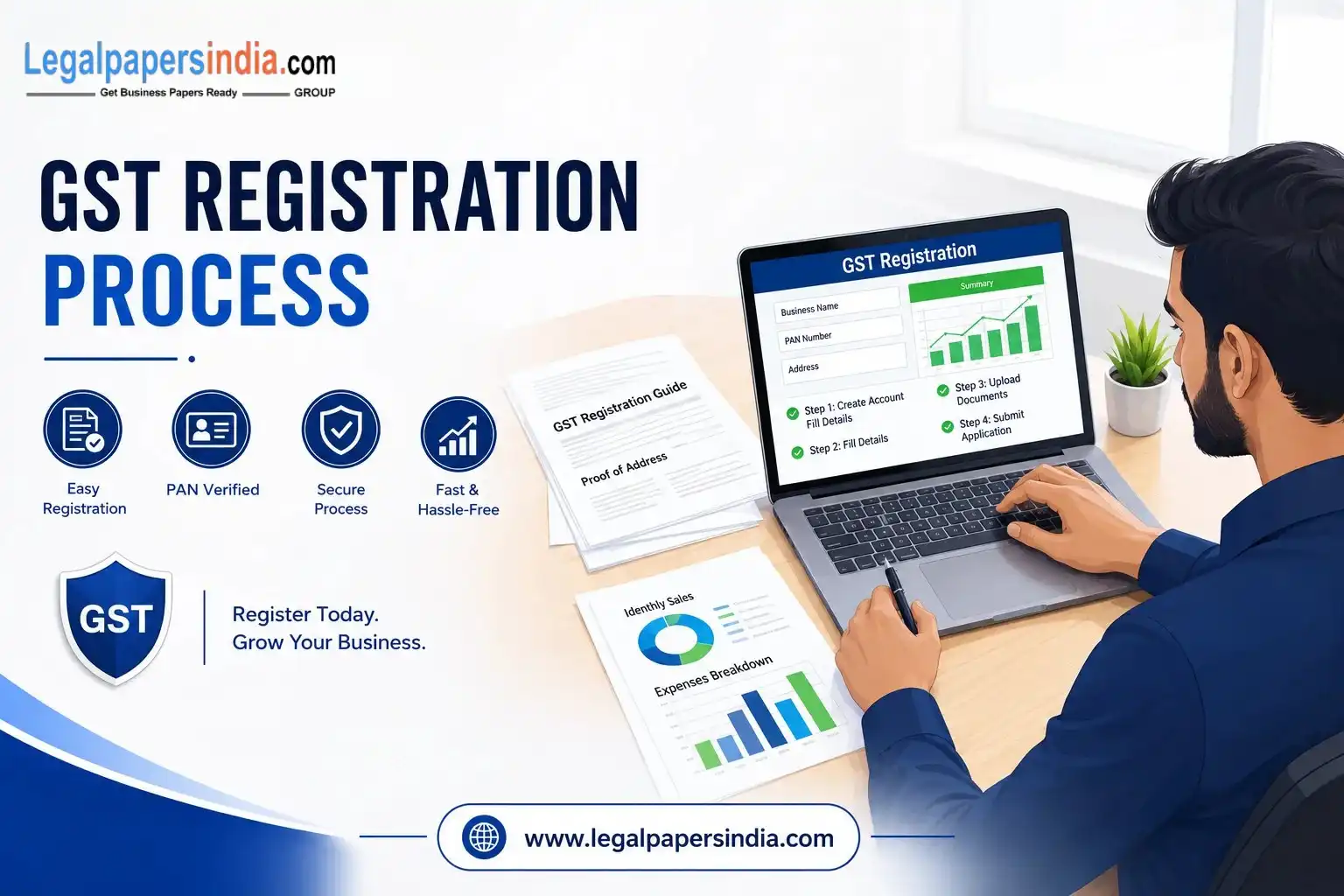
How the GST Registration Process Works Step by Step
1. Determine Eligibility
Before applying, businesses should first confirm whether registration is mandatory, voluntary, or currently unnecessary.
This depends on factors such as:
- Annual turnover
- Nature of goods or services
- State-wise operations
- E-commerce involvement
- Interstate transactions
Many registration delays happen because businesses assume turnover alone determines applicability.
2. Gather Required Documents
The application process generally requires identity, address, and business-related documents.
Commonly required documents include:
- PAN card of business or applicant
- Aadhaar details
- Business address proof
- Bank account details
- Photograph of promoters or proprietors
- Constitution documents (partnership deed, incorporation certificate, etc.)
Document requirements may vary based on business structure.
3. Create an Application on the GST Portal
The application is submitted online through the GST system.
Applicants receive a Temporary Reference Number (TRN) during the initial stage, which helps continue and complete the application later if needed.
At this point, accuracy becomes critical. Even small inconsistencies between PAN data, address proof, and business details can lead to clarification notices.
4. Verification and Authentication
Authorities review the submitted application and may request clarification or additional documentation.
In some cases:
- Aadhaar authentication may simplify approval
- Physical verification may be triggered
- Additional explanations may be requested
This stage varies depending on business profile and risk parameters.
5. GSTIN Allotment and Registration Certificate
Once approved, the applicant receives:
- GSTIN (GST Identification Number)
- GST registration certificate
- Access to GST return filing system
From this point onward, the business becomes responsible for GST-related compliance obligations.
6. Post-Registration Compliance Begins
This is where many first-time applicants underestimate responsibilities.
After registration, businesses may need to:
- File periodic GST returns
- Maintain compliant invoices
- Track input tax credit
- Reconcile purchase and sales records
- Update registration details when business information changes
Registration is therefore not the final step — it marks the beginning of ongoing compliance management.
For businesses seeking a broader understanding of registration-related procedures and compliance support, the detailed GST registration service page provides additional context.
Documents Required During GST Registration
Different business structures require different supporting documents.
For Sole Proprietorships
Typically required:
- PAN card
- Aadhaar card
- Address proof
- Bank details
For Partnerships Firm
Additional documents may include:
- Partnership deed
- Authorization letter
- Partner identity proofs
For Companies or LLPs(Limited Liability Partnership)
Common requirements include:
- Certificate of incorporation
- PAN of company
- Board resolution or authorization
- Director KYC documents
One practical issue businesses often face is address proof mismatch. For example, utility bills, rental agreements, and business registration details should ideally align to reduce verification delays.
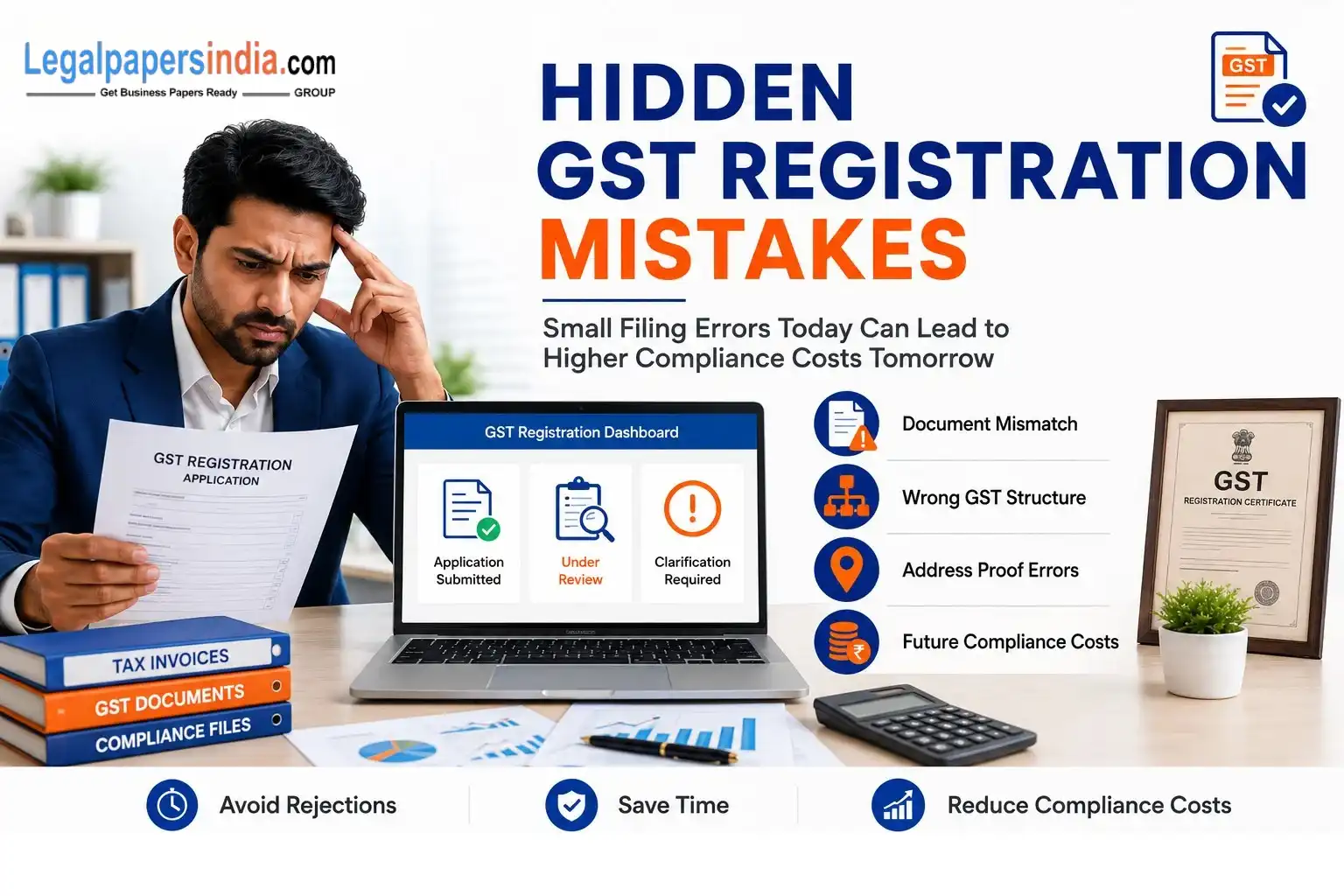
Common Mistakes During the GST Registration Process
Applying Under the Wrong Business Category
Choosing incorrect constitution details or registration type can create later compliance complications.
Using Inconsistent Information
Even minor spelling differences between PAN records and submitted documents may trigger clarification requests.
Ignoring State-Specific Registration Needs
Businesses operating in multiple states sometimes assume one GST registration covers all locations.
In reality, separate state registrations may be required.
Delaying Registration After Eligibility
Some businesses wait until notices arrive before applying. This can lead to penalties and compliance backlog.
Forgetting Post-Registration Obligations
A surprising number of applicants focus only on obtaining GSTIN while overlooking return filing responsibilities afterward.
GST Registration vs Voluntary Registration
Not every business registers because it is legally required to.
Mandatory Registration
Applies when legal conditions under GST law make registration compulsory.
Voluntary Registration
Some businesses choose registration voluntarily because it helps:
- Work with larger clients
- Claim input tax credit
- Improve operational credibility
- Participate in interstate commerce more smoothly
Voluntary registration still carries compliance responsibilities, so businesses should evaluate operational readiness before proceeding.
Key Things to Consider Before Applying
Before starting the process, businesses should think beyond documentation alone.
Important considerations include:
- Will you need interstate billing?
- Are your clients asking for GST invoices?
- Will you claim input tax credit?
- Are you prepared for recurring return filing?
- Does your business structure match registration details?
This becomes especially important for startups and small service providers. In many cases, businesses rush into registration without understanding ongoing filing requirements and reconciliation obligations.
How Long Does GST Registration Usually Take?
The timeline can vary depending on verification complexity and document accuracy.
Typical Timeline
In straightforward cases, approval may happen within a few working days.
However, delays can occur due to:
- Document mismatch
- Address verification issues
- Clarification notices
- Aadhaar authentication problems
- Technical portal delays
Businesses with complete and properly aligned documentation generally experience faster processing.
Frequently Asked Questions About the GST Registration Process
1. Is GST registration mandatory for freelancers?
It depends on turnover, nature of services, and interstate supply conditions. Some freelancers may require registration even below standard turnover thresholds if specific GST rules apply.
2. Can a small online seller operate without GST registration?
In many cases, e-commerce marketplace participation triggers GST registration requirements regardless of turnover. Platform-specific compliance rules also influence this.
3. What happens if a business delays GST registration?
Delayed registration can lead to penalties, tax liabilities, compliance notices, and difficulties in issuing valid GST invoices for earlier transactions.
4. Do businesses need separate GST registration in every state?
Yes, businesses operating from multiple states may require separate registrations for each state where taxable supplies are made.
5. Can GST registration be cancelled later?
Yes, registration can be surrendered or cancelled under eligible circumstances, subject to applicable procedures and pending compliance obligations.
When Professional Assistance Becomes Helpful
GST registration itself may appear straightforward online, but practical complications often arise during document verification, classification selection, and post-registration compliance setup.
Professional guidance may become useful when:
- Business structures are complex
- Multiple states are involved
- Clarification notices are received
- Turnover applicability is unclear
- E-commerce operations are involved
Businesses also benefit from understanding compliance implications before registration rather than reacting after issues arise.
You can also explore the company background and compliance-focused approach through the About Us section of Legal Papers India.
Conclusion
The GST registration process is more than a digital application form. It directly influences how a business invoices clients, manages tax credits, handles interstate operations, and maintains regulatory compliance.
For some businesses, registration is legally mandatory. For others, it becomes a strategic operational necessity as they grow.
The important part is not simply obtaining a GSTIN, but understanding the responsibilities that begin afterward. A careful approach during the registration stage can prevent avoidable compliance issues later.
If your situation involves uncertainty around eligibility, documentation, or post-registration obligations, consulting experienced professionals before proceeding can help reduce errors and improve compliance readiness.
Contact Legal Papers India for hassle-free GST registrationassistance. Our team helps with fast application filing and complete registration support for food businesses.
Social Share: