
Sep 04, 2026
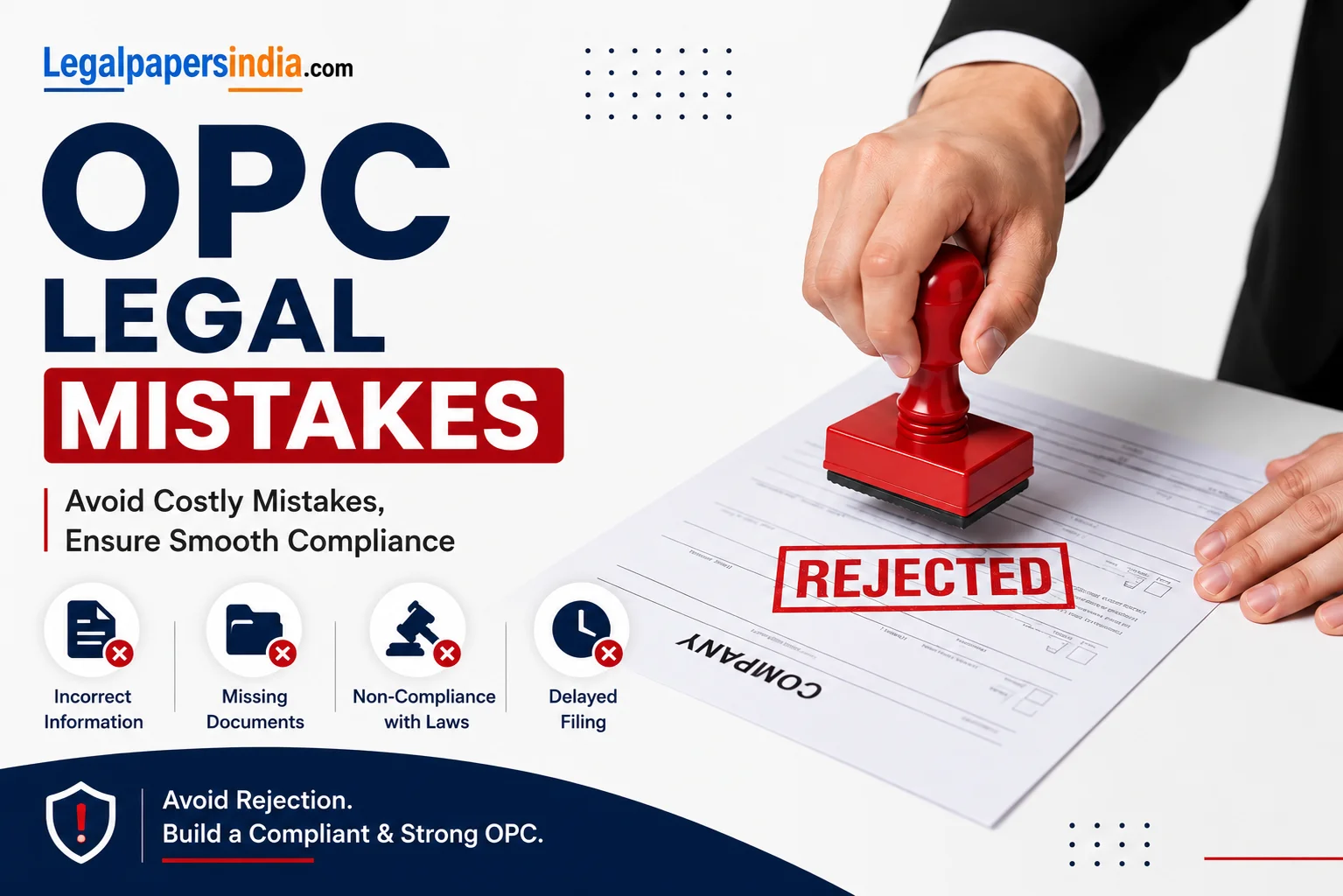
OPC Legal Mistakes: What They Really Cost Founders Later
When “Low-Cost OPC Registration” Turns Expensive Later
A lot of founders think the biggest expense in starting a One Person Company is the registration fee itself. In reality, many end up spending more fixing avoidable legal mistakes after incorporation than they did during registration.
Some choose the cheapest filing option available, skip compliance guidance, or assume “single owner” means fewer legal responsibilities. Then issues start appearing later — rejected bank documentation, compliance notices, correction filings, delayed funding conversations, or penalties for missed ROC obligations.
That’s where the real cost confusion around OPC legal mistakes begins.
The problem usually isn’t just the government fee. It’s misunderstanding what actually affects compliance cost, documentation accuracy, and long-term legal maintenance.
What Do OPC Legal Mistakes Usually Cost?
Minor OPC legal mistakes may only require document corrections or additional professional filing support. But more serious errors such as incorrect nominee details, non-compliance with ROC filings, improper capital structure, or missed annual compliance can lead to significantly higher rectification costs, penalties, delays, and operational disruption.
The actual cost depends on:
- Type of legal mistake
- How early the issue is identified
- Whether corrective filings are needed
- Compliance delay duration
- Professional assistance required
Businesses that treat OPC registration as a one-time formality often underestimate these long-term costs.
Who Should Be Careful About These Costs And Who Usually Isn’t Affected
Not every OPC founder faces the same level of legal risk.
Founders who should pay close attention:
- First-time entrepreneurs
- Freelancers formalizing operations
- Consultants shifting to company structure
- Solo eCommerce sellers
- Small agencies opening current accounts
- Founders expecting future funding or conversion to private limited structure
Businesses less likely to face major OPC correction costs:
- Dormant or inactive OPCs
- Very small local operations with limited transactions
- Businesses using experienced compliance professionals from the beginning
Many founders assume OPCs are “simple companies.” Legally, they are simpler than multi-director companies — but they still operate under company law requirements.
What Actually Determines the Cost of OPC Legal Mistakes?
The biggest misunderstanding is assuming all mistakes cost the same to fix.
They don’t.
A missed filing and an incorrectly structured incorporation can have completely different financial implications.
Here are the real cost drivers.
1. Nature of the Legal Error
Some issues are procedural. Others affect legal validity.
For example:
- Typographical corrections are usually manageable
- Wrong business activity classification may require modification filings
- Incorrect nominee details can create future compliance complications
- Missing statutory filings may attract late fees and penalties
The deeper the issue affects company records, the higher the correction effort.
2. Delay Duration
One overlooked compliance can become expensive simply because it remained unresolved for months.
Late annual filing penalties often increase progressively. Many founders only notice the issue after:
- Bank verification failures
- MCA notices
- GST complications
- Investor due diligence
The longer a mistake stays unresolved, the more paperwork and professional involvement it may require.
3. Documentation Quality
Poor documentation is one of the most underestimated cost triggers.
Common examples include:
- Address proof mismatches
- Invalid utility bills
- Incorrect PAN details
- Signature inconsistencies
- Unclear business object drafting
Low-cost filing providers sometimes focus only on submission speed, not long-term documentation accuracy.
4. Whether Corrective ROC Filings Are Needed
Some legal mistakes require:
- Resubmission
- Amendment filings
- Board resolutions
- Professional certification
- Additional government filing fees
This is where founders realize the original “cheap registration package” did not include correction support.
Cost Breakdown: Where Businesses Usually Spend More Than Expected
Here’s how OPC legal mistakes typically create additional expenses.
| Area |
Potential Impact |
|
Incorrect incorporation details |
Correction filing costs |
|
Missed annual compliance |
Additional late fees |
|
Wrong business activity selection |
Modification procedures |
|
Delayed DIN/KYC compliance |
Penalty exposure |
|
Improper nominee information |
Legal rectification effort |
|
Non-maintained statutory records |
Professional reconstruction support |
|
Conversion-related mistakes |
Higher restructuring costs |
Many founders don’t overspend because the original OPC registration was expensive. They overspend because preventable compliance issues accumulate quietly.
Typical Price Range for Fixing OPC Legal Issues
There is no universal correction cost because legal mistakes vary significantly.
However, businesses usually encounter expenses across three broad levels:
Basic-Level Corrections
Usually involves:
- Minor document corrections
- Resubmission assistance
- Filing clarification support
These are generally manageable if caught early.
Mid-Level Compliance Rectification
Usually includes:
- Delayed ROC filings
- DIN or KYC issues
- Compliance backlog management
- Professional drafting assistance
Costs rise here because professional review becomes more involved.
Advanced Rectification or Structural Corrections
Can involve:
- Shareholding corrections
- Conversion complications
- Legal restructuring
- Long-pending compliance defaults
- Multi-stage filings
This is where founders often realize prevention would have cost far less than correction.
Different OPC Situations Create Different Cost Risks
Scenario 1: Freelancer Starting an OPC
Usually low-risk initially.
But common mistakes include:
- Wrong business activity description
- Improper expense planning
- Ignoring annual compliance
These issues appear later during taxation or banking processes.
Scenario 2: Growing Startup Using OPC as Initial Structure
This group often faces:
- Conversion-related legal issues
- Equity planning problems
- Incorrect authorized capital assumptions
The cost risk increases when scaling plans were not considered during incorporation.
Scenario 3: eCommerce or Digital Sellers
These businesses often face:
- GST coordination problems
- Bank verification mismatches
- Marketplace compliance issues
A small documentation inconsistency can delay operations significantly.
Hidden Costs Founders Rarely Consider
This is where most expectation gaps happen.
People compare only registration package pricing, while ignoring downstream legal and operational costs.
Common hidden costs include:
- Late filing penalties
- Compliance restoration work
- Professional consultation fees
- Refiling government charges
- Banking delays
- Contract credibility issues
- Time lost during corrections
One practical example:
A founder may save a small amount during incorporation by using incomplete documentation guidance, but later spend far more correcting rejected filings during annual compliance.
That pattern is surprisingly common.
How to Reduce OPC Compliance and Correction Costs
Reducing legal cost is less about finding the cheapest service and more about avoiding preventable mistakes.
Practical ways businesses reduce future expenses:
Verify business activity drafting carefully
Poorly drafted object clauses create future modification problems.
Keep nominee information updated
Founders often ignore nominee changes until compliance issues appear.
Avoid delaying annual filings
Small delays become disproportionately expensive later.
Maintain proper records from day one
Reconstructing records later usually costs more than maintaining them properly.
Understand future scalability
If future conversion to private limited company is likely, structure decisions should reflect that early.
Businesses exploring long-term structuring options often review compliance guidance alongside their OPC registration process rather than treating incorporation as a standalone filing step.
Common OPC Legal Mistakes That Increase Cost the Most
Choosing registration solely on lowest pricing
This is probably the most repeated issue.
Extremely low-cost filing services sometimes exclude:
- Compliance guidance
- Correction handling
- Drafting review
- Post-registration assistance
The hidden expense appears later.
Ignoring post-incorporation compliance
Many founders believe registration completion means legal work is finished.
In reality, OPC compliance continues annually.
Using inconsistent documentation
Even small mismatches between:
- PAN
- Aadhaar
- Address proof
- Bank details
can create filing complications later.
Delaying professional review after notices
Some businesses wait too long after receiving MCA notifications or compliance reminders.
That delay often increases rectification effort and penalty exposure.
Real-World Situations Where Founders Commonly Overspend
Example 1: The “Quick Registration” Problem
A consultant rushed incorporation without properly reviewing business activity classification.
Months later, the founder needed modifications for GST and banking alignment.
The correction process cost more than the original registration.
Example 2: Ignored Annual Filing
An inactive OPC ignored ROC filing obligations assuming “no business activity” meant “no compliance.”
Later, restoration and penalty handling became far more expensive than routine annual compliance would have been.
Example 3: Growth Without Structure Planning
A solo founder later wanted investor participation.
But earlier OPC setup decisions complicated conversion planning, increasing restructuring cost and legal documentation work.
Frequently Asked Questions
1. How much does it cost to fix OPC legal mistakes?
Minor corrections may involve limited filing or professional assistance costs, while major compliance defaults or structural issues can become significantly more expensive depending on delay, penalties, and rectification complexity.
2. Are OPC compliance penalties fixed?
No. Penalties and additional costs usually depend on the nature of the default, filing delay duration, and applicable compliance provisions.
3. Can incorrect OPC registration details be corrected later?
Yes, many issues can be corrected through amendment or rectification filings. However, the process may require additional documentation, professional certification, and government filing charges.
4. Why do some OPC registration providers charge very low fees?
Some low-cost packages may exclude drafting review, compliance guidance, correction support, or post-incorporation assistance. Founders often discover these exclusions later.
5. Is professional help necessary for OPC compliance?
Not always for every small issue. But professional review becomes valuable when dealing with ROC filings, correction procedures, compliance delays, or future restructuring decisions.
Decision Clarity: What Matters More Than “Cheap OPC Registration”
The better question usually isn’t:
“How low can the registration fee go?”
It’s:
“Will the structure remain compliant and workable six months later?”
A slightly higher upfront compliance-focused approach often reduces:
- Future corrections
- Filing stress
- Legal ambiguity
- Banking issues
- Operational delays
That doesn’t mean businesses should overpay. It simply means the cheapest option is not always the lowest-cost outcome.
When Professional Guidance Starts Making Sense
Professional support becomes more valuable when:
- You expect business growth
- Future conversion is likely
- Compliance timelines feel confusing
- Documentation involves multiple activities
- You want fewer correction risks later
Many founders prefer reviewing incorporation and compliance requirements together rather than handling filings reactively after problems arise.
Businesses evaluating provider credibility sometimes also review the operational presence and experience behind firms like Legal Papers India’s service network before choosing long-term compliance support.
Conclusion
OPC legal mistakes rarely become expensive overnight. The cost usually builds gradually through delays, ignored compliance, rushed filings, or incomplete understanding of company obligations.
Most founders don’t intentionally make poor decisions. They simply underestimate how documentation quality, filing accuracy, and ongoing compliance affect long-term cost.
A clearer understanding at the beginning often prevents unnecessary spending later.
If you’re evaluating OPC registration or reviewing an existing structure, it may help to explore professional guidance through Legal Papers India to better understand compliance responsibilities, possible risks, and practical next steps before issues become harder to correct.
Legal Papers India provides professional OPC Legal Mistake registration services for startups and businesses across India. We assist with company incorporation, documentation, and compliance support for a smooth registration process.
Contact Legal Papers India for fast and reliable OPC Legal registration assistance. Our experts help with online filing, legal documentation, and business registration support.
Social Share: