
Sep 04, 2026
IEC Complete Guide: Everything Businesses Should Know Before Starting Import or Export
When a Small Business Gets Its First International Inquiry
A manufacturer receives an email from a buyer in Dubai asking for a product sample.
An Amazon seller suddenly wants to source products from China.
A startup plans to sell handmade goods overseas but gets stuck at one basic question: “Can we legally import or export without an IEC?”
This is usually the point where business owners discover that international trade in India starts with one important requirement — the Import Export Code (IEC).
What makes it confusing is that many businesses assume IEC is only for large exporters. In reality, even small online sellers, freelancers dealing in foreign clients, and growing D2C brands may need it depending on how transactions are structured.
Understanding where IEC applies, where it does not, and how the process actually works can prevent unnecessary delays once international business opportunities begin appearing.
IEC Complete Guide
Why Businesses Start Searching for IEC Information
For many businesses, IEC registration becomes relevant unexpectedly rather than as part of long-term planning.
Common situations include:
- Receiving international purchase orders
- Importing raw materials or machinery
- Selling products through global marketplaces
- Receiving foreign currency payments tied to goods exports
- Expanding into cross-border e-commerce
- Working with customs authorities for international shipments
In practical terms, IEC acts as the business identification number for import-export activities in India.
Without it, customs clearance and several international trade-related banking processes can become difficult or impossible.
What Is IEC Registration?
An Import Export Code (IEC) is a 10-digit identification number issued by the Directorate General of Foreign Trade under the Ministry of Commerce and Industry. It is generally required for businesses or individuals involved in importing goods into India or exporting goods and services outside India.
IEC Explained in Simpler Terms
Think of IEC as the basic trade identity of a business for international transactions.
Just as GST registration helps businesses operate within India’s tax framework, IEC helps businesses legally participate in cross-border trade activities involving customs clearance, foreign trade documentation, and international payments.
Why IEC Registration Matters
Many business owners view IEC as “just another registration,” but its importance becomes clear once actual trade operations begin.
IEC often connects multiple systems involved in international commerce:
- Customs processing
- International shipping documentation
- Foreign remittances
- Trade compliance records
- Import-export banking transactions
Without proper registration, businesses may face:
- Shipment clearance delays
- Banking complications for foreign payments
- Customs documentation rejection
- Regulatory non-compliance issues
For businesses planning long-term global expansion, IEC also helps create a formal trade footprint.
Who Should Consider IEC Registration?
IEC is commonly relevant for:
Businesses Importing Goods
Examples include:
- Electronics importers
- Machinery buyers
- Raw material importers
- E-commerce sourcing businesses
Businesses Exporting Products
Such as:
- Textile exporters
- Food product sellers
- Handicraft manufacturers
- D2C brands shipping internationally
Service Exporters
In certain cases, service providers receiving foreign currency payments may also obtain IEC for smoother compliance and banking processes.
Online Sellers Expanding Internationally
Businesses selling through:
- Amazon Global
- Etsy
- Alibaba
- Shopify international stores
often explore IEC early to avoid operational barriers later.
If your business operates from multiple locations, it can also help to review the company’s operational presence through the regional service network for documentation coordination and compliance support.
Who May Not Need IEC?
IEC is not universally mandatory for every foreign transaction.
Situations where it may not be required include:
- Personal imports not connected to business activity
- Certain government departments or ministries
- Limited categories exempted under specific regulatory provisions
- Some service transactions where customs clearance is not involved
However, exemptions can vary depending on:
- Nature of goods
- Type of transaction
- Banking requirements
- RBI or customs-related conditions
This is why businesses often review applicability carefully before assuming exemption.
How IEC Registration Works in Practice
Many online guides explain the process technically, but the actual business flow is usually simpler.
Step 1: Business Structure Preparation
The applicant first ensures that:
- PAN details are correct
- Business constitution is finalized
- Bank details match official records
IEC is linked closely with PAN verification.
Step 2: DGFT Portal Application
The application is submitted through the official DGFT system with:
- Business information
- Address details
- Bank account verification
- Digital authentication
Step 3: Document Verification
Authorities verify:
- Identity details
- Address proof
- Banking information
- PAN linkage
Minor mismatches often cause delays here.
Step 4: IEC Generation
Once approved, the IEC number is issued electronically.
In many cases, businesses receive it relatively quickly if documentation is accurate.
Step 5: Usage During Trade Activities
After issuance, IEC may be used during:
- Customs filing
- International invoicing
- Export documentation
- Import shipment clearance
- Banking procedures involving foreign trade
Businesses exploring broader compliance requirements alongside IEC often also review related regulatory frameworks through the IEC registration guidance resources to understand operational obligations beyond initial approval.
Documents Commonly Required for IEC Registration
The exact documentation may vary depending on business structure, but commonly requested documents include:
For Proprietorship Businesses
- PAN card
- Aadhaar card
- Address proof
- Cancelled cheque or bank certificate
For Companies or LLPs
- Incorporation documents
- PAN of entity
- Director or partner KYC
- Business address proof
- Bank verification documents
Additional Situations
Certain businesses may require:
- Digital signatures
- Authorization letters
- Additional compliance declarations
A practical issue many businesses face is inconsistent information across PAN, GST, and banking records. Even small spelling differences can create avoidable verification problems.
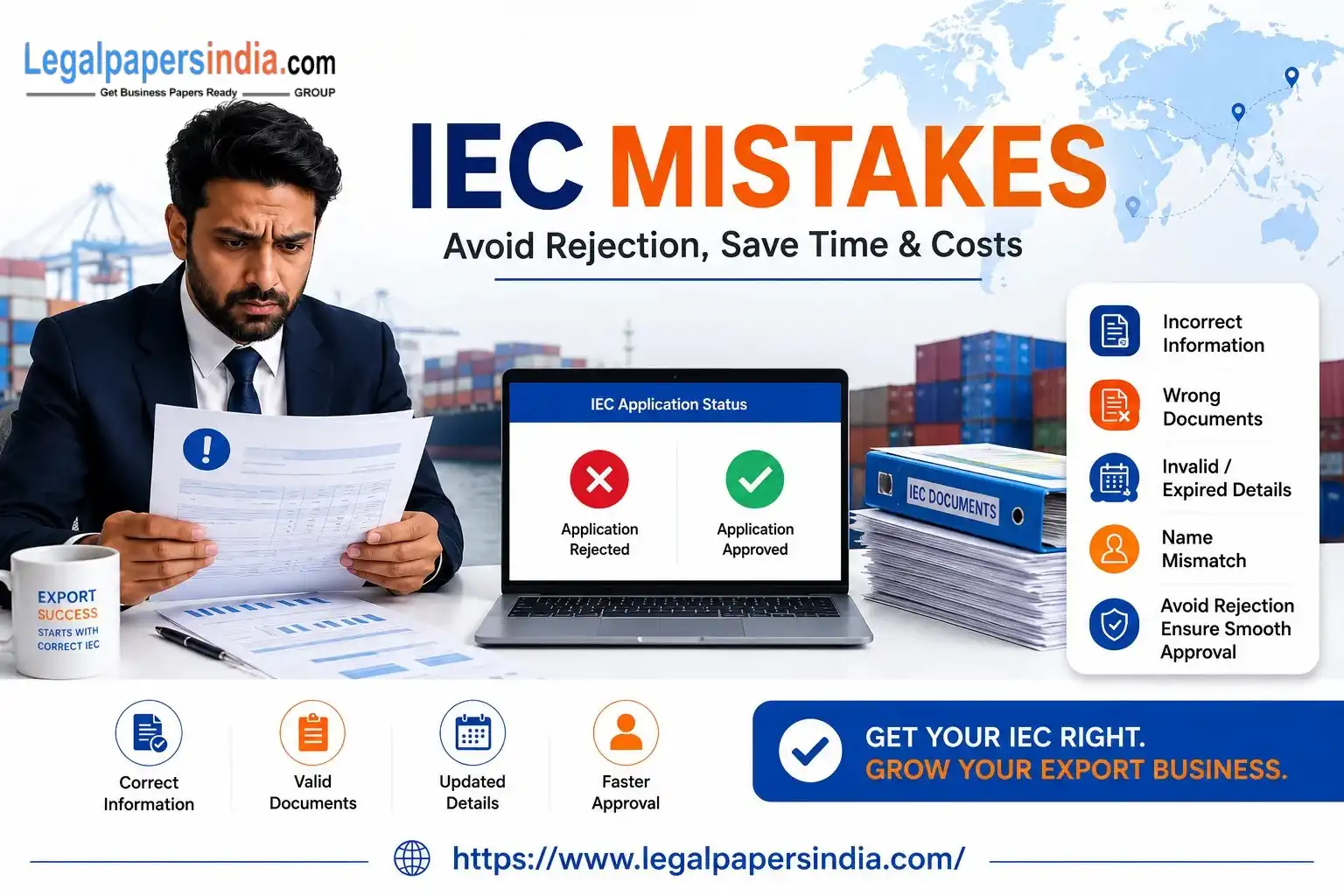
Common IEC Registration Mistakes Businesses Make
Assuming GST Automatically Covers Imports or Exports
GST and IEC serve different purposes.
A GST registration alone does not replace IEC requirements for international trade.
Using Incorrect Bank Details
Bank verification mismatches are one of the more common causes of application issues.
Delaying IEC Until After Receiving Orders
Some businesses wait until they receive their first export order.
That often creates unnecessary pressure when shipment timelines become tight.
Ignoring Annual IEC Updates
While IEC is permanent, businesses are still expected to comply with periodic update requirements prescribed by authorities.
Important Things to Evaluate Before Applying
IEC registration itself may appear straightforward, but businesses should still think beyond the application form.
Understand the Nature of Trade Activity
Different products may involve:
- Sector-specific restrictions
- Export controls
- Licensing requirements
- Customs classifications
Check Whether Additional Registrations Are Needed
Depending on the industry, businesses may also require:
- FSSAI compliance
- APEDA registration
- GST registration
- RCMC certifications
Evaluate Banking Readiness
International trade often involves:
- Foreign inward remittance procedures
- AD code registration
- Export documentation coordination
Businesses sometimes discover these requirements only after the IEC is issued.
How Long Does IEC Registration Usually Take?
In many cases, IEC registration can be processed within a few working days when documents are accurate and verification proceeds smoothly.
However, timelines may vary due to:
- PAN verification issues
- Banking mismatches
- Incorrect application details
- Technical portal delays
- Additional clarification requests
Businesses planning immediate imports or exports usually benefit from starting early instead of waiting for urgent shipment deadlines.
Compliance Risks of Ignoring IEC Requirements
Not every issue results in penalties immediately, but operating without required IEC compliance can create operational disruptions.
Possible risks include:
- Customs shipment holds
- Delayed export clearance
- Banking complications
- Foreign transaction processing issues
- Regulatory scrutiny for trade documentation inconsistencies
The practical impact is often operational rather than punitive at first — delayed deliveries, blocked consignments, or payment complications can affect business relationships quickly.
IEC vs GST: Are They the Same Thing?
This is one of the most searched questions around international trade compliance.
|
Aspect |
IEC |
GST |
|
Purpose |
International trade identification |
Domestic indirect tax compliance |
|
Issuing Authority |
DGFT |
GST Authorities |
|
Needed For |
Imports and exports |
Taxable business transactions |
|
Applicable To |
Cross-border trade participants |
Businesses crossing GST thresholds |
|
Role in Customs |
Important |
Supportive but separate |
Many businesses ultimately require both registrations depending on operations.
Frequently Asked Questions About IEC Registration
1. Is IEC mandatory for all exporters in India?
IEC is generally required for businesses exporting goods from India. However, applicability can depend on the type of transaction, sector rules, and nature of export activity.
2. Can an individual apply for IEC registration?
Yes. Individuals operating as proprietors can apply for IEC if they are involved in eligible import or export activities.
3. Does IEC expire after a few years?
IEC itself is generally permanent, but businesses may need to comply with periodic update requirements prescribed by authorities.
4. Can service providers also obtain IEC?
Yes, in certain situations. Service exporters dealing with foreign remittances or international business operations may obtain IEC depending on operational needs.
5. What happens if imports are attempted without IEC?
Customs clearance, banking procedures, and shipment processing may face interruptions if IEC is required but unavailable.
When Professional Assistance Becomes Helpful
Some businesses complete IEC registration independently without major issues.
However, professional guidance may become useful when:
- Multiple registrations are involved
- Business structure is complex
- International trade classifications are unclear
- Documentation inconsistencies exist
- Additional export compliance requirements apply
Businesses unfamiliar with trade regulations often prefer reviewing the process with experienced compliance professionals before beginning international operations.
You can also learn more about the background and compliance-oriented approach of Legal Papers India when evaluating professional assistance options.
Final Thoughts
IEC registration is often the first real compliance step businesses encounter while entering international trade.
For some, it begins with importing small inventory batches.
For others, it starts after receiving an unexpected overseas inquiry.
Either way, understanding how IEC works before trade activities begin usually makes the process smoother and less stressful later.
If you are uncertain about eligibility, documentation, or related trade compliance requirements, consulting experienced professionals can help avoid delays and operational confusion during the early stages of import-export expansion.
Reach out to Legal Papers India for reliable IEC Registration services. Our experts assist with smooth application processing and complete registration support for international trade businesses.
Social Share: