
Sep 04, 2026
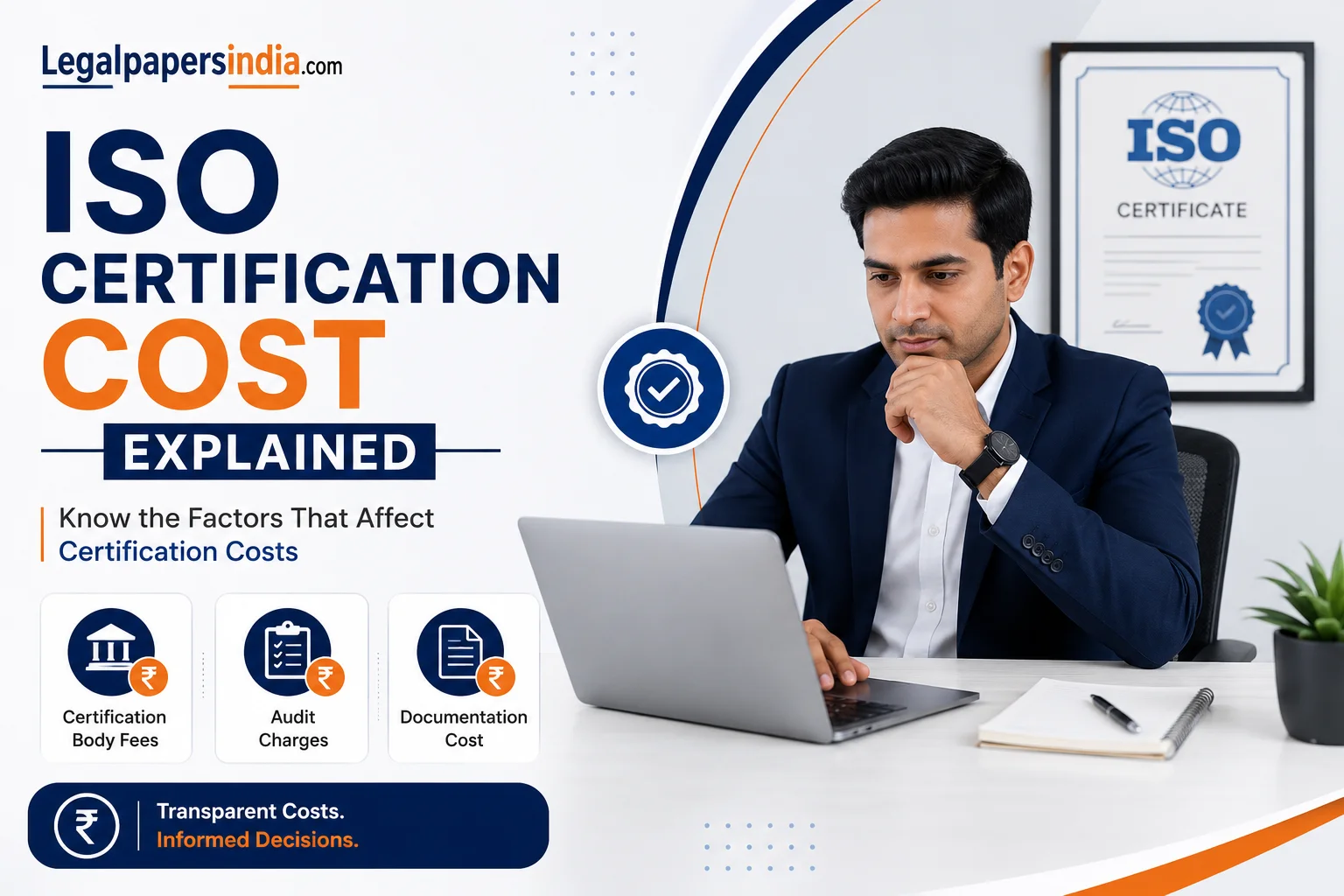
ISO Certification Cost Explained: What Businesses Actually Pay and Why
Why ISO certification pricing confuses so many businesses
One company gets quoted ₹15,000 for ISO certification, while another is told the process may cost several lakhs. That gap creates a genuine trust issue.
Many businesses start searching for ISO certification costs expecting a fixed government fee or a standard package price. Instead, they find wildly different estimates, unclear inclusions, and agencies promoting “instant certification” without explaining what affects the actual cost.
The confusion usually comes from one thing: ISO certification is not a single product. The pricing depends on your business size, industry risk level, documentation readiness, certification scope, audit requirements, and even how urgently you need the certificate.
For small businesses, startups, manufacturers, exporters, hospitals, or IT companies, the cost structure can look very different. Understanding what drives pricing helps you avoid overpaying for unnecessary services — or underestimating what proper certification actually involves.
If you are exploring professional support for ISO certification services, knowing the real cost factors first makes the decision much easier and safer.
How Much Does ISO Certification Usually Cost?
ISO certification costs in India typically vary based on the ISO standard, business size, number of employees, audit complexity, documentation requirements, and certification body fees. Small businesses with simple operations usually spend significantly less than manufacturing units, multi-location companies, or highly regulated industries.
The biggest cost drivers are usually:
- Type of ISO standard
- Number of employees
- Operational complexity
- Audit duration
- Documentation support
- Certification body reputation
- Renewal and surveillance audits
Businesses often misunderstand certification pricing because some providers only quote documentation charges while excluding audit or annual maintenance costs.
Who Should Consider Higher ISO Certification Budgets — and Who May Not Need It Yet
Not every business needs an expensive certification process immediately.
Businesses that usually require deeper certification support
- Manufacturing companies
- Export-oriented businesses
- Food processing units
- Healthcare organizations
- Construction companies
- Multi-location operations
- Businesses applying for tenders
- Companies targeting international clients
These organizations often require stronger compliance systems, internal audits, employee training, and detailed documentation.
Businesses that may start with a simpler approach
- Early-stage startups
- Freelancers or solo consultants
- Very small service-based firms
- Businesses not yet dealing with vendor compliance requirements
In some cases, companies rush into certification before operational systems are stable. That often increases corrective audit costs later.
What Determines the Cost of ISO Certification?
The actual certificate itself is only one part of the expense. Most of the pricing comes from preparation, implementation, and auditing.
1. Type of ISO Standard
Different ISO standards require different levels of compliance.
For example:
- ISO 9001 (Quality Management) is usually more straightforward
- ISO 27001 (Information Security) is more documentation-heavy
- ISO 22000 (Food Safety) involves stricter operational controls
Higher-risk industries generally face higher certification costs.
2. Size of the Organization
A business with 5 employees and one office is much easier to audit than a company with:
- Multiple branches
- Factory operations
- Large staff
- Complex workflows
Audit duration increases with operational scale, which directly affects pricing.
3. Existing Documentation Readiness
Some businesses already maintain:
- SOPs
- HR policies
- Quality records
- Process documentation
- Risk assessment systems
Others start from scratch.
The more preparation required, the higher the consulting and implementation cost tends to be.
4. Certification Body Selection
Accredited certification bodies usually charge more than unknown or low-credibility agencies.
This is where many businesses make costly mistakes.
A very cheap certificate may not be accepted by:
- International clients
- Government tenders
- Large procurement departments
- Export buyers
Businesses often realize this only after paying for certification.
5. Number of Locations
Each operational site may require separate audits or additional audit time.
Multi-location businesses naturally see higher certification costs.
Understanding the Cost Breakdown of ISO Certification
Instead of viewing ISO certification as one combined fee, it helps to separate the process into stages.
Documentation and Gap Analysis
This stage includes:
- Process review
- Policy drafting
- Compliance planning
- SOP creation
- Risk mapping
Businesses with weak documentation usually spend more here.
Training and Implementation
Costs may include:
- Employee awareness training
- Internal compliance setup
- Operational corrections
- Process standardization
Companies often underestimate this stage because implementation takes time internally.
Internal Audit
Before the external certification audit, internal audits identify non-conformities.
Skipping proper internal audits may reduce initial costs but increases the risk of failed external audits later.
Certification Audit Fees
These are paid to the certification body.
The cost depends on:
- Audit duration
- Number of auditors
- Business complexity
- Industry type
Surveillance and Renewal Costs
ISO certification is not a one-time lifetime payment.
Most certifications require:
- Annual surveillance audits
- Periodic renewals
- Ongoing compliance maintenance
Many low-cost advertisements do not clearly mention this.
Typical ISO Certification Price Range in India
There is no universal fixed price for ISO certification because each business has different compliance requirements.
However, in practical market conditions:
- Small service-based businesses usually fall within lower pricing brackets
- Medium-sized operational businesses often require moderate implementation budgets
- Manufacturing, export, healthcare, or multi-site businesses generally face higher certification expenses
Urgent certification timelines can also increase costs due to accelerated documentation and audit scheduling.
If a quotation seems extremely cheap compared to market standards, businesses should verify:
- Whether the certification body is accredited
- Whether audit fees are included
- Whether annual surveillance charges are extra
- Whether implementation support is genuine
Very low-cost certifications sometimes create credibility issues later.
ISO Certification Cost Based on Different Business Scenarios
Small IT or Consulting Firm
Usually lower complexity because:
- Fewer operational risks
- Limited physical processes
- Easier documentation
Main costs typically involve documentation and audit fees.
Manufacturing Unit
Costs increase because of:
- Production controls
- Safety procedures
- Quality checks
- Operational audits
- Shop-floor inspections
Manufacturers often require longer audit durations.
Food Business
Food-related ISO standards involve:
- Hygiene controls
- Hazard analysis
- Process monitoring
- Compliance documentation
This raises implementation complexity.
Multi-Branch Company
Additional branches increase:
- Audit scope
- Documentation management
- Compliance coordination
This is where costs rise faster than many businesses expect.
Hidden or Additional ISO Certification Costs Businesses Overlook
Employee Time and Internal Resources
Even when consultants handle documentation, your internal team still spends time on:
- Meetings
- Policy reviews
- Training
- Process alignment
This operational cost is often ignored during budgeting.
Corrective Actions
If audits reveal compliance gaps, businesses may need:
- System changes
- Additional training
- Process corrections
These adjustments can increase overall project cost.
Annual Maintenance
Some companies assume certification is permanent after the first audit.
In reality, maintaining certification requires continuous compliance and periodic reviews.
Re-Certification Costs
Renewal audits after certification validity periods may involve separate charges.
How Businesses Can Reduce ISO Certification Costs Without Compromising Quality
Trying to find the “cheapest” certification usually backfires.
A better strategy is reducing unnecessary implementation inefficiencies.
Prepare Documentation Early
Businesses that organize:
- HR records
- Process documents
- Operational SOPs
- Vendor controls
before consulting engagement often reduce project complexity.
Choose the Right ISO Standard
Some businesses pursue multiple certifications too early.
Starting with the most commercially relevant ISO standard can control costs better.
Avoid Unaccredited Providers
A cheap but non-recognized certificate may force businesses to repeat the process later.
That becomes far more expensive overall.
Train Internal Teams Properly
Good employee awareness reduces:
- Audit failures
- Corrective actions
- Compliance delays
Common Mistakes That Increase ISO Certification Costs
Waiting Until a Tender Deadline
Urgent certifications usually cost more because:
- Documentation must be accelerated
- Audits are rushed
- Teams are unprepared
Choosing Providers Only by Price
Many businesses compare only package prices instead of checking:
- Accreditation
- Industry experience
- Audit credibility
- Long-term support
Ignoring Operational Readiness
Some companies apply for certification before their internal systems are mature enough.
This creates repeated corrective actions and re-audits.
Underestimating Multi-Department Coordination
ISO implementation affects operations, HR, administration, procurement, and management.
Lack of coordination slows implementation and increases consulting hours.
Practical Examples That Show How ISO Certification Costs Vary
Example 1: Small Service Startup
A small consulting company with one office and limited employees may complete certification relatively smoothly because documentation and operational scope remain simple.
Example 2: Mid-Sized Manufacturer
A factory with production lines, quality inspections, inventory systems, and multiple teams requires deeper audits and process mapping, increasing overall costs substantially.
Example 3: Export-Oriented Food Business
Food exporters usually face stricter buyer expectations, stronger compliance requirements, and detailed process documentation, which naturally raises implementation effort.
These differences explain why comparing ISO certification prices without context can be misleading.
Frequently Asked Questions
1. How much does it cost to get ISO certification in India?
ISO certification costs vary depending on business size, ISO standard, operational complexity, audit scope, and implementation readiness. Small businesses generally spend less than manufacturing units or multi-location organizations because audits and compliance requirements are simpler.
2. Why do ISO certification quotes vary so much?
Different providers include different services. Some quotes only cover documentation, while others include implementation, audits, training, and surveillance support. Accreditation quality and industry specialization also affect pricing.
3. Is low-cost ISO certification reliable?
Not always. Extremely cheap certifications may involve non-accredited bodies or limited audit credibility. Some businesses later discover their certificates are not accepted by clients, exporters, or procurement authorities.
4. Are there annual charges after ISO certification?
Yes. Most ISO certifications require surveillance audits and periodic renewals. Businesses should understand these ongoing costs before choosing a certification provider.
5. Which factor affects ISO certification cost the most?
Operational complexity usually affects pricing the most. Businesses with factories, multiple branches, regulated industries, or large employee teams typically require longer audits and deeper compliance systems.
Turning Cost Understanding Into a Better Business Decision
The goal should not be finding the lowest ISO certificationprice.
The better question is whether the certification process genuinely helps your business improve operational credibility, client trust, compliance systems, or tender eligibility.
A realistic budget paired with the right certification scope usually creates better long-term value than aggressively minimizing upfront costs.
Businesses that understand the difference between “paper certification” and meaningful compliance tend to make more confident decisions.
When Professional Guidance Actually Makes Sense
Professional support becomes valuable when:
- Your business lacks documentation systems
- Compliance requirements are complex
- You need certification for tenders or exports
- Multiple departments are involved
- Audit preparation feels unclear
Experienced guidance can sometimes reduce delays, corrective actions, and avoidable expenses — especially for first-time applicants.
If you want to understand how the process may apply to your business type, learning more about Legal Papers India operational presence and support structure may help you evaluate your options more clearly before moving ahead.
Conclusion
ISO certification costs are rarely “fixed,” and that is exactly why businesses should understand the real pricing structure before making decisions.
The actual cost depends less on the certificate itself and more on operational readiness, audit complexity, implementation depth, and long-term compliance expectations.
A transparent certification process should help businesses gain clarity — not confusion.
If you are evaluating ISO certification, focus on credibility, scope suitability, and long-term business value rather than only comparing the lowest quote available. A balanced approach usually saves both money and operational stress over time.
Contact Legal Papers India for hassle-free ISO Certification assistance. Our team helps businesses with certification documentation, application support, and compliance requirements.
Social Share: